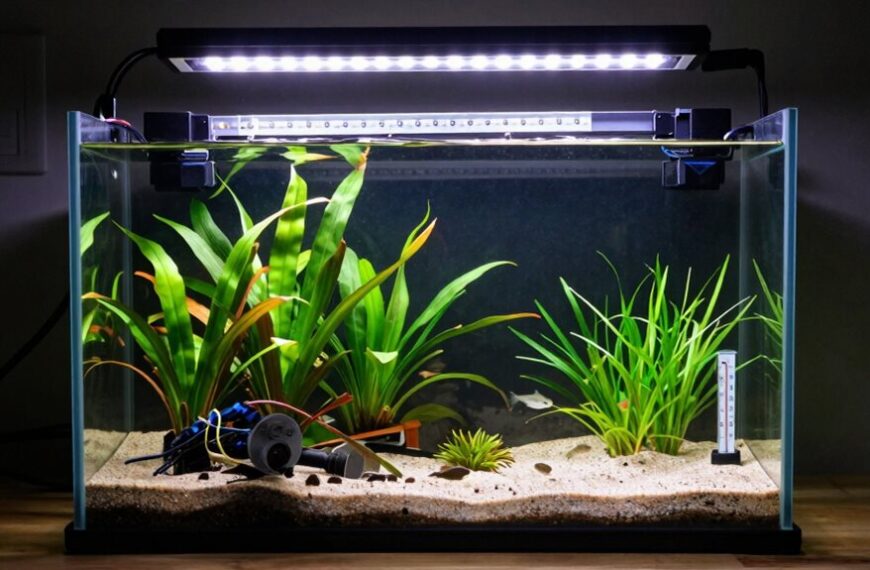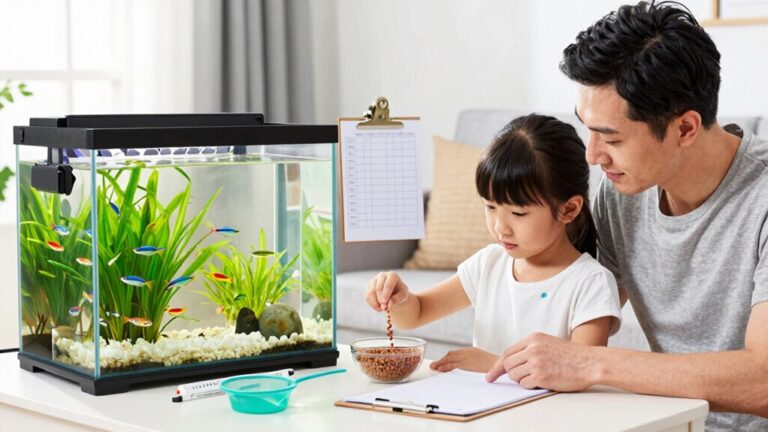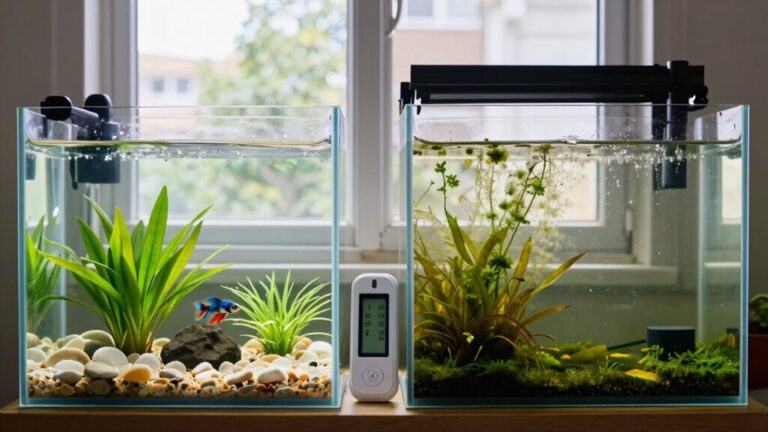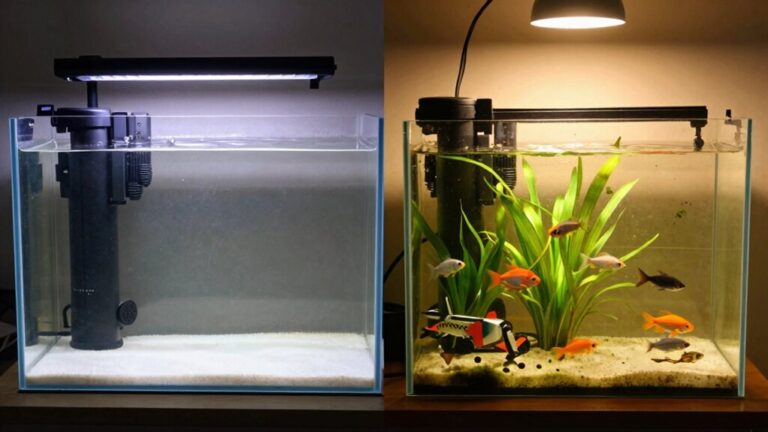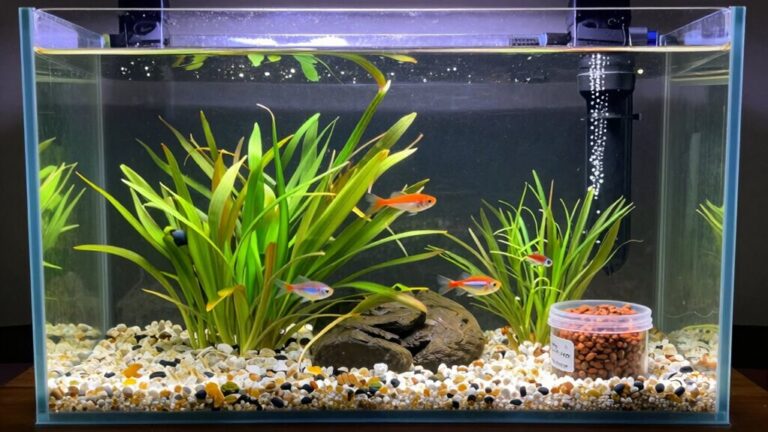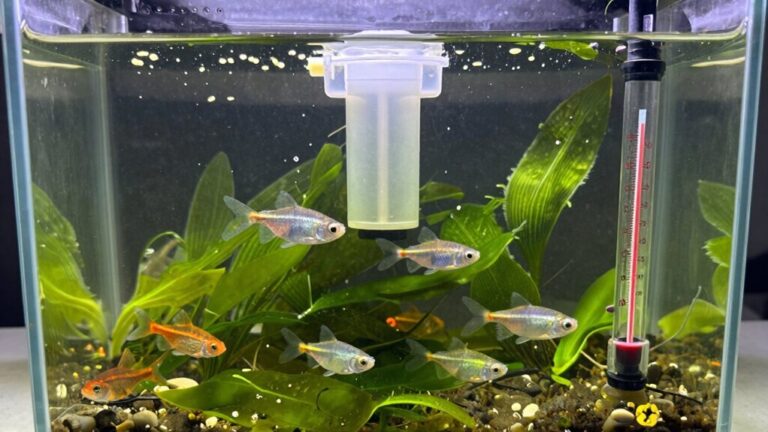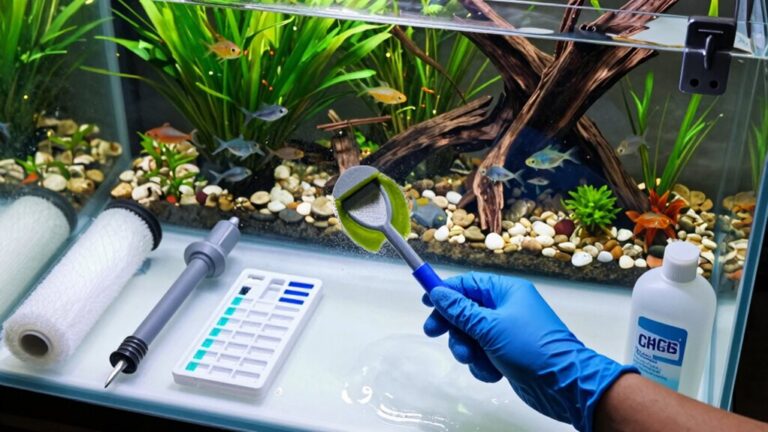

Nano tanks can be ethical for fish and shrimp, but they require your dedicated commitment. You’ll need to choose appropriate species (many popular fish are unsuitable), maintain strict water parameters, perform frequent water changes, and monitor temperature stability in these small environments. Success depends on limiting bioload, providing proper filtration, and creating habitat enrichment. Shrimp-only tanks typically work better than fish setups. The smaller your tank, the greater your responsibility to its inhabitants.
Defining Ethical Standards for Small Aquarium Environments

While nano tanks have surged in popularity among hobbyists, they come with considerable ethical responsibilities that can’t be overlooked.
You’ll need to maintain the same water quality standards in a 5-gallon tank as you’d in a 50-gallon system—perhaps even more vigilantly. Stable ecosystems are crucial in small tanks to reduce stress and illness among fish and shrimp.
Your small tank requires careful monitoring of ammonia, nitrite, and nitrate levels, which can spike dramatically in confined spaces.
Proper research before adding any species is essential to ensure comprehensive welfare for all tank inhabitants.
Don’t forget that every creature deserves an environment mimicking its natural habitat, even in miniature form!
You should provide appropriate lighting, hiding spaces, and compatible tankmates that reflect their evolutionary needs.
Consider having your nano tank independently verified by third-party certification programs that evaluate humane treatment standards for aquatic life.
The Bioload Balance: Species Selection for Nano Tanks
When selecting inhabitants for your nano tank, achieving proper bioload balance becomes the critical foundation of a thriving miniature ecosystem.
You’ll want species that stay small and produce minimal waste. Think of your tank as a tiny apartment—you can’t fit a Great Dane in a studio! Common species like Bettas, Guppies, and Molly fish are not suitable choices for nano tanks despite their popularity. A 5-gallon tank works well for single species setups like a small group of shrimp. For additional health, keep in mind the ideal water temperature requirements for each species to ensure they thrive in your nano tank.
For a successful nano setup, focus on these key factors:
- Choose truly nano-appropriate species like Ember Tetras or Cherry Shrimp
- Stick to the “less is more” philosophy—6-8 small fish maximum in 5-10 gallons
- Mix layers with schooling mid-swimmers and a few bottom dwellers
- Add gradually, allowing your beneficial bacteria to keep pace
Water Quality Management in Limited Volumes
Once you’ve selected the perfect tiny inhabitants for your nano tank, maintaining pristine water quality becomes your next major challenge.
In these limited volumes, waste builds up quickly, making your filtration system your best friend.
You’ll need a three-stage setup that includes activated carbon and biological media to process waste effectively. Hang-on-back or gentle canister filters (140-160 GPH) work well without creating strong currents that might stress your tiny swimmers.
Weekly water changes are non-negotiable—plan on 20-30% for most setups, or up to 50% for heavily stocked tanks. Implementing regular water changes not only helps maintain clear water but also stabilizes overall water conditions.
Don’t skimp on testing either! Check pH, ammonia, nitrite, and nitrate levels weekly until your tank stabilizes.
Adding hardy plants like Java Fern not only looks gorgeous but also helps absorb nitrates and creates natural filtration—a win-win for your mini ecosystem!
Consider keeping spare equipment on hand in case of filter or heater failures, as even brief malfunctions can cause dangerous parameter shifts in nano tanks.
For nano tanks under 20 gallons, many beginners find all-in-one aquarium kits provide the essential equipment needed for maintaining stable water conditions.
Space Requirements: Natural Behaviors in Confined Settings

Despite their compact charm, nano tanks present a considerable challenge when it comes to providing adequate space for aquatic life. When you’re setting up a small tank, you’re fundamentally creating boundaries for creatures that naturally swim freely in much larger spaces.
Different fish need different swimming ratios based on their body style:
- Sedentary fish require at least a 1:3.5 ratio of open water to fish length.
- Maneuverable swimmers need a minimum 1:5 ratio, preferably 1:7.
- Active swimmers demand at least 1:8, ideally 1:10.
- Schooling species require 8-12 individuals to exhibit natural behavior.
You’ll find that many popular fish simply can’t thrive in nano environments. Insufficient swimming space can result in chronic injuries as fish repeatedly bump against tank walls. Additionally, community dynamics among fish can become stressed due to limited space.
Those angelfish might look cute when tiny, but they’ll grow to 6 inches and need at least 30 gallons to swim properly and avoid stress. Similarly, discus fish are completely inappropriate for nano tanks as they can reach 8 inches and require significantly larger aquariums.
Temperature and Parameter Stability Challenges
As beautiful as nano tanks are, they come with a considerable hurdle that many beginners overlook: maintaining stable water parameters. In these tiny ecosystems, even minor changes can cause major problems.
Your nano tank’s small water volume means temperature fluctuations happen fast—especially near windows or vents. Equipment heat from pumps and lights can quickly overheat your tank, while evaporation causes rapid salinity swings that stress your aquatic friends. Regularly monitoring water quality parameters is essential to ensure the health of your fish and shrimp.
You’ll need reliable equipment like quality heaters (Cobalt needle therms work great), cooling solutions for hot climates, and an automatic top-off system to combat evaporation. Maintaining stable salinity is critical as fluctuations can lead to inaccurate readings of other important water parameters.
Weekly water testing isn’t optional—it’s crucial.
Don’t forget to install an always-visible thermometer and consider an Inkbird controller for temperature management.
When equipment issues arise, remember: in nano tanks, you don’t have time to delay!
Enrichment and Stress Reduction in Nano Ecosystems
When you create a nano tank, you’re not just building an aquarium—you’re crafting a miniature world where your fish and shrimp will spend their entire lives. Your choices directly impact their stress levels and well-being, so enrichment isn’t just nice—it’s necessary!
Hardy plants like Java moss and Anubias do more than look pretty; they’re natural stress reducers that also improve water quality. Selecting a location with moderate, indirect sunlight helps prevent excessive algae growth while providing enough light for plant photosynthesis. Moreover, ensuring compatibility between nano species and their habitat enhances overall tank dynamics.
When designing your nano ecosystem, focus on:
- Creating multiple hiding spots with plants, rocks, and driftwood
- Using a proper substrate (2-3 inches deep) that matches your inhabitants’ preferences
- Adding plants densely from the start to prevent algae problems
- Making small environmental changes to stimulate natural behaviors
Responsible Nano Tank Ownership: Best Practices and Guidelines

Successful nano tank ownership begins with understanding that these tiny ecosystems require even more attention than their larger counterparts.
Think of your nano tank as a delicate bonsai tree rather than a houseplant—it needs daily care and monitoring!
Always cycle your tank completely before adding any livestock, allowing beneficial bacteria to establish.
You’ll need to quarantine new arrivals, too—no exceptions!
When selecting species, do your homework and choose creatures that actually thrive in smaller spaces, preferably captive-bred varieties.
Don’t cut corners on maintenance.
With parameters changing rapidly in small volumes, regular testing becomes your best friend.
Remember, you’re not merely a tank owner but a microecosystem guardian.
Your careful attention creates a healthy, stress-free home where your aquatic friends can flourish.
Additionally, keep an eye on ammonia and nitrite levels, as even slight elevations can dramatically affect the health of your nano tank’s inhabitants.
Frequently Asked Questions
How Do Nano Tanks Affect Fish Lifespan Compared to Larger Aquariums?
Your fish will live considerably shorter lives in nano tanks. They’ll face stress from limited space, faster waste buildup, and poorer water quality compared to larger aquariums where most species thrive longer.
Are Certain Filter Types More Ethical for Nano Tank Setups?
Sponge filters are most ethical for nano tanks as they provide gentle flow, excellent biological filtration, and won’t harm small creatures. You’ll create a safer environment while maintaining water quality for your inhabitants.
Can Schooling Fish Ever Be Ethically Kept in Nano Tanks?
No, you shouldn’t keep schooling fish in nano tanks. They need 10-20+ gallons to swim properly and exhibit natural behaviors. Limited space causes stress, prevents shoaling, and your tank’s bioload capacity would be quickly overwhelmed.
How Does Viewing Distance Impact Fish Stress in Nano Tanks?
Your proximity to nano tanks can startle fish who can’t retreat far from the glass. You’ll reduce stress by maintaining distance, approaching slowly, and guaranteeing the tank has adequate sight barriers.
Are Commercially Marketed “Nano Tank Kits” Designed With Ethical Considerations?
No, most commercial nano tank kits prioritize aesthetics and marketability over ethical considerations. You’ll find they rarely provide adequate space, filtration, or habitat requirements that fish need for their physical and psychological well-being.
Final Thoughts
You’re now equipped to make an ethical decision about nano tanks. They’re not inherently wrong, but they demand your commitment to proper species selection, vigilant water monitoring, and creating enriched environments. Remember, your fish and shrimp deserve space to express natural behaviors. With careful planning and consistent maintenance, you can create a thriving micro-ecosystem that’s both beautiful and humane. The responsibility is yours – choose wisely and care deeply.