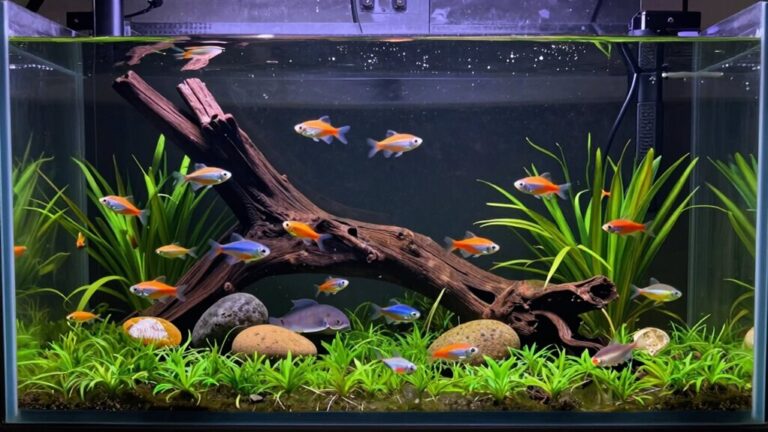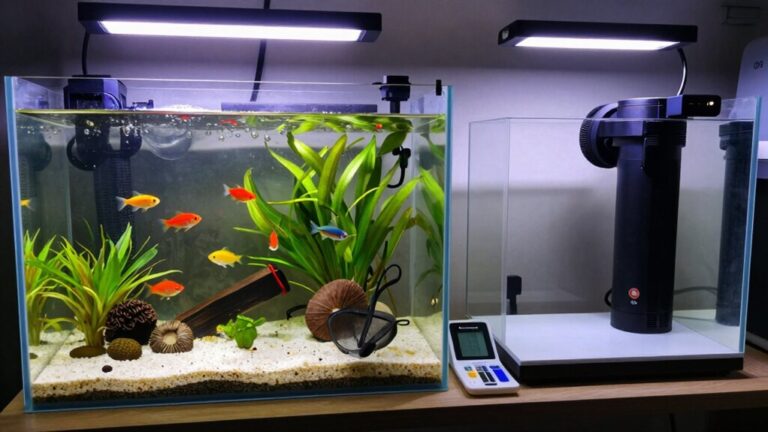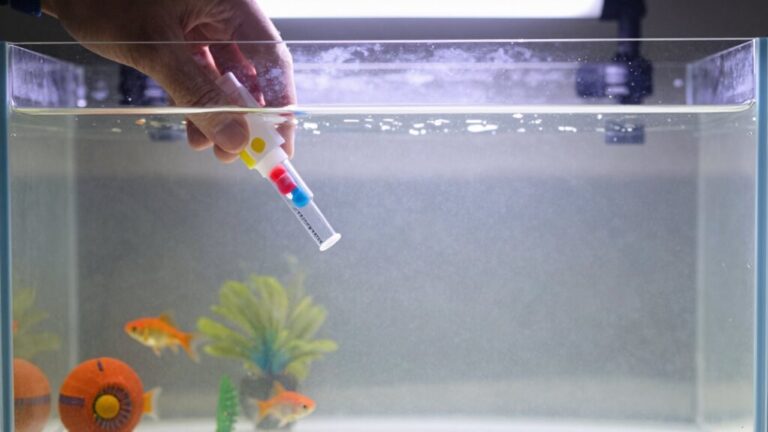
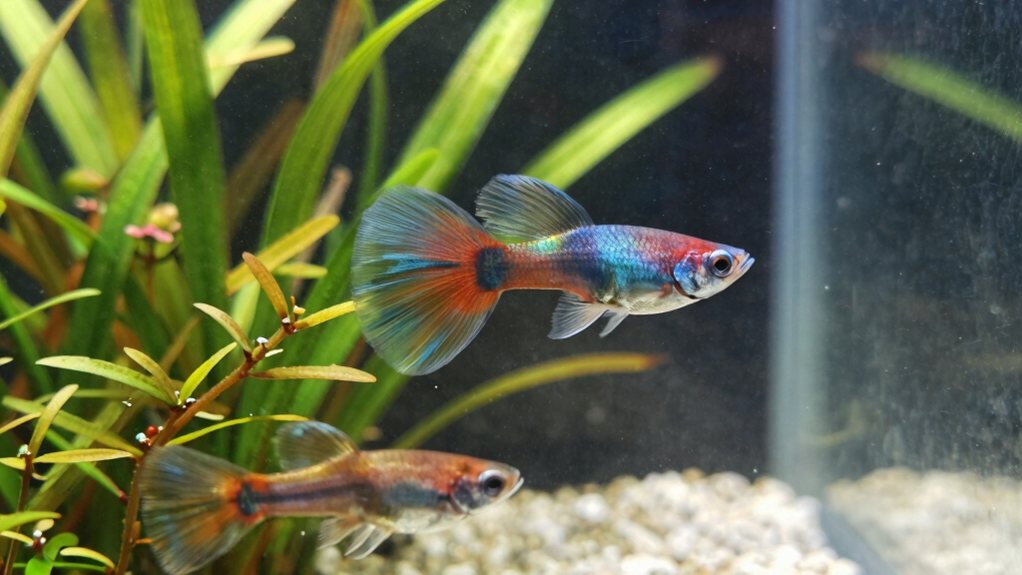
If you’re starting your fishkeeping journey, guppies are your perfect pals. They’re hardy, colorful, and don’t demand perfect water, so you can focus on the fun. Set up a 10-gallon tank with a gentle filter, keep it warm, and cycle it first. Feed them quality flakes and occasional treats for vibrant health. They breed easily, yielding many fry, and get along with peaceful tank mates like neon tetras. Stick with us to uncover all their varieties and secrets!
Why Guppies Are the Perfect Beginner Fish

Ever wondered why guppies are such a famous first fish? Their ease of care makes them an ideal starting point. You’ll find guppy care wonderfully straightforward, as these fish are hardy and adaptable. They don’t demand perfect water parameters, which is a relief when you’re just learning. Their vibrant colors and active personalities bring life to your tank without requiring expert knowledge. Setting up their home is simple, and they’re peaceful with most other community fish. You can enjoy their fascinating behaviors right away, making the hobby instantly rewarding. Basically, they let you focus on the joy of fishkeeping without getting bogged down in complicated details, building your confidence beautifully. Additionally, maintaining a stable pH level is crucial for their optimal health and vitality.
Setting Up Your First Guppy Tank
So, you’re ready to plunge in and create a fantastic home for your new guppies? Great choice! A proper setup is your key to success. Start with at least a 10-gallon tank; bigger is often easier to manage. You’ll need a gentle filter and a heater set around 78°F. Don’t forget to cycle your tank first to make the water safe—this is the most important step!
- Choose a fine substrate like sand or small gravel.
- Add live plants; moderate plant density offers hiding spots.
- Include a gentle bubbler; its placement should create calm water flow.
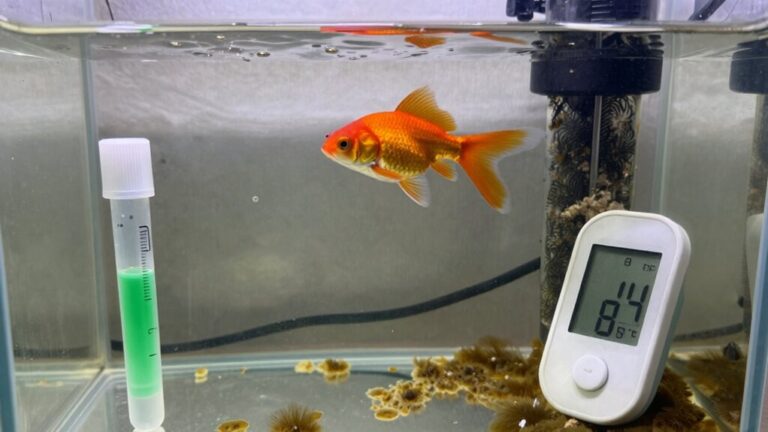
- Use a reliable water testing kit to monitor conditions.
- Finish with decorations for guppies to explore and feel secure.
To support your fish’s health, ensure proper filtration system is in place to maintain water clarity and quality.
Let the fun begin!
Feeding Guppies for Vibrant Color and Health
How can you make sure your guppies are eating right to keep them healthy and their colors brilliant? You need a balanced diet. Offer high-quality flakes or micro-pellets as their main food, but don’t forget tasty treats like brine shrimp or daphnia. These live or frozen foods are packed with nutrients. For truly stunning fins, look into specific color enhancers; these foods often contain natural ingredients like spirulina. Watch your feeding frequency closely. You should feed adults small amounts two or three times daily, giving them only what they can finish in about a minute. This prevents overfeeding, which clouds the water and harms their health. A proper diet keeps your fish vibrant and active! Additionally, monitor feeding habits to prevent overfeeding and maintain health.
Keeping Your Guppies Healthy and Disease-Free

* A little vigilance goes a long way in keeping your colorful friends happy, especially by ensuring stable water conditions to prevent stress and disease.
A Beginner’s Guide to Breeding Guppies
Ever wondered how you could fill your tank with even more of those vibrant, fluttering guppies? Breeding them is a rewarding project. Start with a dedicated breeding tank for the fry’s safety.
Select your healthiest, most colorful males and females, but consider breeding ethics. Avoid pairing closely related fish to maintain strong genetic diversity, which prevents weak offspring.
Once the female is pregnant, you’ll notice a dark gravid spot. She can give birth to 20-50 fry!
To ensure a thriving population, monitor water parameters closely, as stable conditions are crucial for fry survival.
After birth, move her back to the main tank.
Feed the tiny fry powdered food or crushed flakes.
You’ll be amazed at how quickly they grow and start showing their own beautiful colors, multiplying the joy in your aquarium.
Choosing Safe and Friendly Tank Mates
So, you’ve got a tank full of guppies, but have you thought about adding a bit more variety to your underwater community? Choosing tank mates is essential, and you can’t just go for a random pairing. It’s not an unrelated topic; the wrong choice can stress your fish. You want peaceful, similar-sized friends that share water preferences.
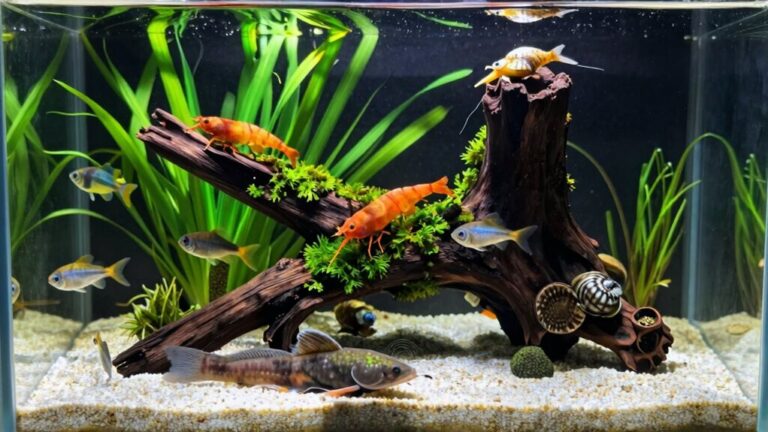
- Peaceful Community Fish: Neon tetras and harlequin rasboras are excellent, gentle choices.
- Bottom Dwellers: Corydoras catfish clean up leftovers without bothering anyone.
- Helpful Clean-up Crew: Amano shrimp are great algae eaters and fun to watch.
- Avoid Fin-Nippers: Steer clear of tiger barbs or angelfish that might nip guppy tails.
- Consider Snails: Nerite snails add character and help with algae control.
When choosing tank mates, be mindful of maintaining stable water conditions to ensure all fish thrive together.
Frequently Asked Questions
Can Guppies Live With Betta Fish?
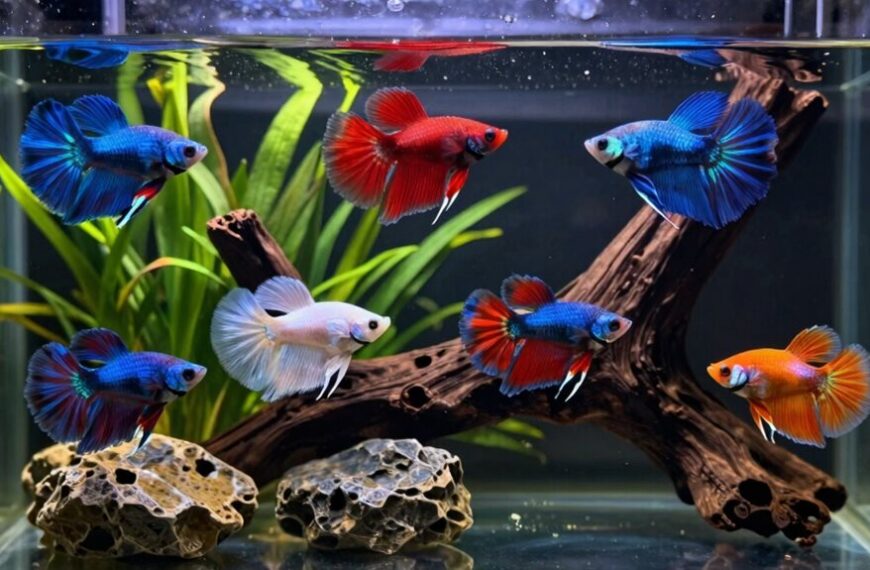
You shouldn’t house guppies with bettas. Their bright tails can provoke aggression, jeopardizing guppies compatibility and overall betta tank safety. You’ll need a very large, heavily planted tank to even consider it.
How Long Do Guppies Typically Live?
Guppies typically live 2-3 years. You can achieve this tank longevity with excellent care, ignoring lifespan myths about them living only a year. Your proper tank conditions directly impact their healthy lifespan.
Do Guppies Need a Filter and Heater?
Yes, you do need both for proper guppy housing. A filter is vital for their filtration needs, and a heater maintains a stable, warm temperature. You’ll create a healthier environment for them this way.
Can I Keep Only Male Guppies Together?
Yes, you can keep only male guppies together. In a male only tank setup, you’ll avoid breeding. Maintain a group of six or more to disperse aggression among two male guppy groups.
What Do I Do With All the Baby Guppies?
You can separate them into a nursery tank, give them to other hobbyists, or sell them to a store. Consider breeding ethics and avoid tank overcrowding by planning for their future homes early.
Final Thoughts
So, you’re ready to start your guppy adventure. Just remember, it’s all about creating a happy, stable home for them. With a little care and attention, you’ll be amazed at how these colorful fish thrive and even multiply right before your eyes. Enjoy the process, have fun watching their antics, and take pride in your beautiful, lively tank. You’ve got this!