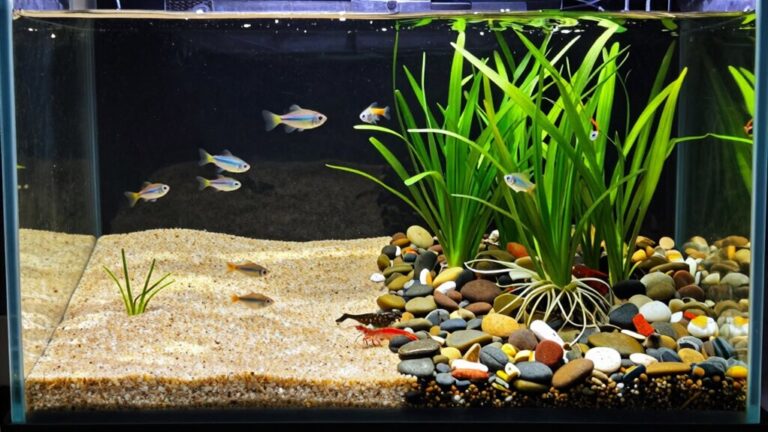

Keep your guppies thriving with a 10+ gallon tank maintained at 78°F and a pH of 7.0-8.0. Feed them 2-3 times daily with high-quality, varied foods, and include a weekly fasting day. Pair them with peaceful tank mates like tetras or corydoras, and maintain a 1:3 male-to-female ratio to reduce stress. Regular water changes and testing will prevent common health issues like ich and fin rot. The secrets to vibrant, long-lived guppies await in the details below.
Creating the Perfect Guppy Home

While setting up a guppy aquarium might seem overwhelming at first, creating the perfect underwater home for these colorful little swimmers isn’t as complicated as you might think.
Start with at least a 10-gallon tank for 5-6 guppies, adding 2 gallons per additional fish. Remember, these acrobatic little fellows can jump up to seven times their body length, so don’t forget a secure lid!
Place your tank on a sturdy surface away from direct sunlight and high-traffic areas—your fully loaded 10-gallon setup will weigh over 100 pounds!
Add 2-3 inches of rinsed gravel or sand first, then incorporate some caves, driftwood, and live plants for hiding spots. Aim to maintain a pH range of 7.0-8.5 which is optimal for guppy health and vitality. Be sure to use a water conditioner to remove chlorine and make tap water safe for your guppies.
Finally, install crucial equipment like a gentle filter, RGBW LED lighting, and a reliable heater to keep your guppies thriving.
Water Parameters: The Key to Healthy Guppies
Temperature should stay between 74-82°F, with 78°F being the sweet spot for both adults and fry. Keep pH slightly alkaline (7.0-8.0) and water moderately hard (8-12 dGH) for vibrant colors and strong development. Consider using a quality filter system that combines mechanical and biological filtration for optimal water quality maintenance. Proper buffering agents can help stabilize pH levels and prevent harmful fluctuations that cause stress to your guppies. Regularly monitoring pH levels is essential for sustaining a healthy environment.
- Test weekly for ammonia and nitrites (both must be 0 ppm) and nitrates (under 20 ppm) to prevent toxic buildup.
- Maintain consistent parameters—sudden changes stress fish more than slightly imperfect conditions.
- Match new water exactly during changes to avoid temperature or chemistry shock that can lead to disease.
Feeding Your Guppies for Optimal Health
Proper nutrition forms the cornerstone of your guppies’ vibrant colors, active behavior, and overall wellbeing.
These little swimmers have different needs at various life stages – fry require high protein for growth, while adults need a balanced diet. Most tropical fish thrive with once or twice daily feedings, but guppies, being quite active, benefit from more frequent meals.
Feed adult guppies 2-3 times daily with portions they’ll consume in 1-2 minutes. For fry, offer smaller meals 4-6 times daily, reducing to 2-3 times after their first month. A consistent feeding schedule impacts health and prevents tank pollution problems.
Don’t forget a weekly fasting day to reset their tiny digestive systems!
Create a diverse menu by rotating between quality flakes, live foods like brine shrimp, frozen options, and vegetables.
Your guppies will thank you with their brilliant colors and playful antics.
Remember to remove uneaten food promptly – nobody likes a messy dining room, especially your filter! As omnivorous fish, guppies will eagerly accept both plant-based and protein-rich foods for a nutritionally complete diet.
Compatible Tank Mates for a Peaceful Community

Well-fed guppies deserve good company! When selecting tank mates for your colorful swimmers, focus on peaceful species that thrive in similar water conditions.
Schooling fish like neon tetras and ember tetras add vibrant movement while maintaining harmony. For bottom maintenance, consider corydoras catfish or bristlenose plecos, which help clean up without disturbing your guppies’ middle-tank activities. Avoid keeping guppies with fish like tiger barbs and male bettas as they are known for their fin nipping behavior. Shrimp can be delightful additions that will enhance tank diversity while helping keep the environment clean. In addition, including a variety of suitable peaceful fish species ensures a thriving community where all inhabitants coexist harmoniously.
- Livebearer friends like platies and Endler’s livebearers make excellent companions since they share similar care requirements and temperaments.
- Keep schooling species in groups of 6+ to reduce stress and showcase their natural behaviors.
- Add plants to create hiding spots that benefit shy tank mates like chili rasboras and provide refuge for any guppy fry.
Successful Breeding Strategies for Vibrant Offspring
Breeding guppies successfully hinges on your careful selection of genetic lines, where you’ll want to choose unrelated pairs with vibrant colors and desirable fin shapes to produce healthy offspring. You’ll need precision with your water parameters, keeping temperatures between 74°-81°F and maintaining clean conditions with a pH of 7.0-8.0 to trigger breeding behaviors. Once your fry arrive, their survival depends on providing protein-rich foods like crushed flakes or baby brine shrimp, along with plenty of hiding spots among floating plants to protect them from hungry adults. Consider that females can produce multiple broods from a single mating because they store sperm for months. Maintaining a 1:3 male-to-female ratio will reduce stress on females and promote healthier breeding conditions. Additionally, ensuring proper tank size will accommodate the fry and promote their growth without overcrowding.
Genetic Line Selection
The foundation of successful guppy breeding lies in your ability to select genetically superior specimens that will produce consistently vibrant offspring.
When you’re building your foundation stock, choose healthy guppies that display pronounced features—vivid coloration, unique tail shapes, or whatever traits you’re aiming to improve.
Don’t mix fish from different sources randomly, as this makes tracking traits nearly impossible!
- Start with related females and introduce outside males for a perfect balance of trait consistency and hybrid vigor.
- Consider line breeding for specific traits using mother-to-son or father-to-daughter pairings.
- Balance inbreeding (for trait intensification) with occasional outcrossing to maintain health and vigor. Additionally, ensure that you create optimal water parameters to support breeding success.
Water Parameter Precision
While many hobbyists focus solely on genetics, mastering water parameters is equally crucial for producing those show-stopping guppies you’re dreaming about. Your breeding champions need precision, not merely tolerance.
Maintain temperatures between 76-80°F, with 78°F hitting the sweet spot for most breeders. Don’t let those daily swings exceed 2°F!
Your pH should settle comfortably in the 7.0-7.8 range, slightly alkaline to showcase those brilliant colors.
For mineral balance, aim for 8-12 dGH hardness and 3-8 dKH carbonate hardness—your guppies’ bones and scales will thank you.
Remember, stability trumps perfection. Zero ammonia and nitrites are non-negotiable, with nitrates kept below 20ppm through regular water changes. Regular water changes are essential to maintain optimal water conditions, ensuring your guppies thrive as desired.
It’s like baking—follow the recipe exactly, and you’ll be rewarded with vibrant, healthy fry that simply sparkle!
Fry Survival Tactics
When your female guppy delivers those tiny bundles of joy, you’re facing a stark reality—without proper planning, as few as 5% may survive to adulthood in a community tank.
To boost these odds dramatically, you’ll need to create safe havens for your vulnerable fry.
- Create a dedicated breeding tank (10+ gallons) for the highest survival rates of 20-40%, with ideal setups pushing this to 75-90%
- Add plenty of hiding places in your main tank—plants and decorations can boost survival rates to 10-15%
- Maintain temperatures between 78-80°F for maximum survival chances, and establish a consistent feeding schedule with appropriate fry food
Don’t crowd breeding boxes—they’ll cause stress that can drop survival to zero!
Additionally, aim for at least 20% weekly water changes to maintain pristine water quality and enhance fry survival rates.
With proper care and planning, you can easily quadruple your fry’s chances of reaching their colorful adult potential.
Preventing and Addressing Common Guppy Health Issues
Guppy health issues can strike even the most careful aquarium keeper, but knowing how to spot and treat common problems will keep your colorful friends swimming happily for years.
Watch for ich (those pesky white spots), fin rot (fraying edges), and columnaris (cottony mouth patches) – all telltale signs your fish need attention.
If you notice swollen bellies or protruding scales, your guppy might’ve dropsy, while erratic swimming could signal swim bladder disorder.
Don’t panic! Most conditions respond well to prompt treatment with aquarium salt, medication, or simple water changes. Additionally, ensure that your tank is free of common ectoparasites to help maintain your guppies’ health.
Your best defense? Prevention! Maintain pristine water conditions, test regularly for ammonia and nitrite spikes, and don’t overcrowd your tank.
Extending Your Guppies’ Lifespan Through Proper Care

Maintaining water parameters within the ideal range (pH 7.0-8.0, temperature 72-82°F) creates a stress-free environment where your colorful friends can thrive for 3-5 years instead of months.
- Tank size matters – provide at least 10 gallons with moderate water flow to mimic their natural habitat and prevent overcrowding stress.
- Feed a balanced diet with high-protein treats like bloodworms to support continuous fin growth and overall health.
- Choose tank mates wisely to avoid aggressive species that stress your guppies and potentially shorten their lives.
Remember that genetic factors play a noteworthy role too – captive-bred show strains typically don’t live as long as their wild cousins, regardless of your excellent care. Additionally, proper maintenance practices like regular water changes help maintain a healthy habitat for your guppies.
Frequently Asked Questions
Can Guppies Change Their Color Pattern as They Age?
Yes, your guppies will change color patterns as they age. They’ll display dull colors when young, develop vibrant patterns by 2-3 months, and may experience gradual fading in their senior years.
How Do You Sex Juvenile Guppies Before Maturity?
You’ll notice developing gonopodia in males by 4-6 weeks, while females show gravid spots at about 2 months. Males develop color earlier and remain smaller, while females grow faster and have rounded anal fins.
Will Guppies Eat Their Own Dead Tankmates?
Yes, your guppies will eat dead tankmates if given the opportunity. They’re opportunistic scavengers that consume soft, decaying matter. Remove deceased fish promptly to prevent water quality issues and potential disease spread.
Can Guppies Recognize Their Owners or Respond to Humans?
Yes, your guppies can likely recognize you! They’ll respond to consistent feeding cues and may associate you with food. Their memory capabilities allow them to distinguish familiar shapes and patterns, including human faces.
Do Guppies Need Darkness at Night or Constant Lighting?
Guppies definitely need darkness at night. You’ll want to provide them with 12 hours of complete darkness daily. Don’t use night lights—they’ll disrupt your guppies’ sleep patterns and cause unnecessary stress.
Final Thoughts
You’re now equipped to create a vibrant, healthy home for your guppies! With proper water parameters, balanced nutrition, and compatible tank mates, you’ll witness your colorful friends thrive. Remember, consistent care prevents most health issues, and careful breeding produces stunning offspring. When you notice your guppies displaying their elegant fins and bright colors in clean water, you’ll know your efforts have paid off. Enjoy the rewarding experience of guppy keeping!