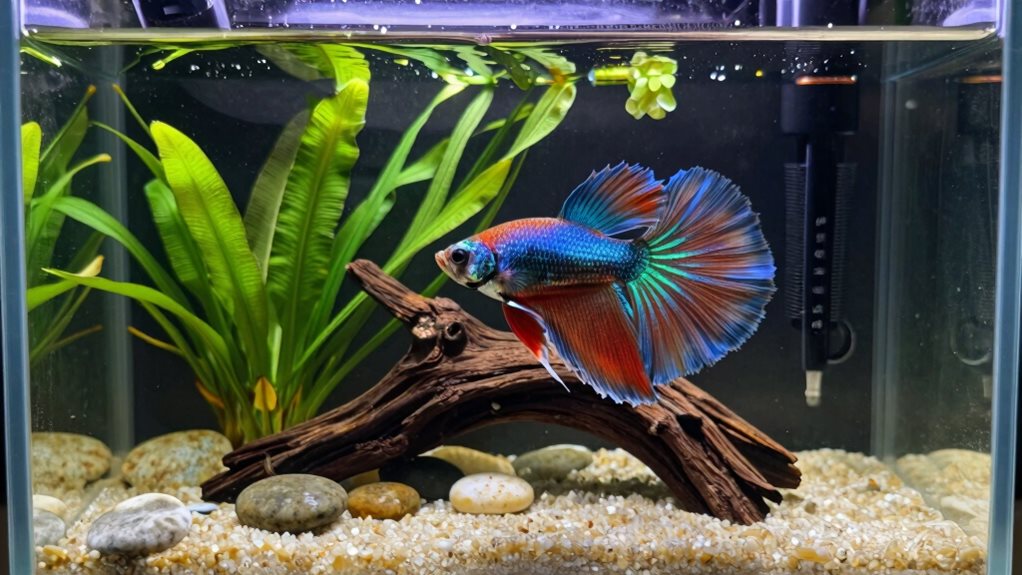
Creating a healthy betta home starts with a 5+ gallon rectangular tank that offers plenty of horizontal swimming space. You’ll need a gentle filter, heater to maintain 76-81°F, and secure lid to prevent jumping. Cycle your tank properly, test water parameters weekly, and perform regular 25% water changes. Add live plants like Anubias for resting spots and natural enrichment. With proper setup and maintenance, your betta can thrive for 3-5 years or more. Discover what makes these colorful swimmers truly flourish!
Why Tank Size Matters for Betta Fish Health

While pet stores may display betta fish in tiny cups or bowls, these beautiful creatures need much more space to thrive than most people realize. A 5-gallon tank is the minimum recommendation for standard bettas, with larger tanks offering considerable benefits.
When you choose a properly-sized tank, you’re giving your finned friend room to swim naturally and express normal behaviors. Small containers cause stress and increase illness risk, as toxins from waste build up rapidly. Those tiny store cups are just 1/20th of the recommended size! Organizations like RSPCA suggest 20 litres optimal for betta health and wellness, as a larger tank allows for better water quality management.
Larger tanks aren’t just healthier—they’re actually easier to maintain. You’ll enjoy fewer water changes, more stable parameters, and the freedom to create a beautiful underwater environment with plants and decorations. The ideal temperature range of 78-80 °F is also easier to maintain in larger tanks.
Your betta will thank you with vibrant colors and active swimming.
Selecting the Ideal Tank Shape and Dimensions
When choosing your betta’s home, you’ll want to prioritize a rectangular, longer tank over a tall or round one. The horizontal swimming space lets your betta move naturally, as these fish prefer swimming side-to-side rather than up and down. A tank with more length than height also provides better surface area for oxygen exchange and makes it easier for your betta to reach the surface for air. A 5 gallon tank is the recommended minimum size for keeping a single betta happy and healthy. This design choice closely resembles their shallow water habitat in the wild, supporting more natural behaviors and reducing stress. Additionally, it’s important to ensure that the tank has a stable water quality to promote the overall health of your betta fish.
Length Over Height
Although many fish tanks come in various shapes and sizes, not all designs serve your betta’s needs equally well. Your finned friend will thrive in a rectangular tank that’s longer than it’s tall, mimicking their natural swimming patterns and wild habitat preferences.
When choosing your betta’s home, prioritize length over height for these key reasons:
- Long tanks accommodate your betta’s natural back-and-forth swimming pattern.
- Shallow designs allow easier access to the surface for breathing.
- Wider footprints provide more territory for exploration, keeping your betta content.
- Horizontal space feels less confining than vertical space, especially for long-finned varieties.
Bettas naturally inhabit rice paddies and shallow streams in Southeast Asia, making tanks that replicate these shallow water environments ideal for their well-being. Additionally, maintaining optimal pH levels in your tank contributes significantly to your betta’s overall health and comfort.
Even a 3-gallon long tank offers a better living environment than a taller 5-gallon. Rectangular tanks are widely preferred by experienced betta keepers because they provide the most suitable environment for these fish.
Horizontal Space Matters
Since betta fish naturally swim horizontally rather than vertically, the shape of your tank plays a crucial role in their overall health and happiness.
You’ll want to prioritize rectangular tanks with greater length than height, mimicking their natural shallow-water habitats. Providing proper tank decoration improves their well-being by reducing stress and promoting natural behaviors. Your betta will thank you for choosing a wider, longer setup where they can patrol back and forth—it’s what they’re built to do! A standard 5-gallon rectangular tank makes a perfect starter home, while more active swimmers or giant varieties might need 10+ gallons.
The horizontal layout isn’t just about swimming room; it provides better surface access for air-breathing and allows you to create engaging environments with plants and hideaways without cramping your fish’s style. This design reflects their native Southeast Asian environment with densely vegetated waters, allowing for more natural behavior patterns.
Water Quality Management for Thriving Bettas
Understanding the nitrogen cycle in your betta’s tank isn’t just helpful—it’s crucial for your fish’s survival. You’ll need to monitor ammonia, nitrite, and nitrate levels weekly using reliable test kits to guarantee toxic compounds aren’t building up in your fish’s home. Regular testing gives you a clear picture of your tank’s biological health, allowing you to catch potential problems before they harm your beautiful betta companion. Consistent testing of key parameters ensures a stable environment for your betta and can help prevent critical imbalances.
A proper cycling period of 4 to 6 weeks before introducing your betta allows beneficial bacteria to establish, creating a stable environment for your fish. Maintaining proper pH balance between 6.5-7.5 is essential for your betta’s respiratory function and overall health.
Nitrogen Cycle Basics
Beneath the surface of your betta’s beautiful tank, a microscopic world of bacteria works tirelessly to keep your fish healthy and thriving. This incredible process, called the nitrogen cycle, transforms toxic fish waste into safer compounds through a two-step bacterial conversion.
When you’re establishing your betta’s home, understanding this cycle is essential:
- Ammonia (highly toxic) comes from fish waste and uneaten food
- Beneficial bacteria convert ammonia to nitrite (still toxic)
- Different bacteria transform nitrite into nitrate (less harmful)
- Regular water changes remove accumulated nitrates
A properly cycled tank takes 6-8 weeks to establish naturally. The cycling process establishes beneficial nitrifying bacteria to convert toxic ammonia into less harmful nitrite and nitrate, which is crucial for the health of aquatic life. You can speed this up using bottled bacteria or media from established tanks. For experienced aquarists, transferring mature filter media from an established tank is one of the most effective methods to seed a new system.
Your patience during this process will reward you with a stable, healthy environment where your betta can flourish.
Testing Water Parameters
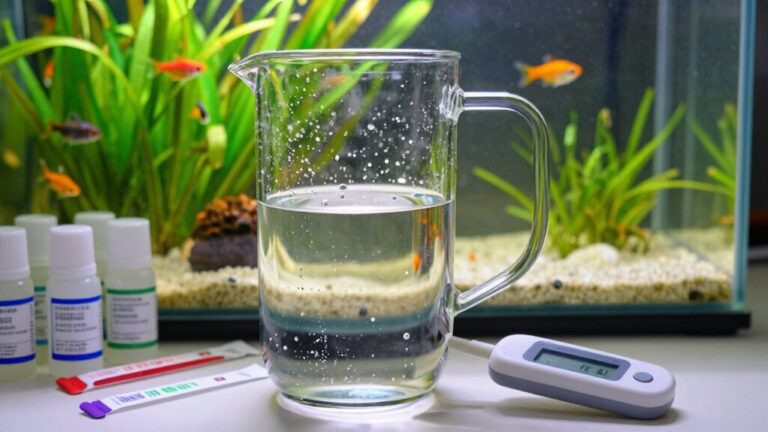
Just as you monitor your own health with regular checkups, your betta’s wellbeing depends on vigilant water quality testing. Investing in a reliable test kit is vital—liquid reagents offer the most precision, while test strips provide convenience for beginners.
Your testing arsenal should track important parameters: pH (aim for 6.5-7.5), temperature (75-80°F), and the nitrogen trio—ammonia, nitrite (both must be 0 ppm), and nitrates (below 20 ppm).
Don’t forget to monitor carbonate hardness (kH), as it prevents those dangerous pH crashes that can send your finned friend into shock. Regular testing for total chlorine levels is equally essential to ensure the gill health of your betta.
When collecting samples, grab water from mid-tank, rinse your test tubes thoroughly, and keep a log of results. This detective work helps you spot troubling patterns before your betta shows signs of stress.
Essential Equipment for a Proper Betta Habitat
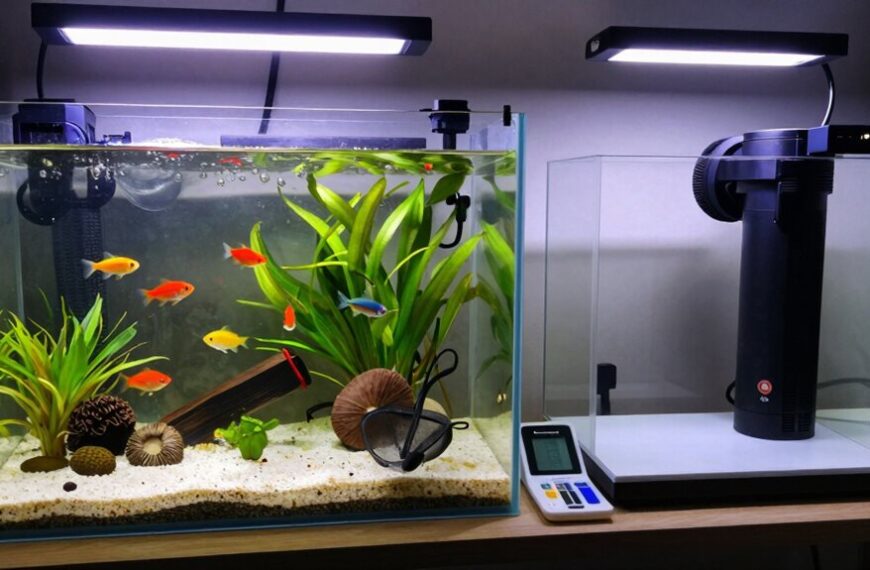
Creating a healthy home for your betta fish requires several key pieces of equipment that work together to maintain ideal living conditions.
You’ll need a tank of at least 5 gallons, though 10 gallons gives your beautiful swimmer more space to thrive. Remember, these aren’t just decorative elements—they’re vital for your betta’s health and happiness!
- Tank with lid: A secure top prevents jumping, with bowfront designs offering space efficiency.
- Heater and thermometer: Keep water between 76–81°F to prevent stress and illness.
- Gentle filtration: Low-flow filters protect delicate fins while maintaining water quality.
- Water conditioner: Removes harmful chemicals from tap water and supports slime coat health.
Additionally, providing a varied diet that includes high-protein options is essential for maintaining your betta’s overall well-being.
Don’t skimp on these basics—your finned friend’s vibrant colors and active swimming depend on them!
Creating an Enriched Environment With Plants and Decor
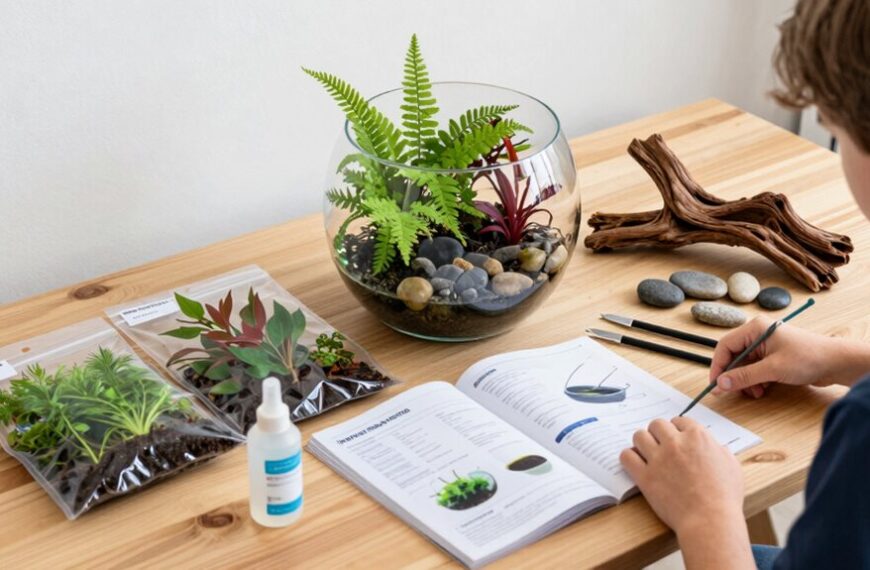
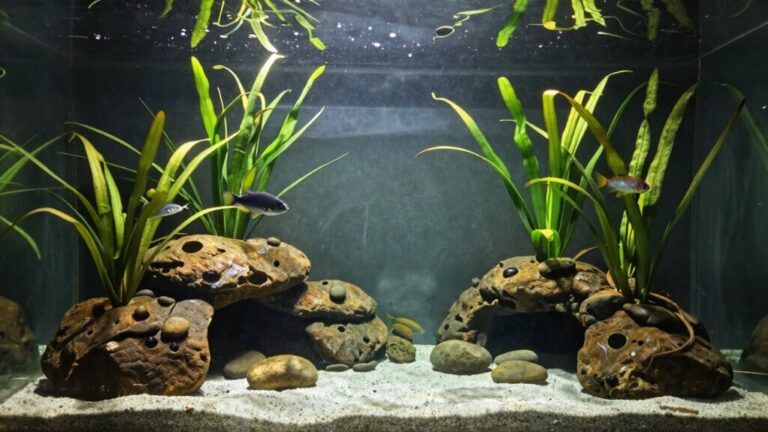
Once you’ve assembled your betta’s essential equipment, it’s time to transform that tank into a vibrant underwater paradise. Your finned friend needs more than just water to thrive—plants create the perfect home that reduces stress while improving water quality.
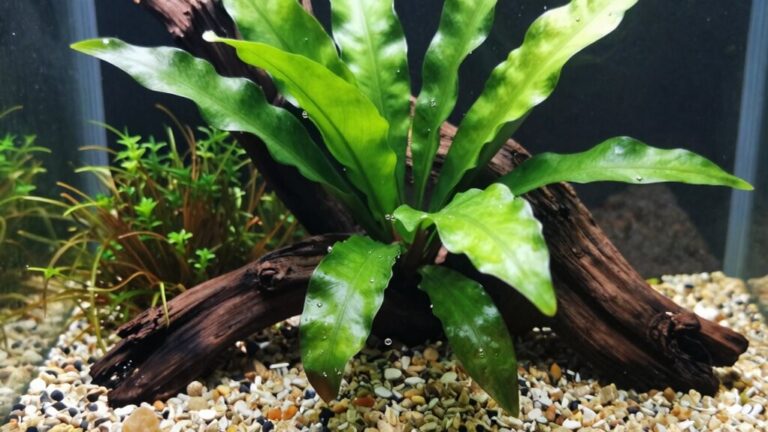
Consider floating options like Amazon Frogbit and Red Root Floaters, which provide shade and encourage natural foraging. For those perfect betta napping spots, Anubias and Java Fern offer broad-leafed “hammocks” where your fish can lounge. Always choose soft-stemmed plants that won’t damage delicate fins.
The ideal setup combines different plant layers—floating, midground, and foreground varieties—creating exploration zones and visual barriers that help your betta establish territory. Incorporating colorful aquarium plants into your design also enhances the visual interest while promoting a healthy tank environment.
With thoughtful plant selection, you’ll create a healthier environment that satisfies your betta’s natural instincts while keeping water parameters stable.
Temperature and Filtration Requirements

Why does your betta fish need such specific water conditions?
Think of it this way—your betta’s environment is their entire world. When you maintain proper temperature and filtration, you’re not only keeping water clean; you’re supporting your fish’s immune system, digestion, and overall happiness.
Your betta will thrive when you provide:
- A consistent temperature between 78-80°F (use an adjustable heater)
- At least a 5-gallon filtered tank with weekly partial water changes
- Slow temperature adjustments (no more than 2°F daily)
- Daily monitoring with a reliable aquarium thermometer
Maintaining optimal water parameters such as pH and ammonia levels is also essential for preventing stress and ensuring a healthy habitat.
Common Myths About Betta Fish Housing
When it comes to betta fish care, misinformation spreads almost as quickly as those stunning fins can flare!
Let’s debunk some persistent myths that might be harming your aquatic buddy.
First, those tiny cups or bowls aren’t suitable permanent homes, despite what pet stores display. Your betta needs at least 5 gallons to thrive, rather than merely survive.
The “bettas don’t need filters” myth is equally harmful—while they can breathe air, they still need clean water without toxic buildup.
Contrary to popular belief, bettas don’t always need solitary confinement. With careful planning and the right tankmates, some bettas can live in community settings.
And those bubble nests? They’re not reliable happiness indicators, just natural breeding behavior that can occur even in suboptimal conditions.
Long-Term Care and Habitat Maintenance
Creating a thriving home for your betta fish isn’t just about the initial setup—it’s about consistent, thoughtful maintenance that supports your finned friend for years to come.
With proper care, your betta can live 3-5 years, and some even reach an impressive 7-10 years!
Your weekly maintenance routine should include:
- Performing 25% water changes to remove toxins while maintaining beneficial bacteria
- Testing water parameters, especially during the first few months
- Checking equipment functionality (heater, filter, lights)
- Removing debris and uneaten food promptly (within 2-3 minutes of feeding)
Frequently Asked Questions
Can Betta Fish Live With Other Fish Species?
Yes, you can house your betta with compatible species like neon tetras, corydoras, and rasboras. Make certain you have a 10+ gallon tank, introduce tankmates gradually, and avoid aggressive or fin-nipping fish.
How Do I Introduce My Betta to a New Tank?
Float your betta’s bag in the new tank for 15-30 minutes, then gradually add tank water to the bag every 5-10 minutes. Finally, net the betta into the tank, avoiding adding the bag water.
Should I Use Tap Water or Bottled Water?
Tap water works well if you dechlorinate it properly. Bottled spring water is also suitable, but avoid distilled or purified options that lack minerals. Whatever you choose, test it to maintain stable parameters for your betta.
What Signs Indicate My Betta Is Unhappy With Its Environment?
You’ll notice your betta is unhappy if it shows clamped fins, gasps at the surface, hides excessively, refuses food, displays erratic swimming, or has faded colors. Water tests may reveal ammonia or nitrite problems.
How Often Should I Replace Tank Decorations and Substrate?
Replace damaged decorations immediately to prevent injury. For aesthetics, change them when they lose appeal. Clean ceramic decorations regularly—they last years. Change substrate gradually every 1-2 years to maintain beneficial bacteria in your tank.
Final Thoughts
You’ve now got everything you need to create a perfect home for your betta! Remember, your colorful friend needs more than just a bowl—they deserve space, clean water, proper equipment, and enriching surroundings. By following these guidelines, you’ll keep your betta healthy, active, and displaying those gorgeous fins for years to come. Don’t forget, a happy habitat means a happy fish, and there’s nothing more rewarding than watching your betta thrive in their well-designed kingdom!