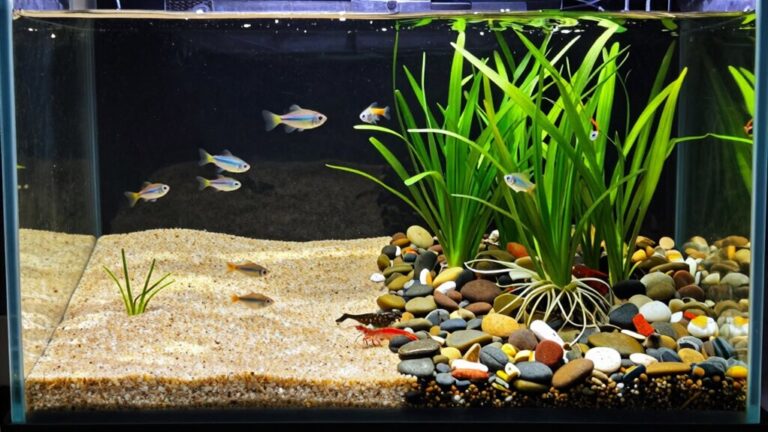
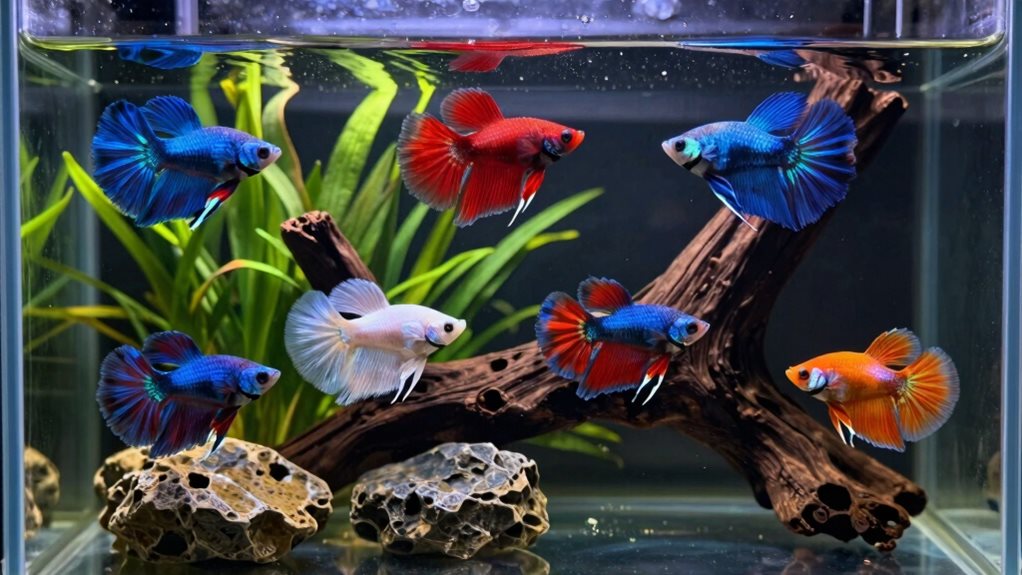
Successful betta sororities require at least 20 gallons with 5 gallons per fish, dense planting (60-70% coverage), and a minimum of five compatible females. You’ll need strategic decorations to break line of sight and create micro-territories. Most failures stem from insufficient space, poor group dynamics, and ignoring natural aggression. Daily monitoring for bullying is crucial, and you should quarantine aggressive individuals immediately. Even with perfect setup, sororities often collapse due to the bettas’ naturally solitary nature. The following details will transform your understanding of these complex communities.
The Truth About Betta Sorority Tank Requirements

Although many pet stores might tell you that bettas can live in tiny bowls, creating a successful female betta sorority requires much more space and planning than most hobbyists realize.
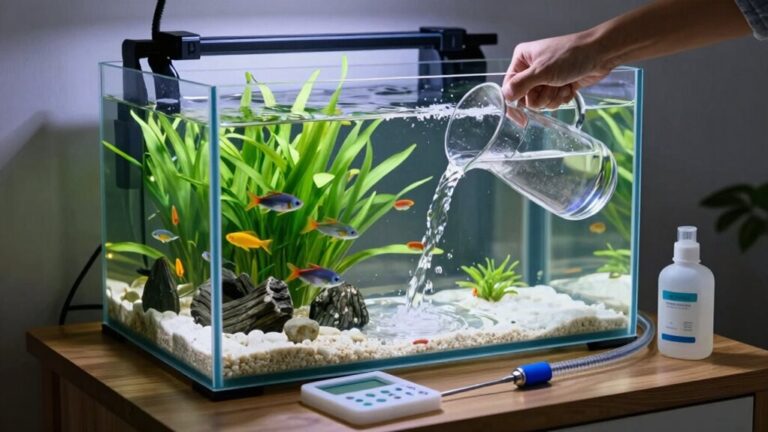
Your sorority tank should be at least 20 gallons, with a minimum of 5 gallons per betta for proper territory establishment.
Don’t even think about trying a sorority in anything smaller than 20 gallons—you’ll just witness constant bullying and stress.
For the best chance of success, consider a 40-gallon breeder or 55-gallon tank. These larger setups dramatically reduce aggression issues, allowing for better water chemistry management.
Creating a blackwater environment with tannin-rich materials helps replicate the natural habitat of bettas, significantly reducing stress levels and potential aggression in your sorority.
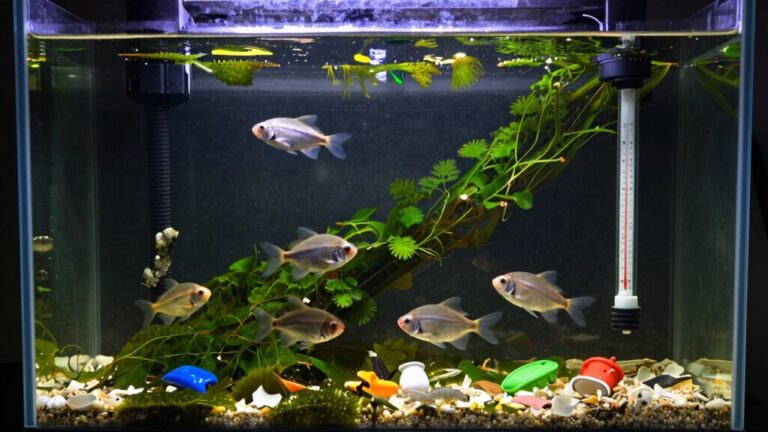
The ideal tank setup should include plenty of hiding spots and decorations to break up lines of sight between the females, which is essential for reducing territorial disputes.
How Many Female Bettas Make an Ideal Sorority?
Five is the magic number when creating a betta sorority—anything less is asking for trouble.
Despite what you might’ve heard from well-meaning fish enthusiasts, those cute stories about three happy bettas are usually just lucky exceptions that won’t last. Overcrowding tanks can lead to increased aggression, which is why it’s essential to have enough females for a harmonious environment. Want better odds of success? Scale up! A 20-gallon tank can comfortably house your minimum five females, but if you’ve got a 29-gallon, you’ll see dramatically improved results with 10-15 ladies swimming about. Initial introduction should include proper quarantine procedures to prevent disease spread and reduce stress when establishing your sorority.
For those with serious space, a 55-gallon could support up to 50 females!
Creating Effective Territories Through Strategic Decoration
When creating a successful betta sorority, strategic decoration isn’t just pretty—it’s essential for survival. Your female bettas need clearly defined territories to reduce aggression and stress. Dense planting combined with thoughtful hardscape creates the safe spaces they desperately need.
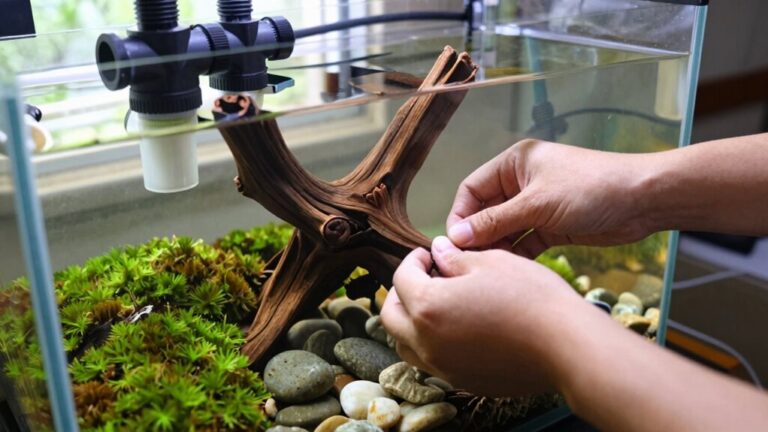
- Java moss becomes a peaceful sanctuary where stressed fish can retreat and regroup.
- Vertical driftwood transforms your tank into a multi-level apartment complex, giving everyone their own “floor.” Properly placed decorations can also contribute to reducing stress and aggression, allowing your bettas to feel more secure.
- Strategic plant placement breaks line of sight, preventing the “mean girl” syndrome of constant chasing.
- Substrate layering with fine aquasoil creates natural boundaries they’ll respect.
- Dense jungle-like setups mimic their natural habitat, making your bettas feel secure enough to show their true personalities.
The ideal setup should include multiple hiding places with various plant channels creating additional escape routes for your bettas when tensions arise. A properly maintained low flow filter will ensure water quality without creating stressful currents that could aggravate your betta community.
Managing Inevitable Aggression in Female Betta Communities

Despite their petite size, female bettas pack a powerful punch when it comes to aggression in community tanks.
You’ll need a well-planned strategy to handle the inevitable conflicts. Daily monitoring is your first line of defense—make it a habit to check for bullying behaviors. When you spot trouble, don’t hesitate to quarantine aggressive individuals in a separate tank. This temporary timeout gives injured fish a chance to recover in peaceful conditions.
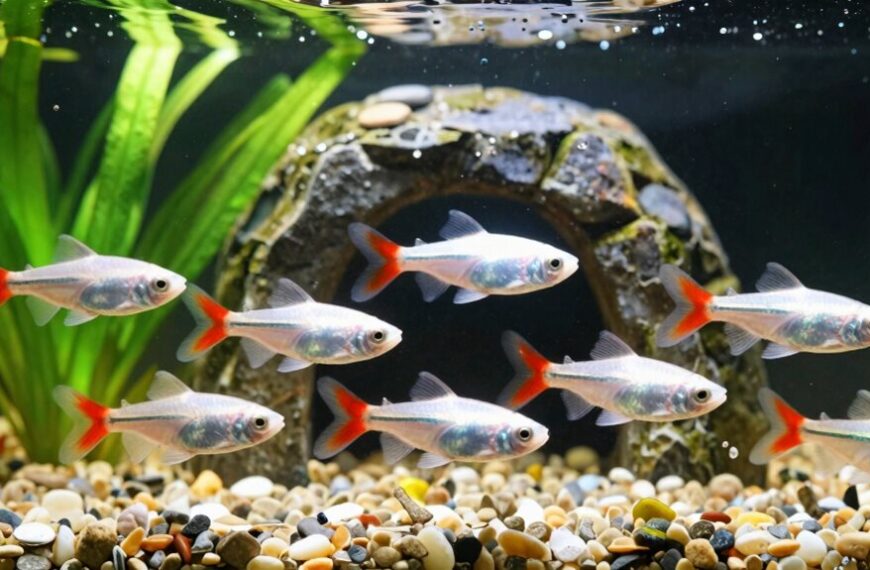
Consider adding distractions like pearl danios or neon tetras, as these schooling fish can redirect your bettas’ fighting energy. Creating a tank environment rich with hiding spots, caves, and abundant live plants can significantly reduce stress and territorial disputes among female bettas. It’s also essential to understand breeding behaviors to appreciate the dynamics of aggression during different life stages.
For long-term harmony, try social acclimation methods—raising juveniles together often works better than introducing adult fish to established groups.
If conflicts persist after reintroduction, you might need to rearrange decorations to disrupt territories or, in extreme cases, consider permanent separation. Maintaining a minimum 20-gallon tank gives your females sufficient space to establish territories without excessive aggression.
Common Reasons Why Most Betta Sororities Ultimately Fail
If you’ve believed betta sororities are a sustainable setup, you’re not alone in this common misconception.
Most female betta communities ultimately collapse due to fundamental biological realities, not simply keeper error.
You’ll find that even the most carefully planned sororities face five major failure points: insufficient tank size, problematic group dynamics, poor water conditions, lack of emergency planning, and heightened disease vulnerability. Female bettas can be just as territorial and aggressive as males, leading to constant stress even in seemingly peaceful sororities. In my experience, a dominant female typically emerges who intimidates the others, forcing them to hide and develop visible stress stripes. To mitigate aggression, it’s critical to create adequate hiding spots and visual barriers within the tank environment.
Subheading Discussion Points
Although many aquarists dream of creating a harmonious community of female bettas, the reality often falls short of these expectations. Most sororities collapse due to fundamental setup issues you mightn’t have considered. Your tank’s success depends on several critical factors that hobbyists often overlook.
- Your 10-gallon “starter tank” is basically setting your girls up for a fight club, not a sorority. Maintaining optimal water quality is essential to reducing stress levels among betta fish.
- Those 3-4 bettas you thought would be “enough to start” are actually prime targets for relentless bullying.
- The size differences you didn’t notice at the store become glaring power imbalances at home.
- That “minimalist” décor approach leaves your fish constantly exposed and stressed.
- The stress stripes you’re ignoring are your fish literally begging for intervention.
Female bettas, like their male counterparts, have been selectively bred for aggression, making peaceful cohabitation virtually impossible regardless of gender.
Natural Solitary Instinct
While many aquarists dream of a peaceful female betta community, these fish are fundamentally programmed to be loners. When you force naturally solitary creatures to cohabitate, you’re fighting against millions of years of evolution.
Your females may tolerate each other temporarily, but their biology eventually wins out. As they mature and become egg-bound, their aggression intensifies dramatically. What looks like random fighting is actually their natural instinct asserting itself.
These fish evolved to claim and defend their own territories in the wild, not share space with rivals. No amount of perfect tank conditions can completely override this inherent programming.
Even in ideal setups with proper space and hiding spots, you’re fundamentally asking them to suppress their core nature—something that rarely works long-term. Furthermore, behavioral changes like increased aggression can often signal distress as the bettas struggle to establish dominance.
Chronic Stress Accumulation
Many betta sorority setups collapse under the weight of chronic stress that silently accumulates in your fish day after day.
You’ll notice the signs if you know what to look for—faded colors, stress stripes, erratic swimming, and increasingly aggressive encounters during feeding time. This isn’t just temporary discomfort; it’s a deteriorating living situation.
- Water quality problems create a cascade of health issues that manifest as aggression.
- Temperature fluctuations weaken immune systems, making your bettas vulnerable and irritable.
- Crowded tanks prevent natural territory establishment, forcing constant confrontation.
- Competition for food and resources never truly resolves, even with generous feeding.
- The stress cycle becomes self-reinforcing as weakened fish attract bullying behavior.
What looks like harmony today might be masking progressive stress that’s slowly destroying your sorority from within. This is often exacerbated by poor water quality, leading to higher stress levels and a cycle of aggression among the fish.
Evidence-Based Success Factors vs. Dangerous Misconceptions
You’ll find your betta sorority thrives when you focus on establishing a proper hierarchy with females of similar size and temperament, rather than fixating on specific numbers.
Dense planting isn’t just decorative—it’s vital for creating visual barriers that reduce aggression and provide key hiding spots for stressed fish.
The temperament of your bettas matters far more than having the “perfect” number, as even a group of seven compatible females will fail without the right tank setup and careful observation. Regular maintenance, including weekly water testing, is essential for ensuring a stable environment conducive to their well-being.
Establish Proper Hierarchy
Three critical factors determine whether your betta sorority will develop a healthy hierarchy or descend into chaos.
First, proper selection of compatible females forms the foundation. Choose similarly-sized fish from the same spawn whenever possible, and always avoid known bullies.
Second, introduction methods matter immensely. Simultaneous introduction prevents territorial advantages, while rearranging decor disrupts potential power struggles.
- Your fish need multiple micro-territories to claim as their own
- Watch closely during the first 72 hours – this is when problems emerge
- Feed at multiple locations to prevent food-based aggression
- Expect some initial chasing that should decrease over time
- Be ready to remove persistent bullies – not all females can live in groups.
Additionally, maintaining clean, balanced water is crucial to reduce environmental stress that can exacerbate aggressive behaviors.
Plant Density Matters
Although beautiful fish can thrive in minimalist tanks, plant density represents the single most vital factor in establishing a peaceful betta sorority. Your plants aren’t just decoration—they’re fundamental infrastructure that creates micro-territories and visual barriers to reduce aggression.
Think of your tank as a neighborhood: tall background plants like Vallisneria create privacy fences, bushy midground species form gathering spots, and carpet plants provide safe zones for less dominant females. Floating plants add another dimension by softening overhead lighting and reducing territorial displays.
Be careful not to overdo it, though. Too much planting can block surface access, create dead zones, or eliminate significant swimming lanes. Aim for 60-70% coverage with regular maintenance to prevent detritus buildup.
Your bettas need both privacy and community spaces to establish healthy social dynamics.
Temperament Over Numbers
While many betta enthusiasts focus obsessively on “magic numbers” for sorority success, temperament compatibility trumps numerical formulas every time.
You’ll set yourself up for heartbreak if you simply toss any five females into a tank without considering their individual personalities.
- That shy, timid betta with tattered fins? She’ll become a target, not a sorority sister.
- Those two aggressive females flaring at each other through dividers? They’ll turn your peaceful community into a battlefield.
- Similar-sized bettas create balance, preventing the “big fish bullies little fish” syndrome.
- Quality stock from reputable sources often display better temperaments than impulse-buy bettas.
- Peaceful personalities create harmony that no tank size can compensate for when absent.
Your success depends on compatibility—not just hitting arbitrary numbers that someone recommended online.
Frequently Asked Questions
Can You Mix Male Bettas Into Established Female Sororities?
No, you shouldn’t mix male bettas into female sororities. It causes chronic stress, aggression, and injury risks for all fish. Even with large tanks and heavy planting, the welfare risks outweigh potential benefits.
How Long Does a Typical Successful Betta Sorority Last?
Successful betta sororities typically last 12-24 months. You’ll notice your sorority’s lifespan depends on tank size (20+ gallons ideal), hiding spots, and genetics. Even well-maintained sororities eventually face aggression or health issues requiring separation.
Are Certain Betta Color Varieties More Aggressive in Sororities?
Yes, red varieties tend to be more aggressive in sororities due to carotenoid-linked temperament traits. You’ll generally observe calmer behavior in blue and wild-type females compared to their vibrant red counterparts when kept together.
Can Sorority Bettas Be Temporarily Separated for Breeding Purposes?
Yes, you can temporarily separate sorority bettas for breeding. Just reintroduce them carefully afterward, watching for aggression. Keep breeding containers ready and monitor their behavior closely when they return to the sorority.
Do Wild-Type Bettas Perform Better in Sororities Than Fancy Varieties?
Yes, wild-type bettas typically perform better in sororities than fancy varieties. You’ll find they exhibit more natural social behaviors and less aggression, making them better candidates for successful group living arrangements.
Final Thoughts
You’ve now seen the challenging reality of betta sororities—they’re not for beginners or the faint-hearted. While they can work with proper tank size, heavy planting, and constant vigilance, they often end in stress, injury, or death. If you’re still determined to try, remember: adequate space, plenty of hiding spots, and a backup plan are non-negotiable. Perhaps consider peaceful community tanks as a rewarding alternative to this high-risk setup.