The fishkeeping industry often blurs the line between ignorance and neglect. You’ll find pet stores selling tiny betta bowls and filters that can’t handle advertised capacities, while promoting harmful water change schedules. Many beginners don’t realize their fish are suffering until it’s too late—mistaking cloudy water and gasping for normal behavior. Understanding the difference between marketing myths and scientific facts will transform your underwater companions from mere decorations into thriving pets.
The Betta Bowl Myth: Marketing Misinformation vs. Ethical Neglect

While betta fish have captured the hearts of countless aquarium enthusiasts worldwide, a concerning practice continues to plague the hobby—the infamous betta bowl.
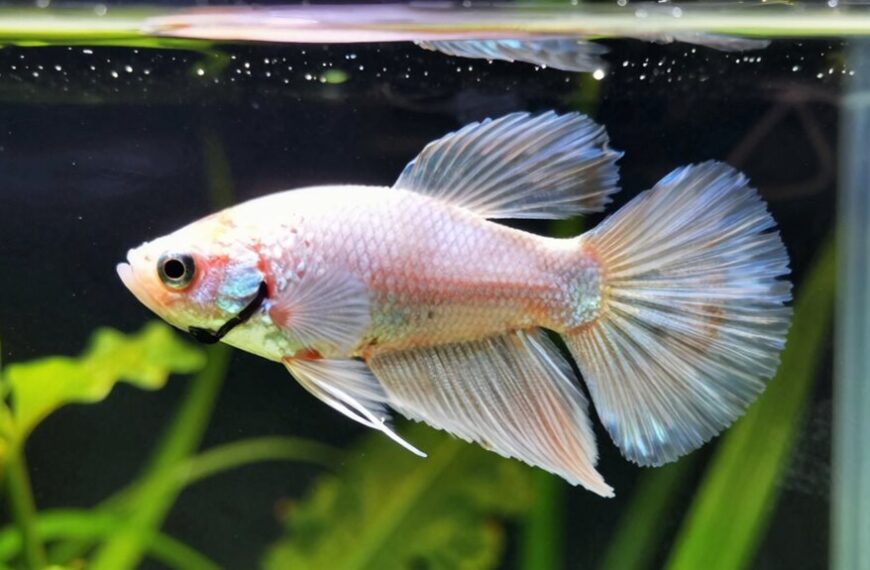
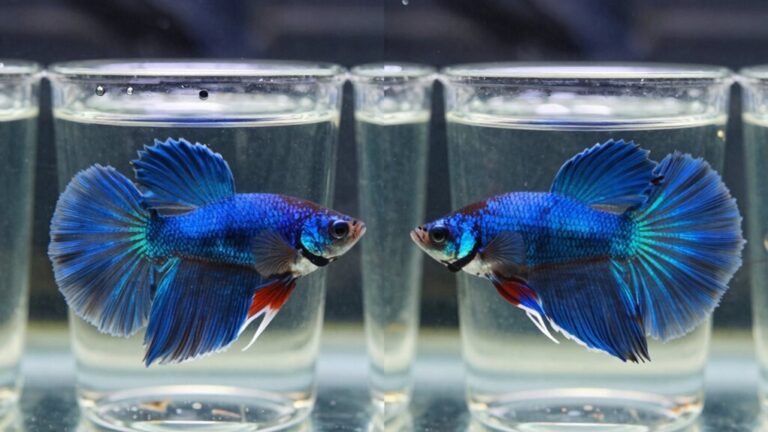
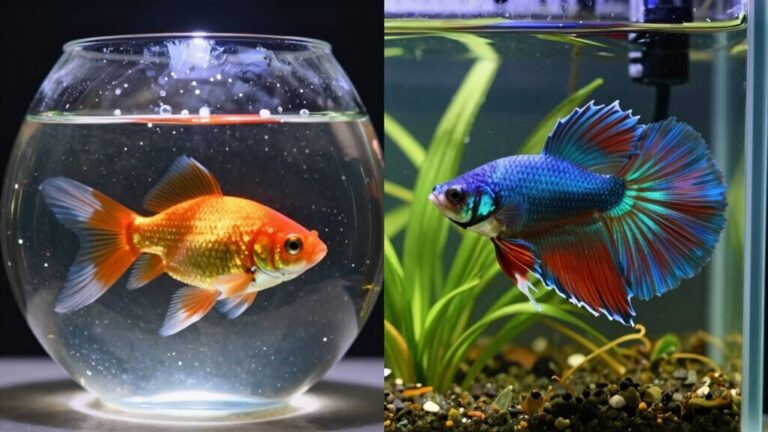
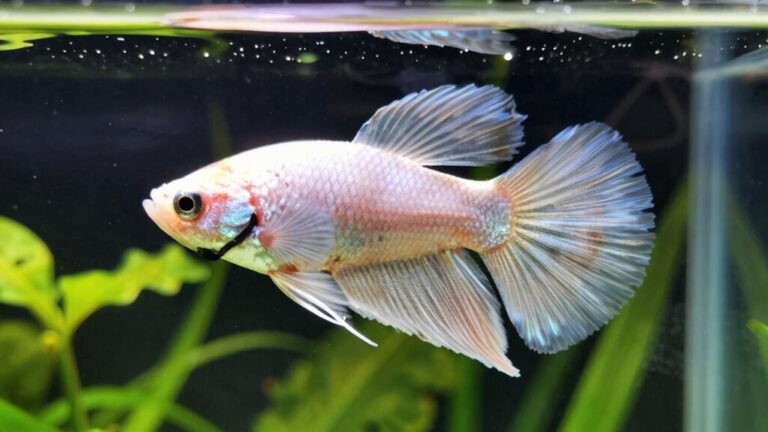
You’ve probably seen them in pet stores: tiny, round containers marketed as “perfect homes” for bettas. Don’t be fooled! These bowls under 5 liters quickly accumulate toxins without filtration and force your fish to maneuver disorienting curved walls. Rectangular or square bowls are vastly superior as they provide better navigation space for your betta. Using a proper low-flow filter is essential as bettas naturally prefer still water conditions. Furthermore, bettas are peaceful species that thrive in environments conducive to social interactions, emphasizing the need for appropriate tank setups.
What’s worse, pet stores often present bettas as low-maintenance “living decorations” rather than tropical fish with specific needs.
The truth? Your betta deserves at least 5 gallons of rectangular space where they can swim naturally, maintain stable water parameters, and thrive in properly heated water (78-82°F).
The bowl myth isn’t just misinformation—it’s a form of neglect that denies these beautiful creatures their basic needs.
How Pet Store Profit Models Perpetuate Fish Suffering
Behind the colorful displays and cheerful storefronts of pet retailers lies a troubling reality that most fish enthusiasts don’t see. The entire business model is built on volume and turnover, not fish welfare.
You’ve probably noticed those tiny betta bowls stacked high near the register—that’s no accident. Stores prioritize fast-selling, visually striking species and promote “starter kits” that rarely meet actual needs. Furthermore, these kits often do not include essential resources for maintaining optimal water quality, which is crucial for fish health.
When you’re getting advice from staff, they’re often trained more on sales tactics than proper fish care. Staff incentives are deliberately aligned with recurring revenue to push consumable products rather than educating customers on proper fish care. This problem is particularly evident in the Asia-Pacific region, where less than 12% of workers have formal qualifications in feed technology or aquatic nutrition.
Even before fish reach the store, they’ve endured overcrowded shipping conditions that compromise their health. Regular maintenance and care, however, are critical as they create an environment for fish to thrive.
The harsh truth? Those impulse purchases of “easy” fish are designed to maximize profits while minimizing the store’s investment in proper education and care.
The Deadly Impact of Small Tank Syndrome
Despite their attractive appearance on pet store shelves, small tanks harbor a deadly secret that claims countless fish lives each year. Your tiny aquarium’s limited volume can’t buffer the rapid changes that spell disaster for your finned friends.
When your fish produce waste in a small tank, ammonia levels skyrocket within hours instead of days. You’ll notice the warning signs quickly: cloudy water, fish gasping at the surface, or suddenly clamped fins. These aren’t minor inconveniences—they’re distress signals. Without established biological filtration, these symptoms often indicate new tank syndrome, a common killer in freshly set up aquariums. Proper cycling of the tank is crucial to ensure that beneficial bacteria can handle waste effectively and prevent these crises.
The real tragedy? Most small tank problems stem from basic misunderstandings. Your fish aren’t dying because you’re a bad caretaker; they’re struggling because these miniature systems collapse too easily. Relying on small cartridge filters provides low surface area for beneficial bacteria to colonize, further compromising your tank’s stability.
The biological filtration simply can’t keep up with even modest waste loads in such limited space.
Why Water Change Guidelines Cause More Harm Than Good

Those well-meaning water change guidelines you’ve been religiously following might actually be harming your aquarium more than helping it.
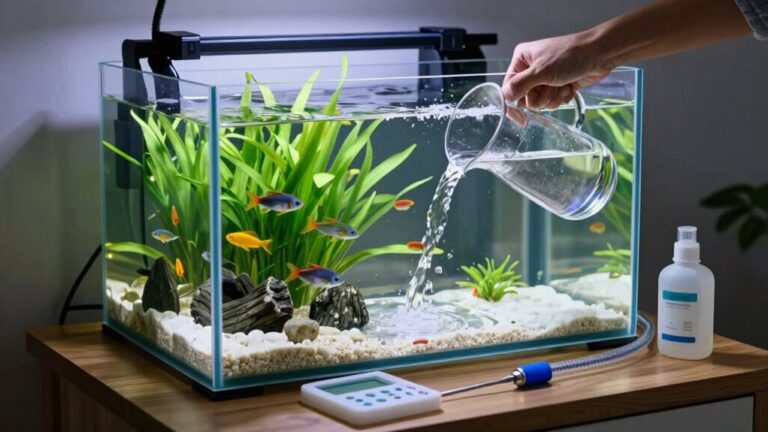
The truth is, the 25% weekly change routine isn’t a one-size-fits-all solution. Instead of blindly changing water, focus on your nitrate levels. If they’re below 50 ppm, you’re likely fine. Most tanks only need a 50% change every 1-3 months, not weekly. Regular cleaning of your filter media can help maintain water quality without excessive water changes. Additionally, routine testing of key parameters like pH and ammonia can prevent unnecessary water changes prompted by inaccurate assumptions.
Have you ever tested your tap water? It might contain more nitrates than your tank, making changes counterproductive!
Temperature and parameter mismatches can stress your fish more than the waste you’re trying to remove. Plus, aggressive substrate cleaning can kill beneficial bacteria colonies.
Don’t fall for myths about mineral replenishment or hormone removal. Test your parameters first, and change water when nitrates approach 80 ppm—not because a calendar tells you to. The industry’s promotion of frequent water changes may be driven by profit motives rather than scientific necessity.
Breaking the Cycle of Beneficial Bacteria Misunderstandings
The beneficial bacteria in your tank aren’t working the way you think they are—and this misunderstanding might be sabotaging your aquarium success.
Those bacterial supplements promising “instant cycling” can’t perform miracles overnight. While they help, they don’t replace the need for bacteria to colonize surfaces in your tank.
Here’s the truth: beneficial bacteria don’t float freely in your water—they cling to your filter media, gravel, and decorations. Proper tank cycling requires establishing colonies of Nitrosomonas and Nitrobacter to process harmful waste products. Making excessively large water changes or cleaning your substrate too thoroughly can disrupt biological balance in your aquarium. Additionally, it’s essential to ensure that your tank’s pH remains stable for these bacteria to thrive, as stable pH levels enhance their effectiveness.
That cloudy water you’re seeing? It’s not your beneficial bacteria; it’s heterotrophic bacteria feeding on waste.
And don’t worry about water changes during cycling—they won’t wash away your helpful microbes.
Overcrowding: From Innocent Ignorance to Willful Neglect
Many fishkeepers start with innocent excitement, adding “just one more” colorful fish to their tank, only to unwittingly create a dangerous environment for their aquatic pets. This seemingly harmless decision triggers a cascade of problems you can’t see at first glance.
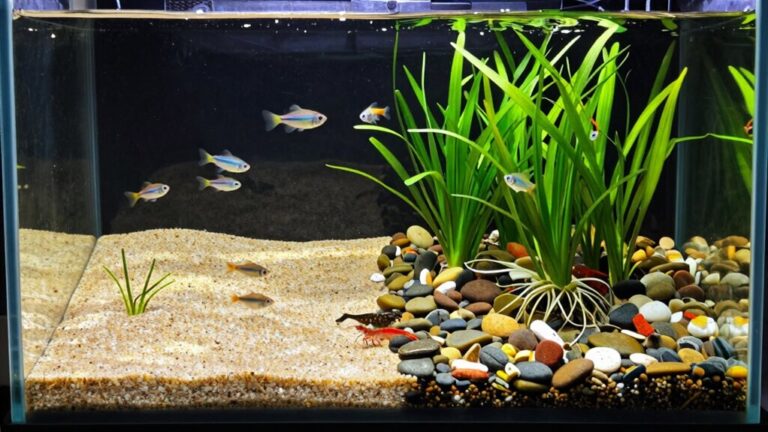
Your overcrowded aquarium becomes a stress factory, with fish showing anxiety through unusual behaviors like bottom dwelling and reduced feeding. They’re literally swimming in their own waste, causing nitrate spikes and oxygen depletion. Think of it as forcing roommates to share a studio apartment with one bathroom!
The consequences aren’t just unpleasant—they’re deadly. Higher aggression, stunted growth, and rampant disease spread become the norm, often marked by behavioral changes that signal distress in your fish.
What started as enthusiasm transforms into neglect when you ignore these warning signs. Remember, your fish can’t tell you they’re suffering, but their environment certainly will.
The Hidden Costs of Filtration Industry Deception

While you browse those enticing filtration products with promises of crystal-clear water and thriving fish, an unseen deception likely unfolds before your eyes.
What’s marketed as cutting-edge technology is often smoke and mirrors designed to empty your wallet rather than clean your tank.
Consider these industry tactics that directly impact your fishkeeping success:
- That “50-gallon” filter you bought probably maxes out at 25 gallons in real-world conditions, leaving your fish gasping in poor water quality.
- The “Made in USA” label on your premium filter disguises imported components hastily assembled stateside.
- Those impressive “certifications” often mean nothing more than internal company testing with no oversight.
You’re not only wasting money on overpriced equipment—you’re potentially compromising your fish’s health based on false promises. Regular monitoring of water parameters is essential for stability, helping to keep ammonia levels at 0.0 ppm and reducing the frequency of water changes by about 50%.
Separating Science From Fiction in Modern Fishkeeping
Despite what manufacturers and influencers might tell you, modern fishkeeping sits at a curious intersection of genuine scientific principles and cleverly marketed fiction.
You’ll find products claiming magical properties, like Eheim’s tourmaline that supposedly generates “electron-activated oxygen” for bacteria—pure nonsense dressed in scientific terminology.
What’s real? The nitrogen cycle is vital, but many filters aren’t the maintenance-free solutions they’re advertised to be. They still need regular cleaning, just like their 1920s predecessors.
While filters have increased possible fish density, they’ve also pushed live plants aside—despite plants being superior at removing both carbon dioxide and nitrates.
The good news? Mother Nature is forgiving. You don’t need every high-tech gadget to succeed, and your weekly water changes will do more for your fish than most miracle products ever could. Additionally, understanding key water parameters is essential to maintaining a healthy aquarium environment.
Frequently Asked Questions
How Do Wild Bettas Survive in Small Puddles Naturally?
Wild bettas don’t actually prefer puddles; they survive temporarily in vegetated pockets during dry seasons. These natural puddles have constant refreshment from rain, vegetation filtering waste, and provide predator protection unlike aquarium bowls.
Can Fish Recognize Their Owners or Display Affection?
Yes, fish can recognize you as their owner. Research shows they distinguish familiar faces with remarkable accuracy, and they’ll often display excitement through behaviors like swimming to the front when you approach.
Do Fish Feel Pain When Kept in Improper Conditions?
Yes, fish do feel pain in improper conditions. Your fish experience distress when exposed to poor water quality, overcrowding, or temperature extremes. Their neurological systems process pain similarly to other vertebrates.
What Testing Equipment Is Actually Essential for Beginners?
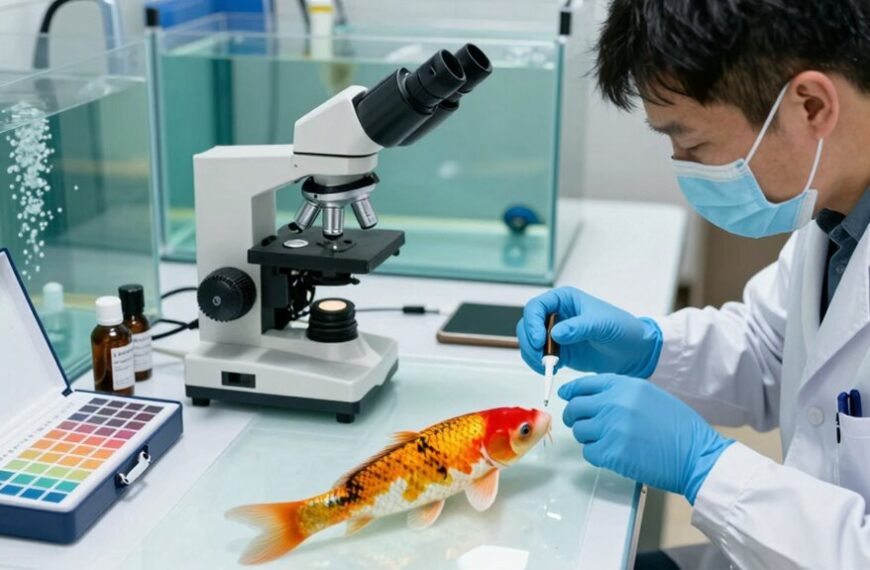
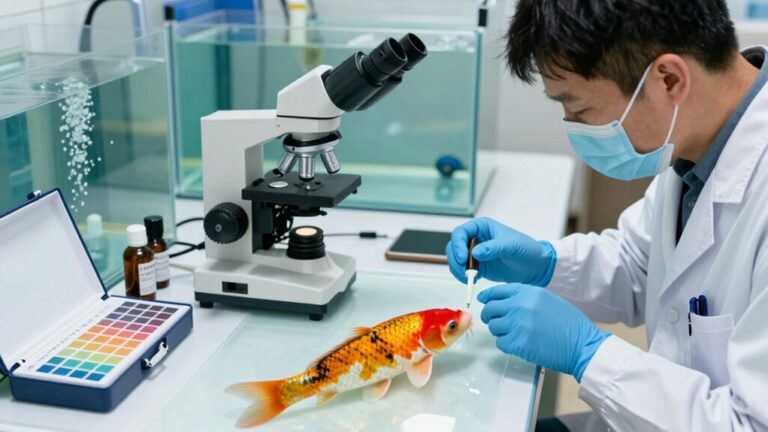
You’ll need a test kit that measures ammonia, nitrite, nitrate, and pH as fundamentals. API’s Freshwater Master Kit is ideal. Don’t skip on a reliable digital thermometer—it’s vital for maintaining stability.
How Do Professional Aquarists Maintain Perfect Water Conditions?
Professional aquarists maintain perfect water conditions by implementing rigorous testing schedules, performing consistent water changes, using high-quality filtration equipment, precisely dosing chemicals, and keeping detailed logs to track parameters and identify trends over time.
Final Thoughts
You’re not only keeping fish – you’re caring for living creatures that depend on you. Don’t let pet store myths or outdated practices compromise their welfare. When you know better, you do better. Take time to research proper tank sizes, filtration, and water chemistry. Your underwater friends deserve the same thoughtful care as any pet. Remember, the line between ignorance and neglect disappears once you’ve been informed.