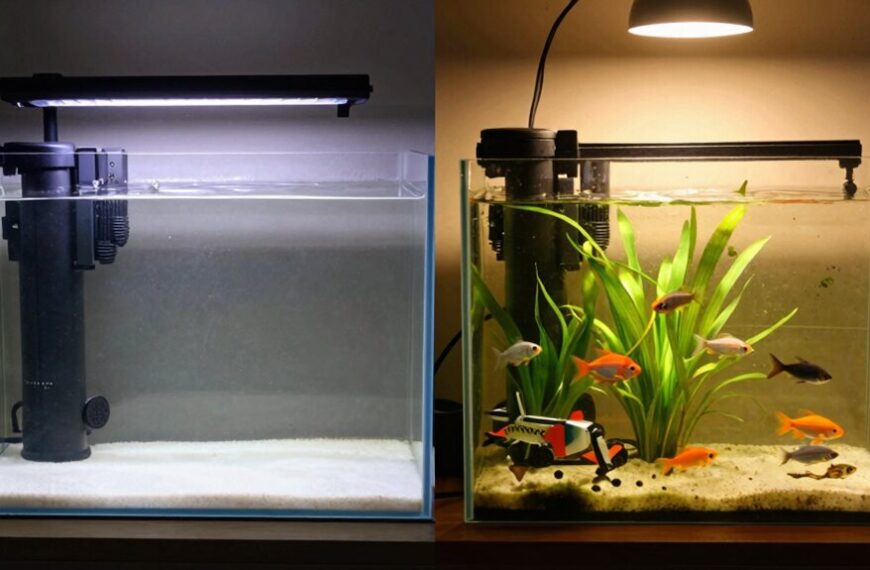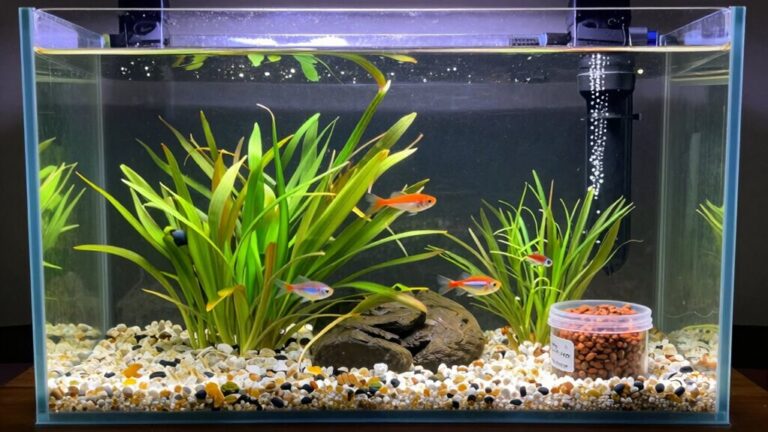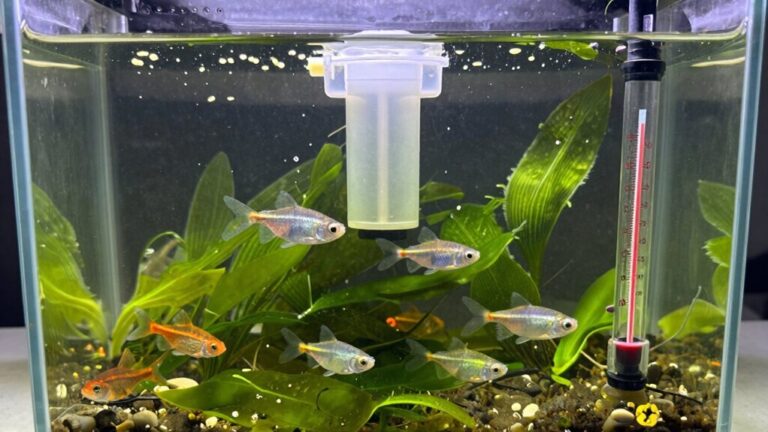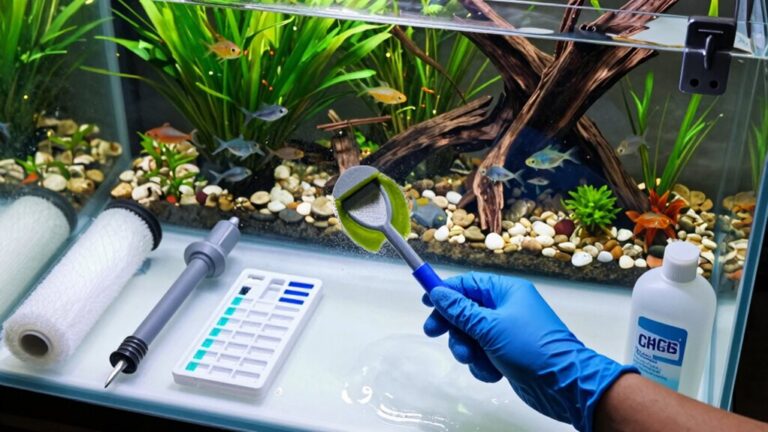

While small tanks are budget-friendly, they’re less forgiving of beginner mistakes. Larger tanks (40-60 gallons) provide better water stability, diluting the impact of overfeeding or missed water changes. You’ll actually spend less time maintaining a bigger tank, with less frequent water testing and parameter fluctuations. Though the initial investment is higher, you’ll save money long-term by avoiding upgrades and fish loss. The extra gallons buy you valuable learning time as you develop your aquarium skills.
Understanding the Stability Factor in Tank Size Selection

When deciding on your first aquarium setup, water volume stability mightn’t be the first thing on your mind, but it’s actually one of the most critical factors for success.
Larger tanks forgive your beginner mistakes, while smaller ones punish them quickly.
Those cute 5-gallon nano tanks at the pet store? They’re actually chemistry nightmares! One pinch too much food, and your ammonia levels skyrocket overnight. Additionally, maintaining stable water parameters can be more challenging in smaller tanks due to their limited volume.
Meanwhile, a 40+ gallon tank dilutes these mistakes, giving you time to correct course before disaster strikes. Smaller tanks may be more manageable in terms of area to clean, but this advantage is often outweighed by their chemical instability.
Think of it like cooking: small pots boil over fast, while large stockpots maintain temperature when ingredients are added.
The sweet spot for beginners is 40-60 gallons—enough stability without breaking the bank.
Mid-sized tanks offer a balanced combination of ecological stability while still fitting standard equipment that won’t require special purchases.
Beyond 120 gallons, you’ll see diminishing returns on stability for your investment.
How Tank Size Impacts Your Weekly Maintenance Schedule
While your small tank might seem easier to manage at first, you’ll find yourself testing water parameters weekly compared to bi-weekly or monthly checks for larger setups.
Your weekend warrior maintenance sessions will look drastically different too—nano tanks demand frequent, small interventions that add up quickly over time. Tank Size influences maintenance frequency, with larger aquariums requiring less frequent water changes and cleaning. Regular water changes are vital for maintaining optimal water quality, as they directly impact the health of your fish. Freshwater tanks generally need maintenance every two weeks, while saltwater systems require more frequent attention.
Larger tanks actually give you breathing room between major maintenance tasks, making your Saturday morning fish-keeping routine less of a commitment than you might expect.
Testing Schedule Differences
Although beginners often gravitate toward smaller tanks for their affordability, the size of your aquarium dramatically affects how often you’ll need to roll up your sleeves for testing and maintenance.
Your nano tank might look cute on your desk, but it’s a high-maintenance friend that demands weekly water parameter checks. Those 10-gallon setups can swing from perfect to problematic overnight! You’ll find yourself testing pH, ammonia, and nitrates twice weekly in smaller tanks. Setting a consistent maintenance schedule for nano reef tanks is crucial for preventing sudden parameter shifts and keeping inhabitants healthy. To avoid toxic buildup, it’s essential to monitor key water parameters regularly.
Larger aquariums offer more forgiveness. With a 50-gallon tank, you can typically reduce testing to once weekly or even bi-weekly once established. Regular monitoring with water quality testing kits is vital, as fish showing signs of distress may indicate underlying water chemistry issues. The greater water volume acts as a buffer against sudden changes, giving you breathing room between water changes while maintaining a healthy environment for your finned friends.
Weekend Warrior Workload
Despite what you might initially think, the size of your tank directly determines how much of your precious weekend you’ll spend with your sleeves rolled up and hands in water.
Larger tanks actually require less frequent maintenance, with 10-25% water changes needed only every 1-2 weeks, while smaller tanks demand weekly attention.
Your tank size affects your weekend schedule in three key ways:
- Smaller tanks (under 10 gallons) concentrate waste quickly, turning your “quick water change” into a weekly necessity. Weekly water changes can significantly reduce the stress on fish in smaller tanks.
- Larger tanks disperse waste across greater volumes, buying you free weekends between maintenance sessions.
- Nano tanks might seem convenient but will claim more of your Saturdays with constant parameter monitoring.
The irony? That tiny starter tank often becomes more work than a bigger system would have been! Using a quality water test kit regularly helps determine the exact cleaning schedule your specific tank needs, regardless of size.
The Margin for Error: Why Size Matters for Novice Aquarists
When you’re new to fishkeeping, you’ll inevitably make mistakes like overfeeding or skipping water tests, but larger tanks give you room to recover from these blunders.
Your forgotten water change might crash a 5-gallon tank within days, while a 40-gallon setup might barely register the change in water parameters. Furthermore, maintaining optimal pH levels is easier in larger volumes, reducing stress on fish as novice aquarists learn to manage their tanks.
This forgiving nature of bigger volumes means the difference between panicking over dying fish and having time to correct your course, making larger tanks surprisingly easier for beginners despite their intimidating size. Water quality stability increases naturally with larger tank sizes, providing an additional safety buffer that new aquarists will appreciate as they learn the ropes. Following the one-inch-per-gallon rule becomes more practical in larger aquariums, allowing for proper fish stocking without overcrowding issues.
Beginner Mistakes Buffered
Since every new aquarist makes mistakes, the size of your tank determines whether those errors become learning experiences or heartbreaking disasters.
Larger tanks provide an essential buffer against common beginner blunders that would devastate smaller setups.
When you’re starting out, these forgiving aspects of bigger tanks make all the difference:
- Overfeeding in a 60-gallon can be fixed with a small water change, while the same mistake in a 10-gallon often leads to deadly ammonia spikes.
- Adding saltwater instead of freshwater during top-offs doubles salinity quickly in nano tanks but causes minimal stress in larger volumes.
- Equipment failures or power outages give you precious extra minutes to intervene before catastrophe strikes in bigger systems.
- The establishment of beneficial bacteria in a larger tank can help stabilize the ecosystem, creating a healthier environment for your fish.
The minimum recommendation of 29 gallons provides beginners with better stability and more reasonable maintenance requirements than smaller nano tanks.
You’ll make mistakes—everyone does—but in a larger tank, they’re rarely fatal.
Forgiving Volume Advantage
Three critical words define the advantage of larger tanks for beginners: dilution, stability, and forgiveness. When you’re just starting out, these factors become your safety net.
A 75-litre tank gives you breathing room that smaller setups simply can’t match. That extra water volume dilutes waste products, preventing those dreaded ammonia spikes that can wipe out your fish overnight.
You’ll notice 55-gallon tanks provide even more protection against common mistakes like overfeeding. Larger tanks also maintain stable parameters longer, giving you time to correct errors before they become disasters. In a 20-gallon tank, that forgotten fish food might trigger a crisis, but in a 140-litre setup, you’ve got hours, not minutes, to address the issue.
For novices, this forgiveness factor isn’t just convenient—it’s crucial for success. Regular water changes can also support fish health, ensuring that harmful contaminants do not accumulate over time in your larger tank.
Balancing Initial Investment vs. Long-Term Value
Although the temptation of a budget-friendly $50 nano tank might seem irresistible to your wallet, this initial saving often transforms into a costly lesson for beginners.
You’ll likely find yourself caught in an upgrade cycle, spending $200-500 within months as you battle constant water issues and fish losses.
Meanwhile, starting with a 40+ gallon tank offers surprising long-term value despite the steeper upfront cost.
Consider these benefits:
- Stable water parameters reduce maintenance time and replacement costs
- Higher fish survival rates mean fewer trips to the pet store
- One-time equipment purchases eliminate the need for multiple upgrades
Additionally, larger tanks support beneficial bacteria that efficiently break down waste, enhancing the overall health of your aquarium.
The sweet spot? A 40-gallon setup gives you the stability benefits of larger tanks without breaking the bank.
It’s like buying quality shoes—pay once, enjoy comfort longer!
Choosing the Right Tank for Your Dream Fish Collection
Before selecting your first aquarium, you’ll need to contemplate which fish species will eventually call it home. Your finned friends’ needs should drive your tank size decision!
For that gorgeous betta you’ve been eyeing, a 10-gallon tank works, though it’ll require vigilant daily testing.
Planning on colorful schooling tetras? Jump to a 20-gallon long for proper horizontal swimming space.
If angelfish or goldfish are your dream, nothing smaller than a 29-gallon will do.
The 40-gallon breeder is what aquarium enthusiasts call the “sweet spot” – wide enough for territories, stable enough to forgive beginner mistakes, and perfect for those who don’t want to upgrade later. Additionally, larger tanks provide more stable environments, making them an excellent choice for beginners navigating the intricacies of aquarium care.
Space Requirements and Home Integration Considerations

While you’re dreaming of colorful fish, you’ll need to face a practical reality: your tank must physically fit into your living space.
Small tanks (under 10 gallons) might seem perfect for tight quarters, but they’re actually more demanding with frequent water changes and parameter monitoring. Medium-sized tanks (20-40 gallons) offer the sweet spot between footprint and stability.
Before selecting your aquatic home, consider:
- Location stability – avoid direct sunlight, heating vents, and high-traffic vibration areas
- Measurement matters – horizontal length benefits active swimmers, while floor area helps bottom-dwellers
- Long-term integration – a 20-gallon tank provides beginner-friendly stability without dominating your room. Additionally, larger tanks typically enable better water chemistry management, making it easier for beginners to maintain a healthier environment for their fish.
The Psychology of Success: Setting Up New Hobbyists to Thrive
Once you’ve decided to take the plunge into fishkeeping, your mindset becomes just as important as your equipment. You don’t need to master everything before starting—there’s no single “right way” to succeed in this hobby.
Whether you choose a small tank or larger setup, your willingness to engage regularly with maintenance and observation will determine your success. The most thriving aquarists combine patience with active participation in all aspects of their systems.
Join online forums or local clubs to tap into the community’s knowledge. You’ll find that successful hobbyists focus on science-based practices rather than anecdotal advice.
Equipment Scaling: How Technology Changes With Tank Dimensions
The three most critical aspects of aquarium equipment—filtration, heating, and lighting—transform dramatically as you move between tank sizes. Your 10-gallon starter tank might work with a simple hang-on-back filter, while a 75-gallon system demands canister filtration that costs three times as much. Heater wattage requirements jump considerably too, from 50 watts for a nano tank to 300+ watts for larger setups.
Consider these equipment scaling realities:
- Small tanks (under 30 gallons) need less equipment but offer less margin for error when equipment fails.
- Medium tanks (30-75 gallons) hit the sweet spot of reasonable maintenance with adequate stability.
- Large tanks require substantial investment but reward you with parameter stability that forgives occasional maintenance lapses.
You’ll find that as dimensions increase, both your equipment budget and maintenance time scale accordingly!
Frequently Asked Questions
How Does Tank Size Affect Electricity Bills?
Larger tanks cost more in total electricity but are more efficient per gallon. You’ll pay less per gallon with a 100-gallon tank than a 50-gallon, with heating representing the biggest expense in your bill.
Can I Upgrade My Tank Without Losing Beneficial Bacteria?
Yes, you can upgrade your tank without losing beneficial bacteria. Transfer your old filter media, substrate, and decorations to the new setup – they contain most of your established colony that will quickly colonize the new tank.
How Do Different Water Types Influence Minimum Tank Size Recommendations?
Saltwater setups need larger tanks (40+ gallons) for parameter stability, while freshwater can start at 5 gallons for single fish. You’ll need more space for saltwater species due to their sensitivity and swimming requirements.
What Lighting Adjustments Are Needed for Deeper Tanks?
You’ll need higher intensity lights (0.8-1 watt/liter) for deeper tanks, as water absorbs light. Increase red spectrum, guarantee even distribution with proper placement, and monitor PAR levels (40-50+) to reach your substrate effectively.
How Does Tank Size Impact Fish Disease Management?
Smaller tanks let you quarantine sick fish easily and dose medications cost-effectively. You’ll need less medication and can monitor health better, though diseases spread faster in confined spaces with less dilution.
Final Thoughts
You’ve now explored both sides of the tank size debate, and while there’s no one-size-fits-all answer, your decision should align with your lifestyle, space, and fishkeeping goals. Whether you choose a smaller, budget-friendly setup or invest in a larger, more forgiving environment, your success depends on commitment to learning and maintenance. Remember, the perfect tank isn’t about gallons—it’s about creating a sustainable home where both you and your fish can thrive.