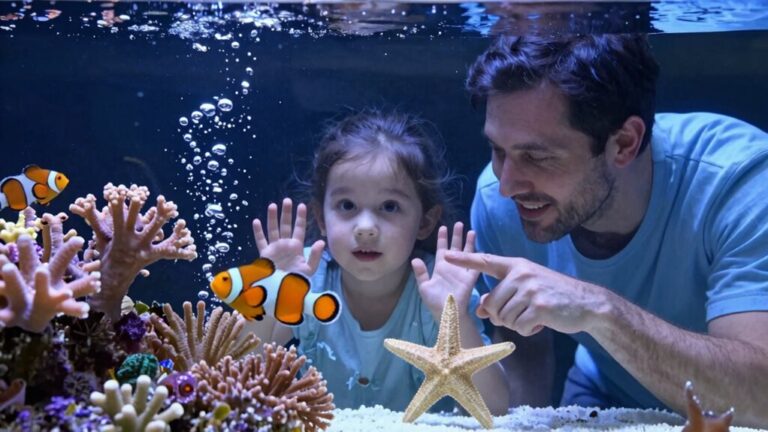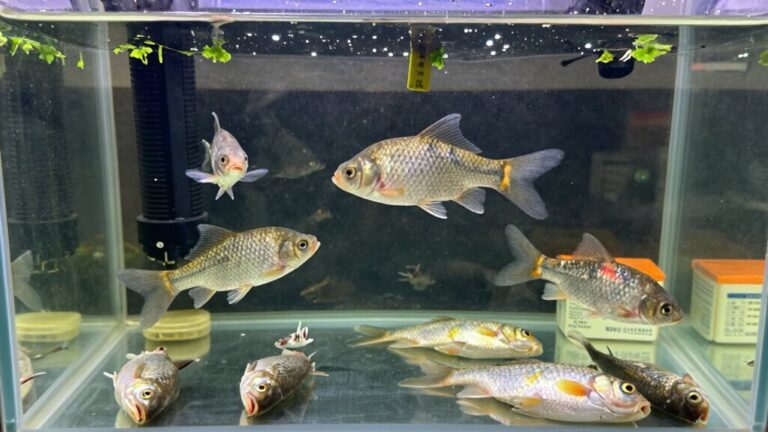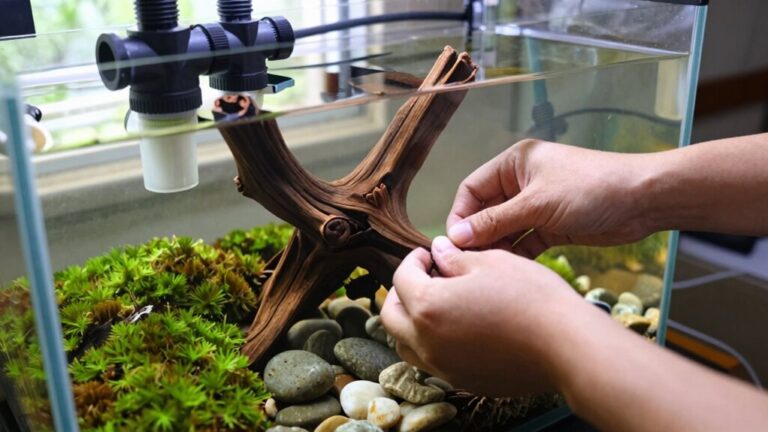

Common first-year fishkeeping pitfalls include rushing the nitrogen cycle, which needs 2-6 weeks to establish beneficial bacteria. You’ll face disappointment with tanks that are too small or poorly filtered, as they’re harder to maintain and prone to toxic ammonia spikes. Overfeeding, skipping quarantine for new fish, and changing too much water at once can devastate your aquatic community. Don’t trust all advice from pet stores—verify through multiple credible sources before making decisions. The path ahead offers invaluable lessons for keeping your underwater friends thriving.
The Nitrogen Cycle Rush: Why Patience Is Your First Virtue

While setting up a new aquarium might tempt you to add fish immediately, rushing the nitrogen cycle is the number one mistake that leads to disappointment and heartbreak for beginners.
Your tank needs time—typically 2 to 6 weeks—to develop the crucial bacterial colonies that convert toxic ammonia into safer compounds. Establishing beneficial nitrifying bacteria is essential for a healthy environment.
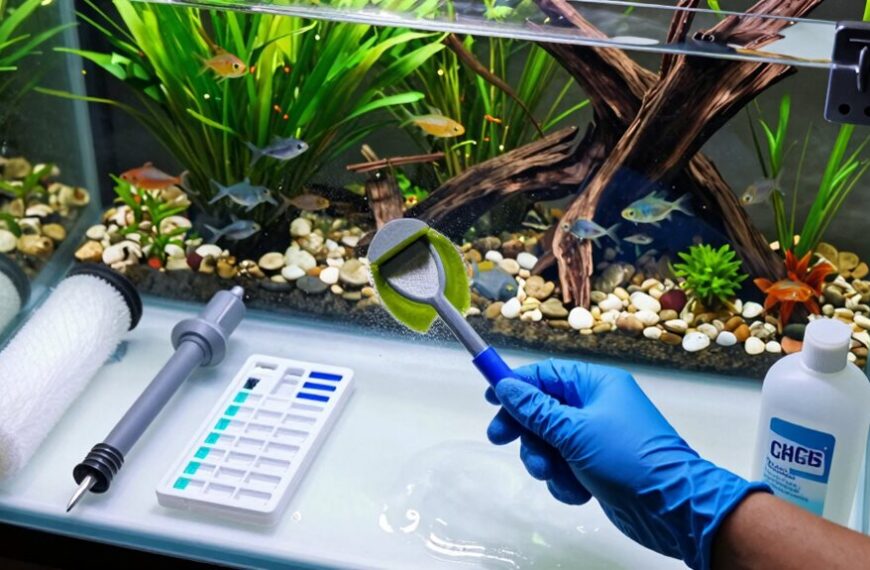
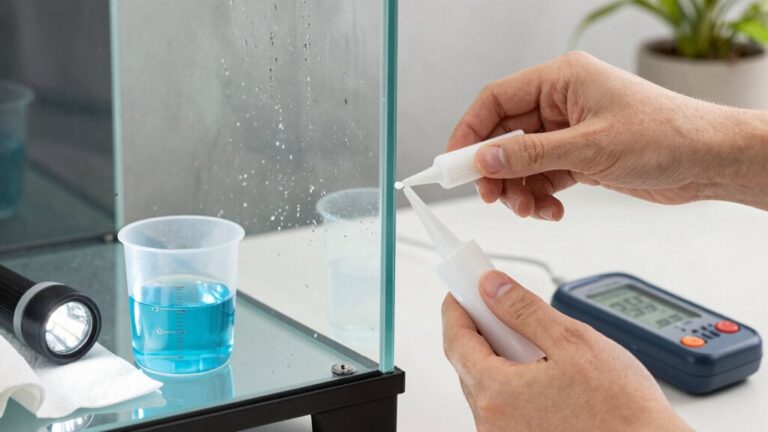
Skipping this process is like moving into a house with no plumbing. Without beneficial Nitrosomonas and Nitrobacter bacteria established in your filter media, waste products quickly reach lethal levels. These bacteria are particularly sensitive to environmental factors and require optimal pH ranges to function efficiently. Fish won’t survive this toxic environment, no matter how beautiful your setup looks. Regular water testing using aquarium water strips will help you monitor when your tank is properly cycled.
Instead, try fishless cycling using food, pure ammonia, or bacterial supplements. Test regularly for 0 ppm ammonia and nitrites before adding any fish.
Tank Size Matters: Selecting the Right Home for Your Fish
Despite what pet stores might tell you, choosing the right tank size isn’t just about what fits on your shelf—it’s about creating a healthy environment where your fish can thrive. Those cute 5-10 gallon setups might look perfect, but they’re actually water parameter nightmares waiting to happen!
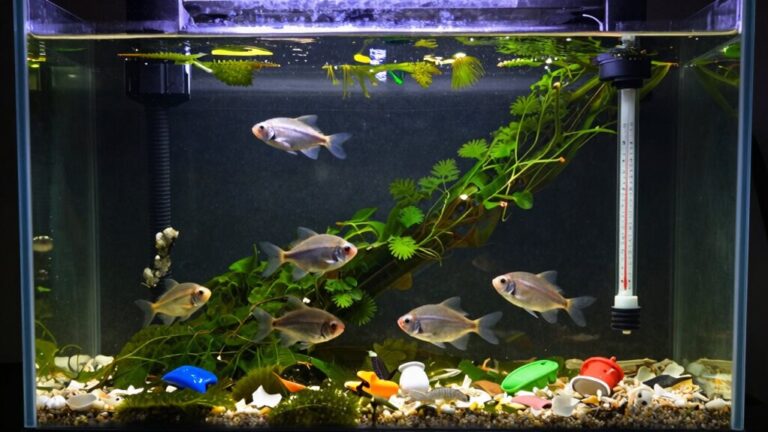
For beginners, aim for 20-50 gallons—this sweet spot offers stability while accommodating small schools of fish. A 29-gallon tank works well for medium-sized species, while a 40-gallon breeder gives you ample space for creative aquascaping. Additionally, larger tanks provide more stable environments that are easier to maintain over time.
Remember, smaller tanks actually demand more maintenance, not less. Our customers consistently report high satisfaction with larger initial tank purchases that allow for proper fish growth and community development.
When setting up, avoid placing your aquarium in direct sunlight or near heating vents. Your fish will thank you for a stable location free from noise and temperature fluctuations.
Follow proper stocking guidelines—about 2.5 liters per inch of tropical fish keeps everyone happy!
A 60-litre aquarium is an excellent starting point as it provides adequate space for most beginner-friendly fish species without being overwhelming to maintain.
Filtration Fundamentals: Beyond Just Clear Water
Although many new aquarists focus on making their water crystal clear, proper filtration goes far deeper than mere aesthetics. Your filter isn’t just a debris catcher—it’s the heart of your tank’s ecosystem, performing three vital functions: mechanical, biological, and chemical filtration.
You’re likely making a significant mistake if you’re overlooking biological filtration. Those invisible bacteria are your tank’s unsung heroes, converting toxic ammonia into safer nitrates. Skip the cycling process, and you’ll be facing a tank of unhappy (or worse, deceased) fish within days. Inadequate filtration can lead to dangerous spikes in ammonia and nitrites, putting your fish at risk for serious health problems. Regular monitoring of water parameters is crucial for maintaining stability in your aquarium.
Don’t fall into the trap of buying undersized filters, either. Your system should turn over your tank’s volume at least three times hourly. Consider utilizing porous media in your biofilter for more efficient bacterial colonization and improved water quality.
And remember, even the best filter needs regular maintenance—just be careful not to scrub away those beneficial bacteria!
Water Change Wisdom: Avoiding Common Replacement Errors

When you think about taking care of your fish tank, water changes might seem like the simplest task—just scoop out old water and pour in new, right?
Actually, this routine maintenance is where many new hobbyists make critical mistakes.
Never change more than 40% of your water at once—you’ll shock your fish with sudden chemistry shifts. Match your replacement water’s temperature and pH to your tank’s conditions, and always test it before adding. Always use a dechlorinating conditioner when adding tap water to make it safe for your aquatic pets. Regular water changes are essential for reducing harmful nitrates that can adversely affect your fish’s health.
During changes, turn off your filter if the water drops below the intake to prevent stirring up trapped debris. Regular maintenance is critical for preventing nutrient imbalances that can stress your livestock.
For saltwater tanks, use only aquarium-specific salt (never table salt!), and mix thoroughly before adding.
Finally, establish a regular testing and changing schedule—weekly or biweekly—to prevent invisible problems from becoming visible disasters.
Feeding Faux Pas: How Less Food Often Means Healthier Fish
You’ll often see better results by adopting a skip-day feeding schedule, giving your fish’s digestive system time to process food completely. Rather than dumping in flakes daily, you’re better off offering smaller, nutrient-rich portions that won’t leave leftovers decomposing in the tank. The ideal approach is feeding only what your fish can consume in 3-5 minutes to prevent waste accumulation. Consistent feeding patterns contribute to improved water quality, which is vital for fish health. When you focus on food quality instead of quantity, you’ll notice fewer water quality issues and healthier, more active fish that display vibrant colors and natural behaviors. Implementing a consistent feeding schedule helps train your fish to recognize regular feeding times, reducing food waste and preventing overfeeding-related health issues.
Skip-Day Schedule Benefits
Despite what many novice fishkeepers believe, implementing a skip-day feeding schedule often results in healthier, happier fish. Your aquatic pets aren’t like dogs or cats—they’re naturally adapted to go without food for several days.
When you skip feeding once or twice a week, you’re actually mimicking their natural eating patterns while giving their digestive systems a much-needed break. This approach aligns with the fact that some fish species are naturally adapted to fasting, allowing them to thrive without constant food intake.
You’ll notice clearer water with fewer harmful ammonia spikes and less algae growth. Those begging fish at the glass? They’re opportunists, not starving!
This approach prevents obesity, reduces waste buildup, and saves you from the heartbreak of fish loss due to poor water quality.
Quality Over Quantity
The single most destructive habit in fishkeeping isn’t buying the wrong equipment or selecting incompatible species—it’s overfeeding.
When you sprinkle those extra flakes “just to be sure,” you’re actually harming your aquatic friends, not helping them.
Here’s the truth: fish need surprisingly little food. Feed only what they’ll consume in 2-3 minutes, and don’t panic about skipping days. Your fish won’t starve, but leftover food will pollute your tank faster than anything else.
Match food types to feeding zones—flakes for surface feeders, sinking pellets for bottom dwellers.
Consider temperature too; cold water means slower metabolism and less food needed.
When in doubt, remember this golden rule: it’s always better to underfeed than overfeed, especially in new tanks. Overfeeding can lead to water quality issues, which can stress your fish and lead to serious health problems.
Quarantine Protocols: Protecting Your Aquatic Community
Introducing new fish to your aquarium without proper quarantine is like inviting a stranger with the flu to your family gathering—someone’s bound to get sick.
A proper quarantine setup isn’t complicated, but it’s non-negotiable for responsible fishkeeping.
Set up a separate tank with a cycled filter, sponge filters, and minimal decor. Keep it in a quiet location, covered with blankets to reduce stress.
During the first few days, observe your new arrivals without medication, watching for clamped fins or unusual behavior.
If all looks well, follow a structured treatment protocol—typically 2-4 weeks for prevention, extending to 6 weeks if problems arise. Additionally, maintaining optimal water conditions is essential for keeping new fish healthy during this period.
Test Kit Truths: The Numbers That Keep Fish Alive
Here’s what every new fishkeeper should know:
- Timing matters – Reading results too early or late can dramatically change outcomes. Salifert nitrate tests show 20 PPM at 6 minutes but 40 PPM at 15 minutes!
- Technique affects accuracy – Level spoon fills and proper mixing aren’t suggestions, they’re requirements.
- Not all kits are created equal – Aquaforest consistently outperforms for calcium and alkalinity testing.
- Strips vs. liquid – While convenient, test strips spoil easily and often lack the precision of liquid kits for critical parameters.
Additionally, understanding the impact of ammonia spikes on fish health can prevent losses when results fluctuate.
Don’t let faulty testing turn your dream tank into an underwater nightmare!
Stocking Strategy: The Art of Adding Fish Gradually

Many excited fishkeepers rush to fill their new aquarium with every colorful species that catches their eye, not realizing they’ve just set the stage for an underwater disaster.
Your filter needs time to develop beneficial bacteria that process fish waste, and this happens gradually—not overnight.
Instead of adding all your fish at once, introduce them in small batches every few weeks.
Monitor ammonia and nitrite levels after each addition; if they spike, you’ve added too many too soon.
Keep nitrates below 40 ppm as your benchmark for when it’s safe to add more.
Plan your community by swimming zones—top, middle, and bottom dwellers—to reduce territorial conflicts.
Additionally, remember that the cycling duration typically spans from 4 to 6 weeks to establish a stable environment for your fish.
And don’t forget to quarantine newcomers for at least two weeks to prevent disease outbreaks in your main tank.
Once you’ve decided to start your first aquarium, you’ll quickly discover a bewildering ocean of contradictory fishkeeping advice.
This conflicting guidance isn’t merely frustrating—it’s a leading reason why up to 65% of beginners quit after their fish die within the first few weeks.
To avoid becoming another fishkeeping dropout, focus on these research priorities:
- Learn about the nitrogen cycle and “new tank syndrome” before buying any fish.
- Verify information through multiple credible sources, not solely chain pet stores.
- Join reputable forums where experienced keepers can validate your setup plans.
- Approach social media advice cautiously, as algorithms often promote controversy over accuracy.
Frequently Asked Questions
How Do I Tell if My Fish Are Actually Sick or Just Acting Odd?
Check for physical symptoms like white spots, ragged fins, or lesions. True sickness persists for days, includes lethargy with appetite loss, and often combines multiple symptoms rather than isolated odd behaviors.
Will Adding Live Plants Help Stabilize My New Tank?
Live plants will stabilize your new tank by accelerating beneficial bacteria growth, absorbing excess nutrients, preventing ammonia spikes, and producing oxygen. They’ll create a more balanced ecosystem from day one of your aquarium adventure.
How Often Should I Clean Tank Decorations and Substrate?
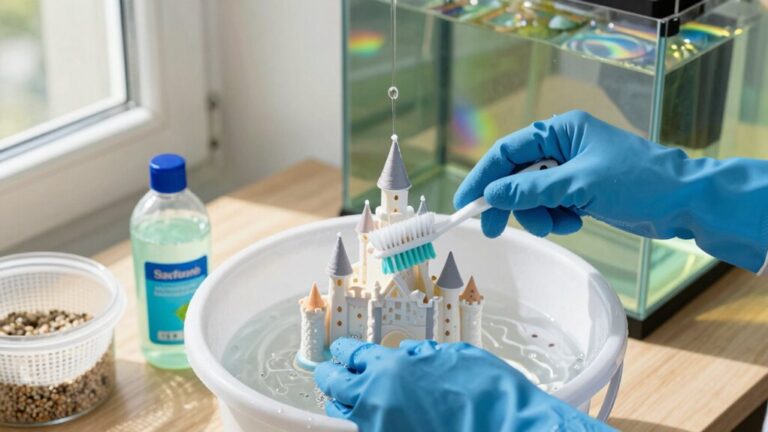
You should clean decorations monthly or when algae appears, and vacuum 25-50% of substrate weekly during water changes. For heavily stocked tanks, increase cleaning frequency and replace decorations that show damage or persistent algae.
Can I Mix Different Species From Similar Geographical Regions?
While you can mix species from similar regions, it’s tricky. You’ll need to match fish with compatible behaviors, feeding habits, and water parameter needs. Even similar-region species can compete aggressively for resources.
What Are the Warning Signs of Imminent Filter Failure?
Watch for reduced water flow, unusual noise levels, leaking components, or complete stoppage. You’ll notice clogged media, impeller obstruction, strange sounds, water under the filter, or a silent motor that won’t restart.
Final Thoughts
You’ve now got a roadmap to avoid the most common first-year fishkeeping mistakes. Remember, this hobby rewards patience and research above all else. You’ll face challenges, but they’re part of the adventure that transforms beginners into experienced aquarists. Trust your test kits, not your eyes, and don’t rush any process. With these pitfalls in mind, you’re already ahead of where most of us started. Happy fishkeeping!