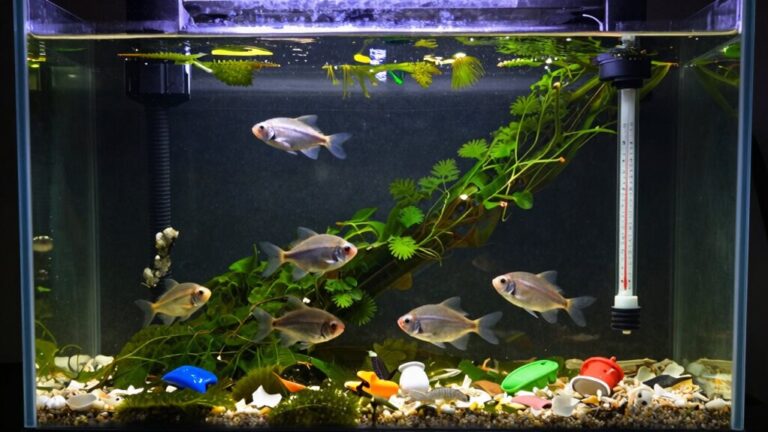

Successful aquarium maintenance starts with proper setup: choose at least a 10-gallon tank, place it on a sturdy surface away from direct sunlight, and invest in crucial equipment like filters and heaters. You’ll need to monitor water parameters weekly, perform regular water changes, and clean your filter on a consistent schedule. Don’t forget to feed your fish appropriately—small, frequent meals work best. The right maintenance routine transforms your aquarium from a simple fish tank into a thriving underwater world.
Setting Up Your First Freshwater Aquarium

When you’re ready to plunge into the wonderful world of fishkeeping, setting up your first aquarium is an exciting adventure that requires thoughtful planning.
Start with at least a 10-gallon tank—though larger is better for maintaining balance and diluting waste.
Place your tank away from direct sunlight and high-traffic areas, and make sure it’s near a water source for those frequent changes.
Remember, your setup will weigh about 10 pounds per gallon, so choose a sturdy surface!
For equipment, you’ll need a tank, sponge filter, heater, lid, and light.
Beginners should budget $50-100 for a complete 10-gallon setup, though the initial setup could cost around $200 or more depending on the accessories you choose.
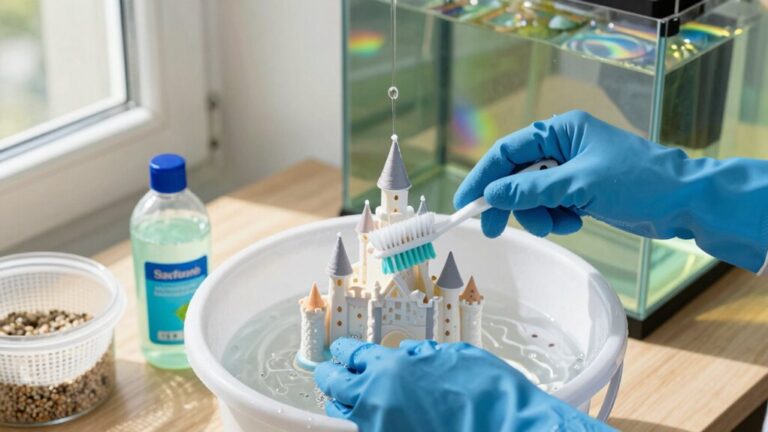
Rinse everything thoroughly, add dechlorinated water, and be patient—cycling takes 2-3 weeks before your first fish can move in.
Adding a quality water conditioner is essential since chlorinated water from municipal sources can quickly harm or kill fish.
Essential Water Parameters and Testing Methods
Five key water parameters form the foundation of a healthy aquarium ecosystem, and mastering them will set you up for success.
pH should range between 6.8-7.4 for most community tanks, with regular water changes preventing dangerous drops. Your aquarium’s hardness metrics—GH (4-8 dGH) and KH (2-6 dKH)—work together to guarantee stability, with KH always staying below GH. Remember that fish from different natural habitats require specific pH levels that may fall outside the typical community tank range. Consistent testing of these parameters is essential to ensure the well-being of your aquatic life.
For nitrogen compounds, remember this golden rule: ammonia and nitrite must always read zero, while nitrates should stay below 5 ppm for peak health. Maintaining proper temperature between 22 to 24°C is crucial for the metabolic health of most tropical fish species.
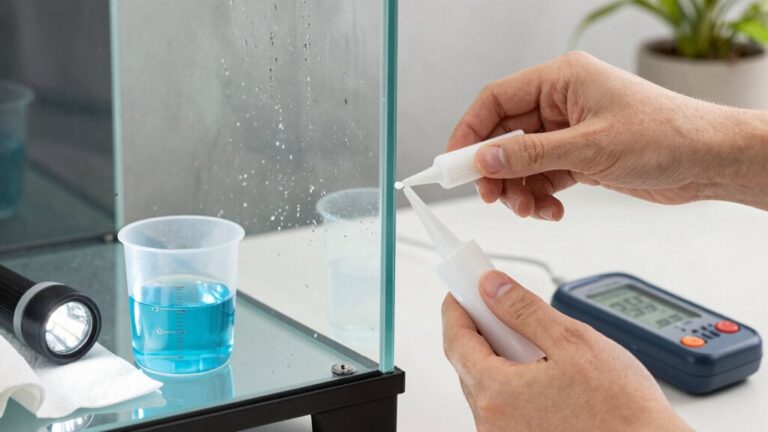
When things get out of balance, your fish will let you know—they’re not exactly subtle about their discomfort! Testing weekly using liquid test kits rather than strips gives you the accuracy you’ll need to maintain these vital parameters.
Weekly and Monthly Maintenance Routines
Establishing consistent maintenance routines will make your aquarium hobby more enjoyable and less stressful over time.
You’ll need to follow weekly tasks like partial water changes, glass cleaning, and equipment checks, while setting aside time monthly for deeper cleaning of filters and substrate. Consistency is crucial in maintaining a healthy reef tank, as it prevents small issues from becoming major problems that can affect your entire ecosystem.
Weekly water changes should remove 10-30% of tank water depending on your readings, with larger changes necessary when detecting ammonia spikes that could stress or harm your fish population.
As seasons change, you’ll also want to adjust your maintenance schedule to account for temperature fluctuations, breeding cycles, and plant growth patterns that naturally occur throughout the year.
Weekly Maintenance Checklist
Regular maintenance stands as the cornerstone of a healthy aquarium ecosystem, saving you countless headaches down the road. Your weekly routine should include testing water parameters (ammonia, nitrite, nitrate, and pH), performing a 10% water change, and vacuuming the gravel to remove debris.
Don’t forget to clean glass panes with an algae magnet and rinse your prefilter sponges to maintain proper flow. For reef tanks, calcium and alkalinity tests are crucial, while all saltwater setups require salinity checks. Wiping the neck of your protein skimmer weekly will ensure optimal skimmate collection and overall filtration efficiency.
Remember to top off evaporated water and inspect your equipment—temperature should stay between 74-80°F. Having evaporation-reducing lids can make this task more predictable and manageable.
Small tanks under 5 gallons need larger water changes (30-50%) weekly, while desktop aquariums require filter pad changes twice weekly. A consistent schedule keeps your underwater friends thriving!
Monthly Deep Cleaning
While weekly maintenance keeps your aquarium operating seamlessly, a monthly deep cleaning guarantees your underwater world stays pristine for the long haul. This more thorough process doesn’t need to be intimidating!
Start by washing your hands and unplugging equipment. Test your water parameters before cleaning the inside glass with an algae scraper—working in sections to preserve beneficial bacteria. Regular water testing ensures optimal water quality and prevents potential issues from arising.
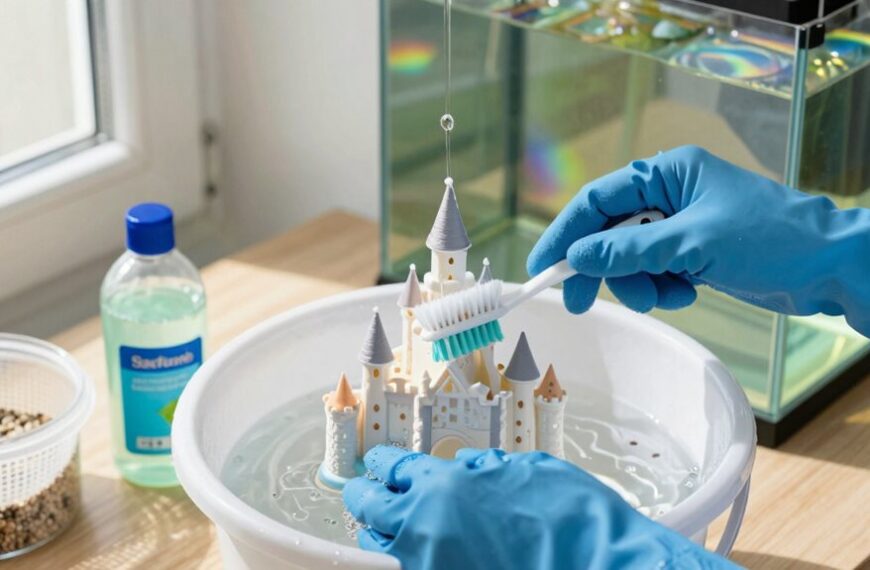
After settling debris, vacuum about one-third of your substrate, removing fish waste and uneaten food. It’s important to incorporate this task into your regular cleaning routine as gravel vacuuming helps maintain a clean and healthy environment for your fish. Use a turkey baster to remove debris from tight spaces between plants and decorations without disturbing the entire substrate.
Don’t clean your filter the same day as your tank cleaning (schedule it two weeks apart). When you do clean it, rinse media in old tank water—never tap water! Your beneficial bacteria will thank you.
Finally, refill with temperature-matched, dechlorinated water and reset all equipment. Your fish will enjoy their refreshed habitat!
Seasonal Care Considerations
Seasons change, and so do your aquarium’s needs throughout the year. During summer months, you’ll need to monitor temperature more closely, as ambient heat can raise tank temperatures unexpectedly.
Consider adjusting your water change schedule—perhaps increasing to weekly 30% changes during warmer months when evaporation rates climb. Regular water changes are essential to promote fish health and reduce harmful nitrates.
In winter, your heater works overtime, so check it regularly and keep backup equipment handy. This is also a perfect time to deep clean your protein skimmer and replace any aging filter media.
Remember, consistency matters more than chasing perfect parameters!
Maintain your testing routine year-round, but pay special attention during seasonal shifts. Your corals and fish will thank you by thriving through temperature changes.
Don’t forget to adjust your lighting duration with the seasons—mimicking nature’s rhythms helps reduce stress on your underwater friends.
Proper Filtration and Equipment Care

Your filter’s health directly impacts your fish’s well-being, so you’ll need to establish a regular maintenance schedule based on your specific filter type.
You’ll extend your equipment’s lifespan by performing routine checks during water changes, rinsing mechanical media in tank water (never tap water!), and gradually replacing biological media. Additionally, incorporating regular filter media maintenance ensures optimal water quality and enhances the overall health of your aquarium ecosystem.
Remember that consistent care prevents costly replacements and emergencies, giving you more time to enjoy your underwater world rather than troubleshooting problems.
Filter Maintenance Schedule
Maintaining a proper filter schedule stands as one of the most crucial aspects of successful aquarium keeping. Your daily routine should include checking filter flow, looking for blockages, and listening for unusual noises that might signal impeller problems.
Weekly, you’ll want to clean pre-filter media in tank water (never tap water!) and inspect intakes for debris. For HOB filters, rinse media every 2-4 weeks, while sponge filters need attention every 2-3 weeks.
Monthly, tackle deeper cleaning of mechanical media, but don’t replace everything at once—you’ll lose those precious beneficial bacteria!
Different filters have specific needs: canister filters typically need cleaning every 1-2 months, while Eheim-style filters can go 4-12 weeks between cleanings if water flow remains strong.
Equipment Longevity Tips
Now that we’ve covered filter maintenance schedules, let’s focus on extending the life of all your aquarium equipment. Proper care not just saves you money but guarantees your underwater friends stay healthy and happy.
Remember to always unplug electrical items before maintenance and use GFCI-protected outlets to prevent those scary electrical shocks!
- Create drip loops in all cords—this simple trick prevents water from traveling down the cord into outlets.
- Limit lighting to 7-10 hours daily using timers to prevent algae blooms and reduce wear on fixtures.
- Never let filter motors run dry, as this is the quickest way to burn them out.
Don’t forget to dedicate specific cleaning tools for your tank use only. Cross-contamination from household cleaners can be deadly to your aquatic pals! Additionally, regular maintenance will ensure you prevent toxic buildup and maintain a healthy environment for your fish.
Feeding Strategies and Stocking Guidelines

Proper feeding strategies represent the cornerstone of a thriving aquarium ecosystem, directly impacting both the health of your fish and the overall water quality in your tank.
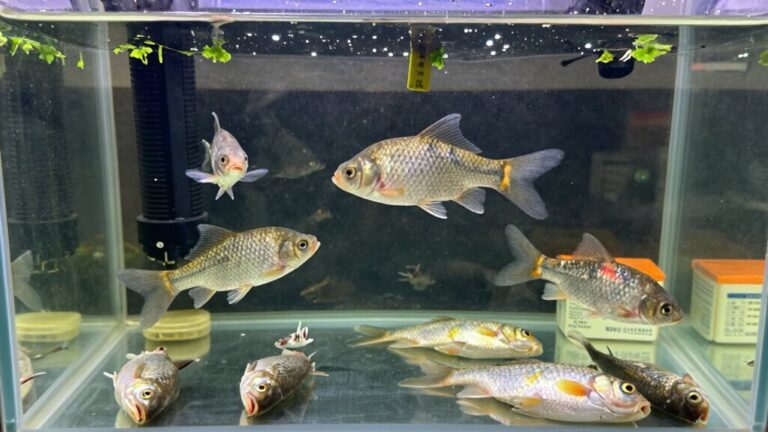
Rather than offering one large meal daily, feed your fish small portions 3-5 times throughout the day—think of it as fishy snacking rather than an all-you-can-eat buffet!
Match your feeding approach to your fish’s natural habits. Herbivores like tangs need regular seaweed offerings (2-3 times weekly), while active swimmers require high-fat foods more frequently.
Remember, variety is key—no fish thrives on a monotonous diet!
When feeding, slow down and observe. You’ll want to guarantee every fish, from bottom-dwellers to surface-skimmers, gets their fair share. Monitoring fish behavior for hunger cues will help you ensure they are fed adequately.
Your attention during these feeding sessions will reward you with healthier, happier fish.
Troubleshooting Common Aquarium Problems
Why do perfect-looking tanks suddenly develop mysterious clouds, green patches, or stressed fish?
Even experienced aquarists face these challenges, but you’ll handle them confidently with the right knowledge.
When problems arise, check these common culprits first:
- Cloudy water usually signals filter issues or bacterial bloom—replace clogged media and reduce feeding to clear things up.
- Algae outbreaks thrive on excess light and nutrients—limit lighting to 6-10 hours daily and conduct regular water changes.
- Fish health concerns often stem from poor water quality—test for ammonia spikes and verify your filter isn’t clogged. Regular maintenance of ammonia and nitrite levels is crucial for ensuring a healthy environment for your fish.
Frequently Asked Questions
How Do I Safely Move an Established Aquarium to a New Location?
You’ll need to transfer fish to temporary containers, save original water, disassemble tank components carefully, secure everything for transport, and gradually reintroduce fish after setting up at the new location.
Can I Use Plants From Local Waterways in My Aquarium?
No, you shouldn’t use local waterway plants. They often carry pests, diseases, and parasites harmful to your aquarium. They may also be invasive species or protected plants that are illegal to collect.
How Do Medications Affect Beneficial Bacteria and Filter Media?
Most medications can harm your beneficial bacteria. Antibiotics and methylene blue pose high risk, while antiprotozoals are gentler. Established filters with thick biofilm resist damage better. Always monitor ammonia/nitrite levels after medicating.
When Should I Replace My Aquarium Substrate Completely?
Replace your substrate completely when it’s causing persistent ammonia/nitrite spikes, breaking down into mud, hosting pest infestations, losing its buffering capacity, or contaminating water chemistry. Partial replacement is often better for established tanks.
What’s the Proper Way to Acclimate Fish From Pet Store Bags?
You’ll need to float the bag 15-30 minutes for temperature matching, then use either the cup method or drip acclimation to adjust water parameters gradually. Never add store bag water to your aquarium.
Final Thoughts
You’ve now got the basics to succeed in the wonderful world of aquarium keeping! Remember, consistency is your best friend when it comes to maintenance. Don’t be discouraged by early challenges—they’re just part of the learning curve. With regular testing, proper equipment care, and attentive feeding, you’ll create a thriving underwater ecosystem that brings joy and tranquility to your home. Happy fish keeping!