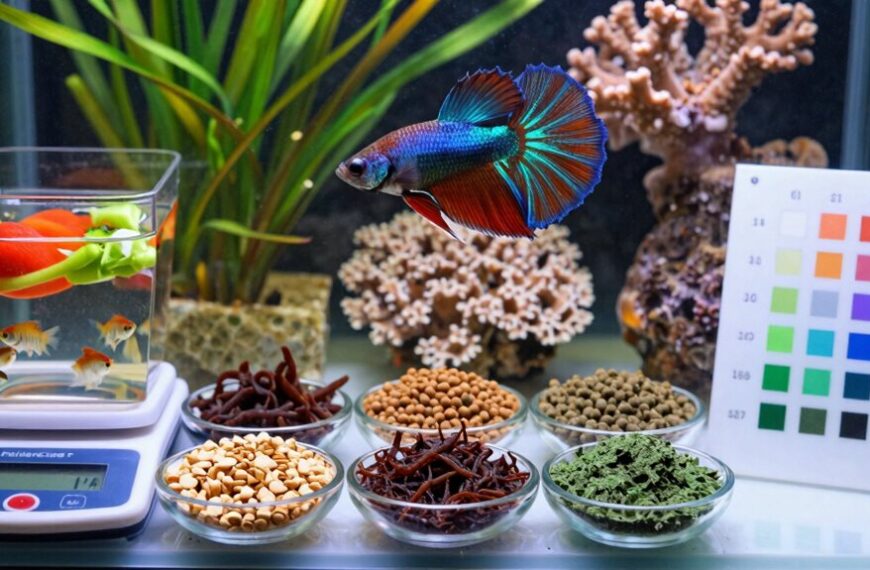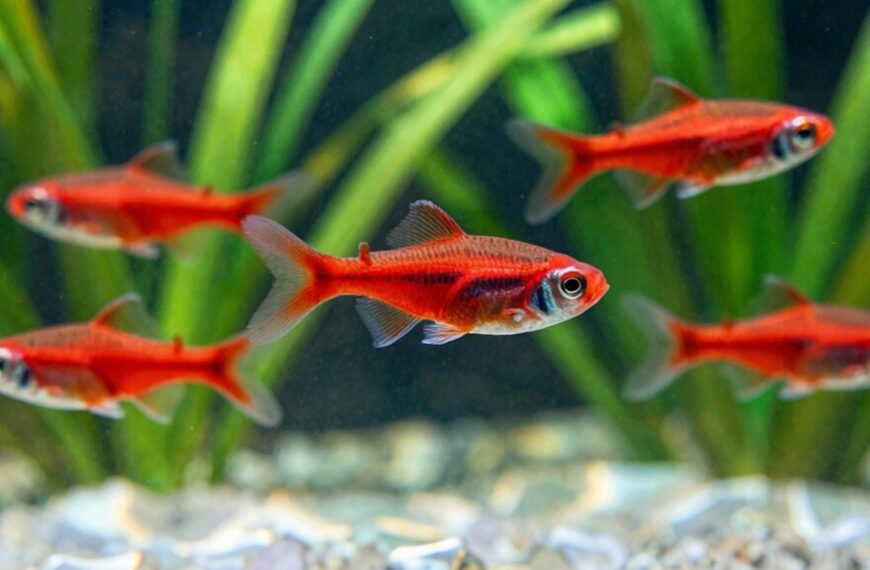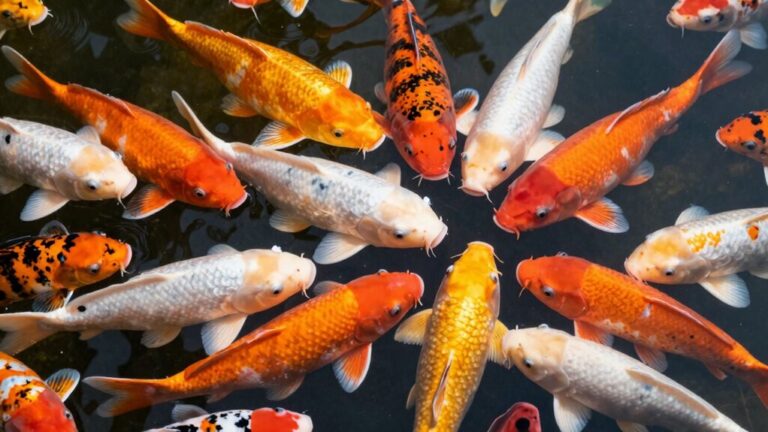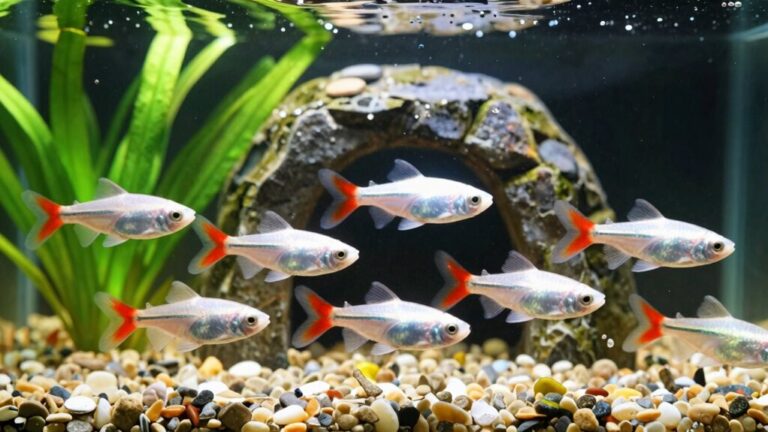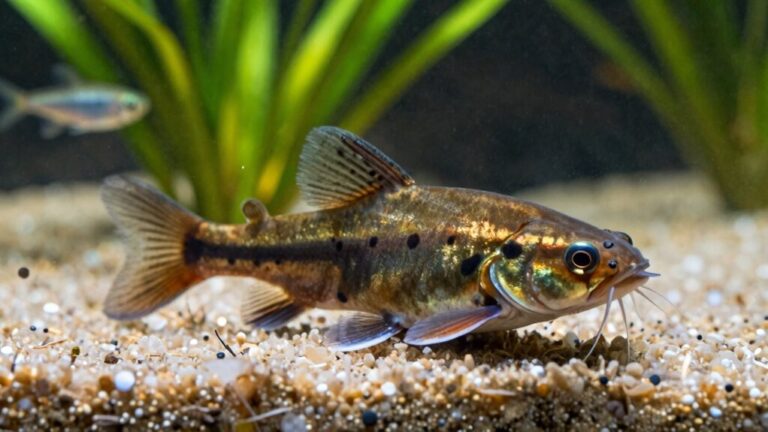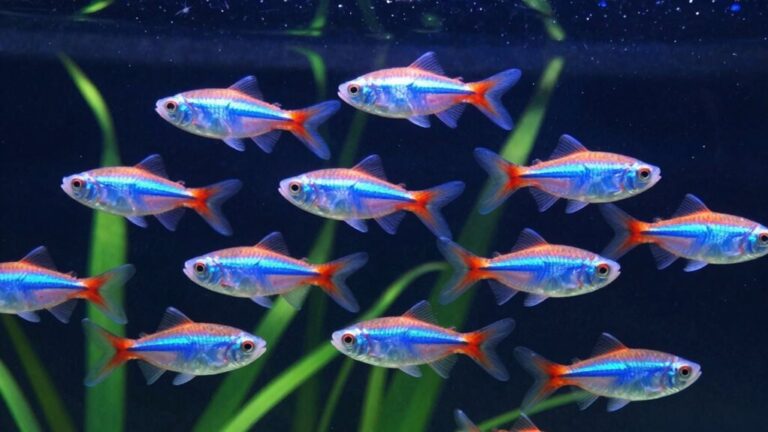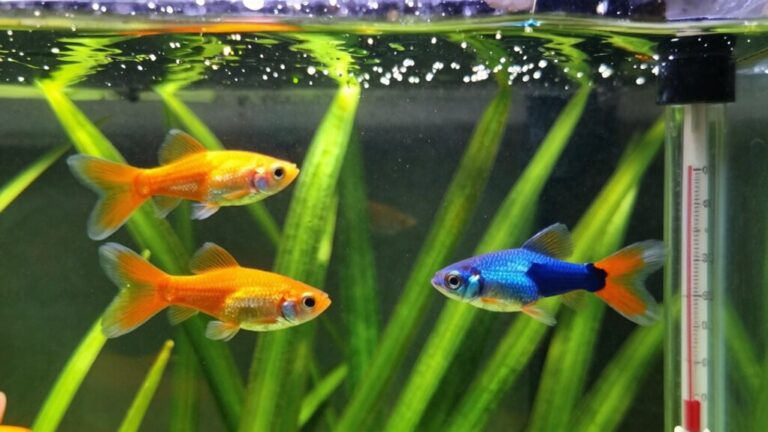
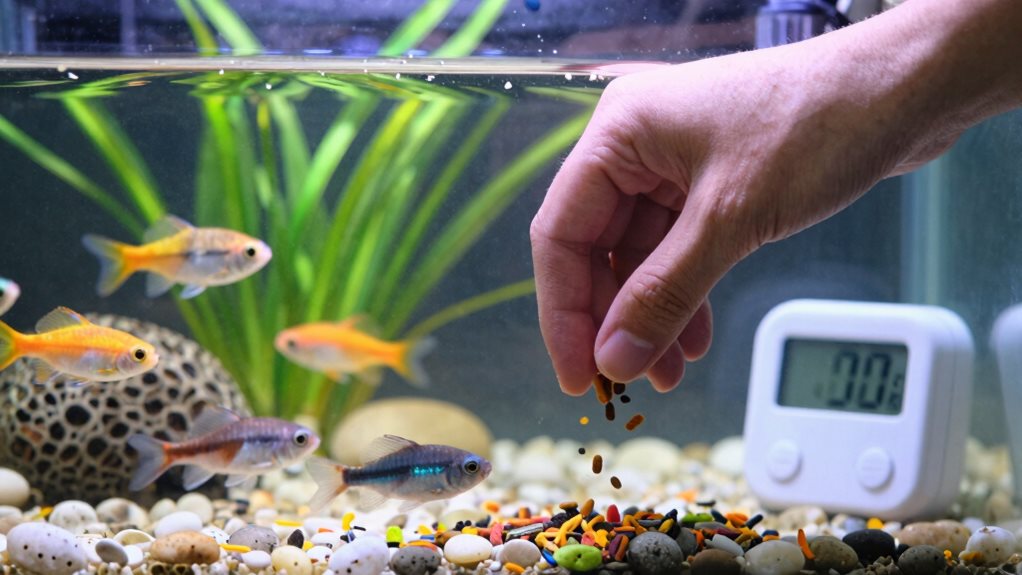
To establish a healthy fish feeding routine, feed most fish 2-4 times daily with appropriately sized portions they can consume in under three minutes. Match food types to your fish’s natural diet—herbivores need plant matter while carnivores require protein-rich options. Consider water temperature, as warmer water speeds digestion and increases appetite. Watch for signs of overfeeding (cloudy water, leftover food) or underfeeding (aggression, dull colors). Rotating high-quality pellets with occasional treats like brine shrimp guarantees balanced nutrition and happier aquatic pets.
Understanding Fish Feeding Behaviors in the Wild

To truly understand how to keep your fish healthy in home aquariums, you’ll need to appreciate how they behave in their natural habitat first. Most fish follow circadian rhythms that dictate when they eat, with some being active during daylight and others preferring nighttime feasts.
Diurnal species like sharp-snout seabream consume nearly all their food when it’s bright, while nocturnal fish hunt after dark. In the wild, fish aren’t grazing constantly. They’ve evolved to hunt or forage based on their biological clock, environmental cues, and survival instincts. Predatory fish typically use their keen sense of smell and ability to detect vibrations to locate potential meals in their environment. Disrupting these natural patterns by hand-feeding can cause fish to develop an unhealthy dependency on humans for food rather than maintaining their instinctual foraging behaviors. Additionally, understanding the importance of dietary needs ensures that fish are receiving appropriate nutrition, which is crucial for their overall health.
Temperature plays a vital role too – fish feed more vigorously in warmer water when their digestion works efficiently. They’ll also display different behaviors depending on whether they’re herbivores grazing on plants or carnivores hunting smaller creatures.
Matching Feed Types to Different Fish Species
Different fish species have vastly different nutritional needs, so understanding what your aquatic pets require is crucial for their health and longevity.
You’ll need to tailor your feeding approach to match their natural diets. Herbivores like goldfish and plecos thrive on vegetables and fiber-rich foods. Offer chopped spinach or potato slices, and don’t forget those wood pieces for plecos’ grazing habits! Additionally, keeping portion sizes in check is vital to avoid overfeeding.
Carnivores need protein-packed options—think brine shrimp, pellets with 38-42% protein, or other meaty treats. Your omnivorous swimmers enjoy the best of both worlds, so mix it up with flakes, pellets, and occasional treats.
Remember to take into account where your fish feed in the tank. Bottom-dwellers need sinking tablets, while surface feeders prefer floating pellets. Establishing a feeding routine helps ensure consistency in nutrition and prevents water quality issues from overfeeding.
Small, frequent meals throughout the day more closely mimic natural behaviors and improve nutrient absorption compared to single large feedings.
Match these habits, and you’ll see your underwater friends flourish!
The Science Behind Optimal Feeding Frequency
Your fish’s metabolism and digestive system play an essential role in determining how often you should feed them, with research showing that most fish species achieve ideal growth with just two to four feedings per day. Different species have unique timing needs, as smaller, more active fish typically benefit from more frequent meals, while larger species can thrive with fewer feeding sessions. You’ll need to take into account your specific fish type when establishing a routine, as factors like water temperature and age can greatly alter digestion rates and feeding requirements. Regular monitoring of water quality is critical as it affects fish health and feeding efficiency, ensuring that your fish thrive in a safe environment. Recent meta-analysis of 145 study cases revealed a quadratic relationship between feeding frequency and fish growth, confirming that more feedings don’t always translate to better results.
Metabolism and Digestion Factors
Understanding the delicate relationship between feeding frequency and fish digestion can dramatically improve your aquarium management skills. Your fish’s digestive system typically processes food within four hours post-feeding, with enzyme activities peaking when you feed them 3-4 times daily. Recent research on juvenile black bream showed trypsin activity changes significantly during periods of fasting compared to regularly fed control groups. Additionally, maintaining a consistent feeding schedule can help prevent water quality issues that can arise from overfeeding and uneaten food.
Water temperature is essential—keep it between 68-75°F for ideal metabolic function. Most adult fish can thrive on once-daily feedings while maintaining optimal health and growth.
Here’s what you need to know about fish digestion:
- Digestive enzymes like lipase reach maximum efficiency at three feedings per day.
- Weekly fasting days help prevent digestive overload and promote gut health.
- Splitting daily feedings prevents obesity while maintaining growth rates.
You’ll notice healthier fish when you match their feeding schedule to their digestive capabilities.
Species-Specific Timing Needs
While all fish need food, each species thrives on dramatically different feeding schedules that you’ll need to master for a thriving aquarium.
Salmonids like trout prefer multiple daily meals (2-8 times) in cool water, with youngsters needing more frequent feedings. Tilapia fingerlings do best with 5-6 daily meals, while catfish needs vary by species and age. Proper feeding ensures energetic swimming and vibrant health.
Your marine carnivores might be happier with just 1-2 larger meals per day. It’s all about matching their natural patterns!
Remember that size matters – tiny fry need frequent small portions due to their tiny stomachs, while adult fish can handle fewer, bigger meals. As your fish grow, you’ll need to adjust accordingly.
Water temperature also plays an essential role – warmer water typically means more active fish that’ll appreciate more frequent feedings. Research shows optimal growth occurs when each feeding provides about 1% of bodyweight, allowing for multiple smaller feeds rather than one large meal.
Quantity Control: How Much Is Too Much?
When feeding your fish, you’ll need to measure portions carefully before dropping food into the tank, as most species only need about 1% of their body weight per day.
You can spot overfeeding by watching for uneaten food drifting to the bottom, cloudy water, or a spike in ammonia levels during water tests.
A good rule of thumb is that no food remains after one minute of feeding time, indicating you’ve provided an appropriate amount.
Consider fasting your fish once or twice a week to prevent overfeeding and maintain optimal digestive health.
Measure Before Dropping
Three common mistakes can turn your fish feeding routine into an underwater disaster: eyeballing portions, dumping in “a little extra just in case,” and ignoring your fish’s actual needs.
Precision matters when it comes to keeping your aquatic friends healthy and your water crystal clear.
Instead of guesswork, try these proven measurement approaches:
- Weight-based feeding – Calculate daily rations as a percentage of your fish’s biomass (typically 0.5-3% of body weight)
- Time-window method – Offer only what your fish can consume in 30 seconds to 3 minutes
- Calibrated scoops – Use measuring tools you’ve pre-weighed for your specific feed type. Regularly monitor water quality since overfeeding can lead to cloudy water and health issues for your fish.
Signs of Overfeeding
Even the most dedicated fish keepers can struggle with portion control, accidentally turning their tanks into all-you-can-eat buffets with disastrous consequences. You’ll notice the warning signs in both your water and your fish themselves. Watch for cloudy water, fuzzy mold on leftover food, and filters that clog more frequently than they should. Your fish might develop bloated bellies, appear unusually fat, or gasp at the water’s surface. If food remains uneaten after three minutes, you’re definitely offering too much.
The health impacts are serious—digestive problems, shorter lifespans, and even premature deaths can result from overfeeding. High ammonia levels can further stress fish and lead to illnesses if overfeeding continues unchecked.
Different species have different needs: carnivores like bettas thrive with feedings just 2-3 times weekly, while goldfish naturally graze throughout the day. Learning your fish’s specific requirements is crucial.
Strategic Timing for Maximum Nutrient Absorption
Ideal timing of fish meals can dramatically impact their health, growth, and overall well-being. You’ll want to schedule feedings based on your fish’s specific needs and environmental conditions. Early morning works best for most systems (except ponds) when oxygen levels and temperatures are rising—creating perfect conditions for digestion.
Consider these critical timing factors:
- Water temperature dictates frequency—warm water means more frequent meals, while cooler temperatures require fewer feedings.
- Fish age matters—juveniles need smaller, more frequent meals compared to adults.
- Species-specific patterns exist—catfish thrive in darkness, while sharp-snout seabream prefer light periods. Additionally, establishing a feeding schedule can help maintain your fish’s digestive health and prevent overfeeding.
Feeding Techniques to Reduce Water Contamination

You’ll find that targeted feeding methods, like using demand feeders or controlled distribution areas, considerably reduce wasted food that pollutes your aquarium or pond.
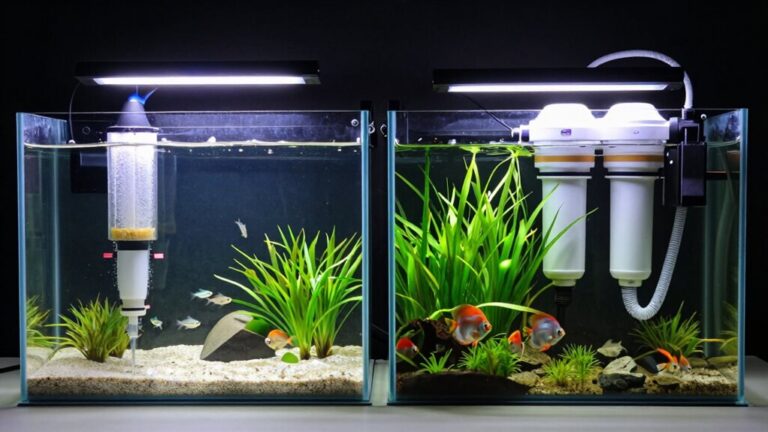
Setting up simple debris management systems, such as strategically placed filters or collection zones where you concentrate feeding activity, can capture uneaten pellets before they break down and contaminate the water.
These approaches not solely keep your water clearer and healthier but also save you money on feed costs while reducing the maintenance time you’ll need to spend cleaning filters and performing water changes. Additionally, maintaining optimal water quality is essential for the overall health of your aquatic life.
Targeted Feeding Methods
Four essential feeding techniques can dramatically reduce water contamination while guaranteeing your fish receive proper nutrition. The “Easy Squeezy” method uses turkey basters or pipettes to deliver food directly to shy or outcompeted species, preventing excess food from decomposing in your tank.
Similarly, feeding sticks place food precisely where needed, reducing waste and competition.
For best results, try these targeted approaches:
- Position food in consistent locations so bottom feeders can predict where leftovers will land.
- Use pipettes for medication delivery to specific fish, avoiding tank-wide treatments.
- Train fish with feeding signals (like a gentle tap or whistle) to create efficient feeding routines.
Additionally, ensuring that the correct fish dietary needs are satisfied will enhance fish health and reduce uneaten food waste. You’ll notice your water stays cleaner longer, and even your most reclusive tank inhabitants will thrive with these personalized dining options!
Debris Management Systems
While targeted feeding techniques help prevent waste, implementing effective debris management systems takes your aquarium maintenance to the next level. You’ll find multiple options to keep your tank pristine between feedings.
Consider installing an Eco-Trap system that cleverly directs solid waste to a central collection point using just 5% of your tank’s water flow. For larger aquariums, sand filters work like kitchen colanders, trapping larger particles while letting clean water pass through.
Don’t forget protein skimmers—these handy devices create bubbles that attract fine organic matter and lift it away as foam.
Automated feeding systems like Tritone deliver precise portions, preventing overfeeding that leads to waste buildup. For additional support, biological cleaners break down leftover organics on gravel and decorations, keeping your filter running effortlessly and your fish breathing easy.
Special Considerations for Community Tanks

Community tanks present unique feeding challenges because they’re home to diverse species with different dietary needs and feeding behaviors.
You’ll need to accommodate fish that feed at various water column levels, from surface skimmers to bottom dwellers.
When managing your community tank’s feeding routine, focus on these critical elements:
- Target different water column levels by using floating foods for surface feeders and sinking wafers for bottom dwellers like Cories and plecos.
- Rotate between protein-rich and plant-based foods to satisfy both carnivores and herbivores.
- Use feeding tools like turkey basters or syringes to deliver food precisely to specific areas, making sure shy fish get their share.
Remember to observe your fish during feeding—healthy fish will eat enthusiastically, while disinterest might signal health issues.
Seasonal Adjustments to Your Feeding Schedule
Just as you’ve learned to accommodate different fish species in your community tank, you’ll also need to adjust your feeding approach throughout the year. Your fish’s metabolism shifts dramatically with the seasons, requiring thoughtful changes to their diet.
In spring, when water hits 50°F, start with light wheat germ-based foods, gradually increasing as temperatures climb above 60°F.
Summer calls for protein-rich options fed 2-6 times daily, but pull back during scorching 80°F+ days.
As fall arrives, shift back to easily digestible wheat germ foods when temperatures drop below 60°F.
By winter, you’ll stop feeding entirely below 40°F as your fish enter dormancy.
Don’t rely on the calendar—your thermometer should guide these decisions!
Watch how keenly they swim to the surface; their behavior will tell you if you’re on the right track.
Recognizing Signs of Overfeeding and Underfeeding
How many times have you wondered if you’re giving your fish too much or too little food? Finding that perfect balance isn’t always easy, but your aquarium will tell you when something’s off.
Watch for these clear warning signs of overfeeding:
- Cloudy water with a foul smell (bacterial bloom from decomposing food)
- Uneaten food sitting at the bottom after 5 minutes
- Clogged filters that need cleaning much sooner than usual
Underfeeding looks different – fish that consume everything within 2-3 minutes might need more nutrition.
While slightly underfeeding is safer than overfeeding, you don’t want your fish looking thin or losing their vibrant colors.
Supplemental Foods to Enhance Color and Immunity
Once you’ve mastered proper portion control, you can take your fish’s health to the next level with the right supplemental foods.
Natural pigment-rich options like frozen krill, spirulina, and brine shrimp don’t just make your fish look stunning—they’re packed with immune-boosting nutrients too!
Try rotating between high-quality pellets and color-enhancing treats like mysis shrimp or daphnia. Your fish will thank you with vibrant colors and fewer health problems!
When shopping for color-enhancing foods, look for ingredients like astaxanthin, marigold extract, or whole crustacean meals rather than artificial dyes.
Frequently Asked Questions
Can Fish Recognize Their Owners During Feeding Time?
Yes, many fish can recognize you during feeding time. They learn your face, movements, and patterns through repeated associations with food rewards, especially social species with good vision like cichlids and damselfish.
How Long Can Most Aquarium Fish Survive Without Food?
Most aquarium fish can survive without food for 3 days to 2 months, depending on species. You’ll find healthy adult fish typically manage up to two weeks, while it’s safe to leave any fish unfed for about 3 days.
Should Feeding Routines Change During Fish Breeding Periods?
Yes, you’ll need to adjust feeding during breeding. Increase frequency to 2-3 daily meals with high-protein foods like brine shrimp. Feed in morning or before lights dim and match food to each species’ specific breeding needs.
Do Automatic Fish Feeders Affect Fish Behavior or Health?
Automatic feeders can positively influence your fish’s health through consistent nutrition and reduced stress, but they’ll also change behavior through conditioning to feeding times while potentially limiting your direct observation of health changes.
Are There Benefits to Fasting Fish One Day per Week?
Yes, fasting your fish one day weekly rests their digestive systems, reduces waste, improves water quality, and mimics natural feeding patterns. It’s particularly beneficial for goldfish and adult fish with fully developed metabolisms.
Final Thoughts
By establishing a thoughtful feeding routine, you’ll create a thriving aquatic environment your fish will love. Remember, you’re mimicking their natural feeding patterns while adapting to their specific needs. Don’t worry about perfection right away—observe your fish, make adjustments, and you’ll soon develop an intuitive sense for their hunger cues. Your reward? Vibrant, active fish that’ll bring life and color to your home for years to come.