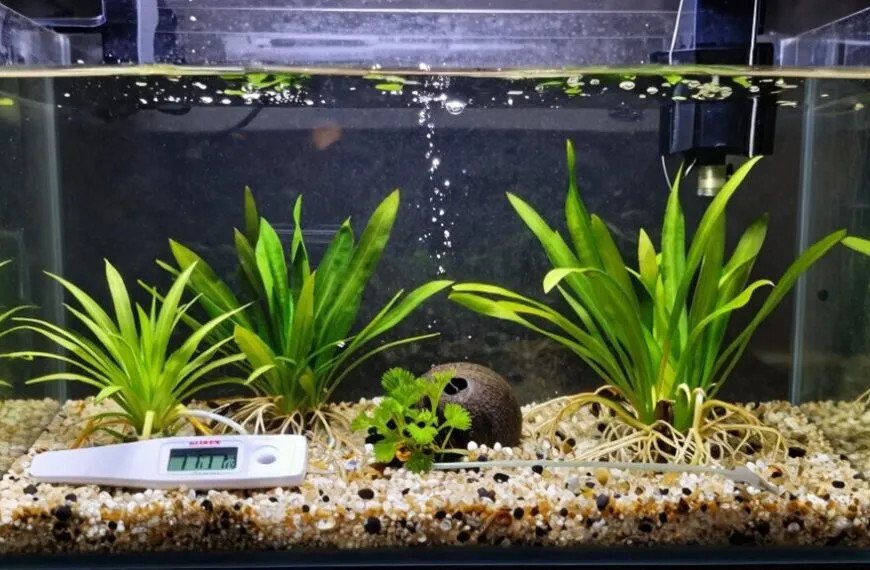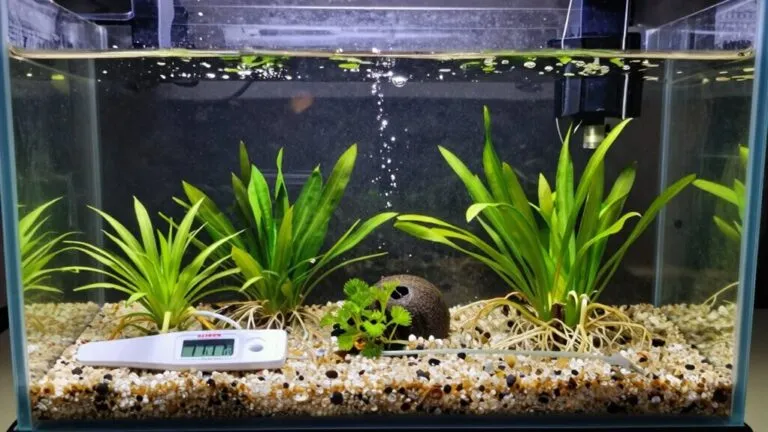
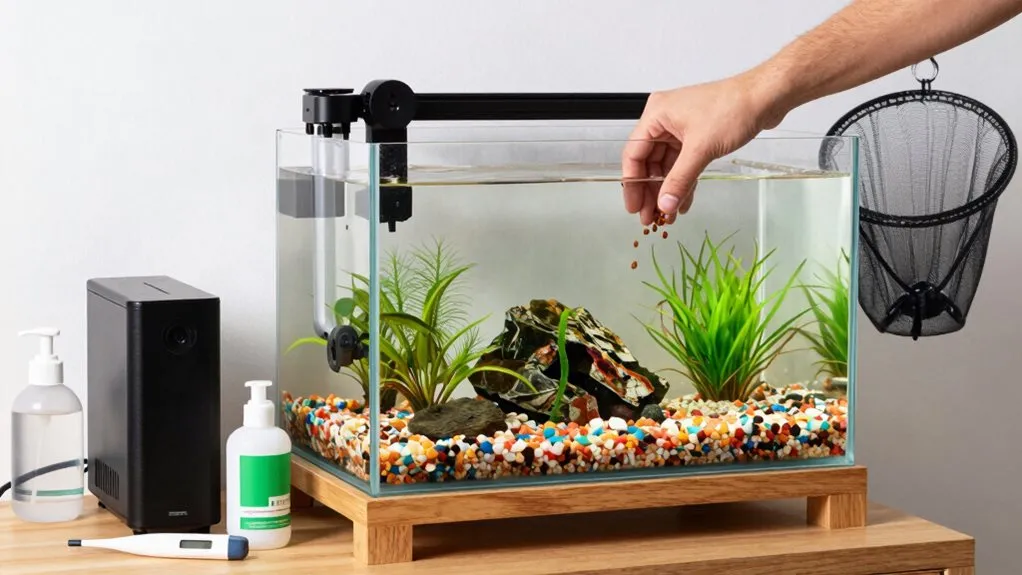
To set up your first fish tank, start with a larger tank (20+ gallons) for stability, and position it away from windows and high-traffic areas. Install crucial equipment: filter, heater, thermometer, and lighting. Prepare substrate by rinsing it thoroughly before arranging decorations. Allow your tank to cycle for 6-8 weeks, testing water parameters regularly. Once cycling is complete, introduce fish gradually, starting with hardy species. Maintain your aquarium with weekly water changes and regular equipment checks. The expedition ahead holds fascinating discoveries about aquatic ecosystems.
Contents
- 1 Selecting the Perfect Tank Size and Material
- 2 Essential Equipment for a Thriving Aquarium
- 3 Preparing and Arranging Substrate and Decorations
- 4 Step-by-Step Tank Assembly and Initial Fill
- 5 The Nitrogen Cycle: Establishing Biological Balance
- 6 Introducing Fish to Their New Environment
- 7 Weekly and Monthly Maintenance Routines
- 8 Frequently Asked Questions
- 9 Final Thoughts
Selecting the Perfect Tank Size and Material
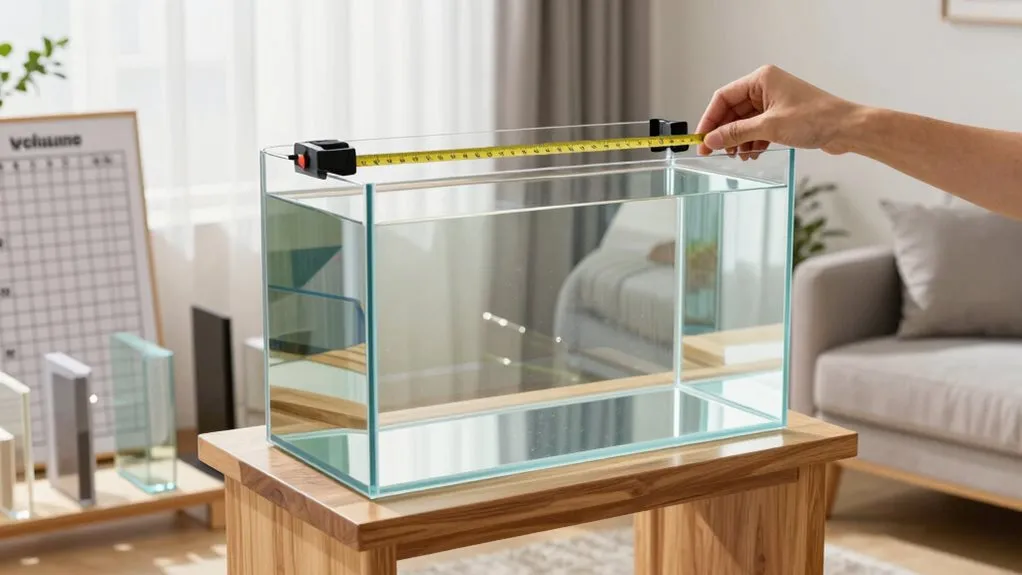
When you’re diving into the aquarium hobby, choosing the right tank size might seem overwhelming at first, but it’s actually one of the most exciting decisions you’ll make.
Surprisingly, bigger tanks are often better for beginners! A 20-gallon long tank (30″ × 12″ × 12″) gives your fish ample swimming space while maintaining stability—remember, more water means fewer sudden chemical changes if you make a small mistake. Additionally, larger tanks can accommodate a wider variety of fish species that thrive in schools.
If you’ve got the space, consider a 29-gallon that weighs about 330 pounds when filled, perfect for medium-sized fish like goldfish. Always consider future fish growth when selecting tank dimensions to avoid having to upgrade too soon.
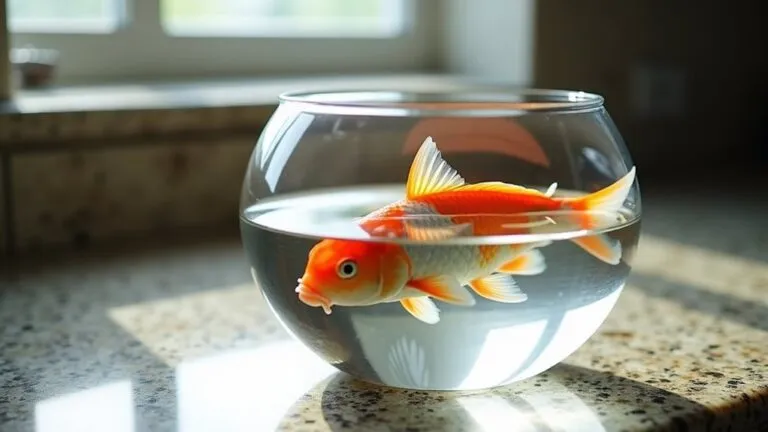
Avoid placing your new aquatic kingdom near windows, radiators, or high-traffic areas that cause vibrations. A tank placed in direct sunlight will encourage excessive algae growth, creating maintenance challenges. Your finned friends will thank you for the peaceful environment, and you’ll enjoy fewer maintenance headaches!
Essential Equipment for a Thriving Aquarium
Once you’ve selected the perfect tank, you’ll need to outfit it with vital equipment that transforms an empty glass box into a thriving underwater ecosystem.
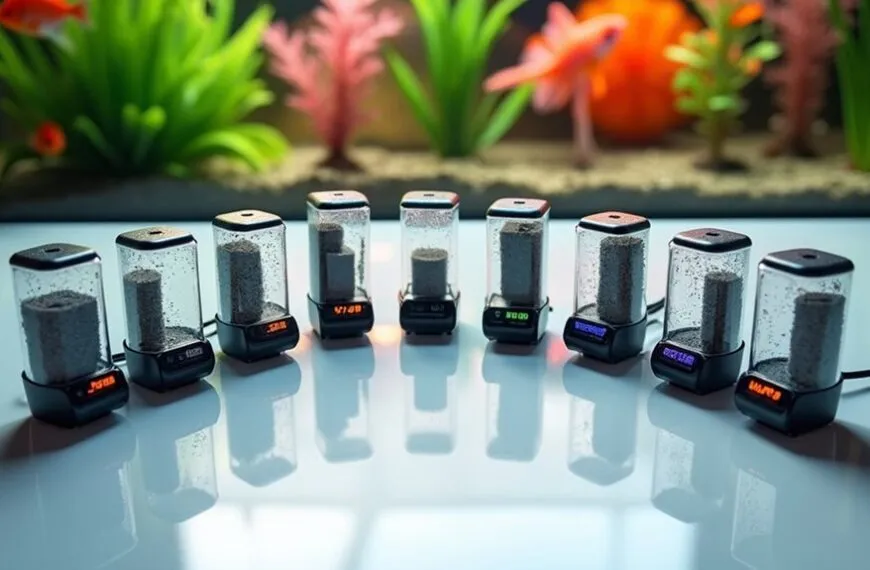
A filter is non-negotiable—sponge filters are perfect for beginners with their gentle flow and monthly maintenance, providing biological filtration that helps convert harmful ammonia into less toxic substances.
Don’t forget a reliable heater (calculate 5 watts per gallon) to maintain ideal temperatures for your tropical fish, and always verify with a thermometer.
LED lighting on a timer prevents algae overgrowth while supporting plant life and giving you a clear view of your underwater world.
You’ll also need testing supplies to monitor water quality, dechlorinator to neutralize tap water, and maintenance tools like a dedicated bucket and gravel vacuum.
Consider adding an air pump to enhance oxygen levels and provide additional water movement for your fish.
A quality glass lid will minimize water evaporation and heat loss while providing openings for essential equipment cords.
These key items work together to create a healthy, balanced environment where your fish can flourish.
Preparing and Arranging Substrate and Decorations
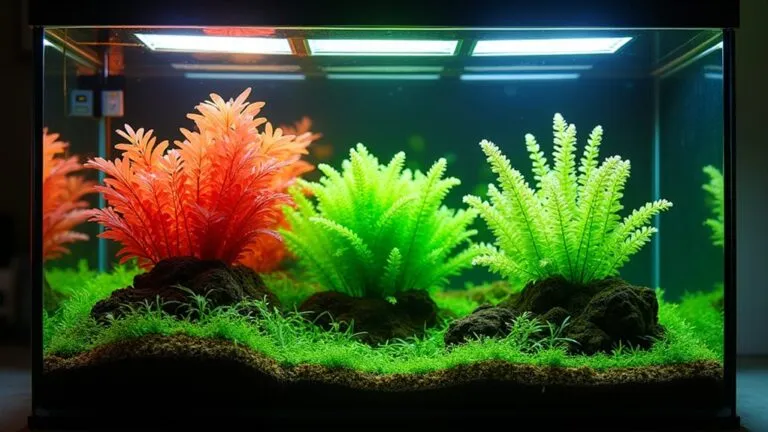
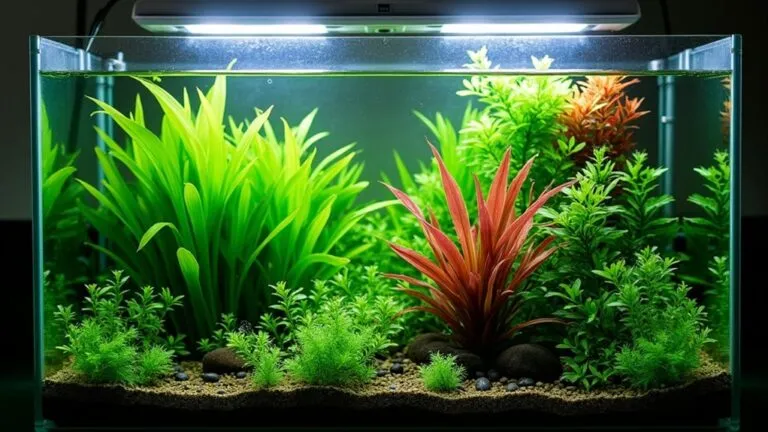
Three critical steps stand between you and a vibrant underwater scenery: choosing the right substrate, preparing it properly, and arranging it thoughtfully.
For beginners, medium-sized gravel (1-4mm) offers the perfect balance—it’s easy to clean and won’t compact dangerously like finer substrates that can create toxic pockets. Substrate selection directly impacts your aquatic environment by influencing water chemistry and providing essential habitat features for your fish. Rounded grains are particularly beneficial for bottom dweller fish to prevent injuries as they search for food, as they also promote water circulation which contributes to a healthier tank environment.
If you’re planning a planted tank, consider layering techniques: start with a thin nutrient-rich base like clay or soil (about 1cm thick), then seal it with 3-5cm of gravel.
For fish-only setups, you’ll only need about 2 inches of substrate. Remember, substrate isn’t just decoration—it affects your tank’s chemistry! Aragonite raises pH (perfect for African cichlids), while peat lowers it (ideal for tetras).
Always pre-rinse your substrate to remove dust that would otherwise cloud your water.
Step-by-Step Tank Assembly and Initial Fill
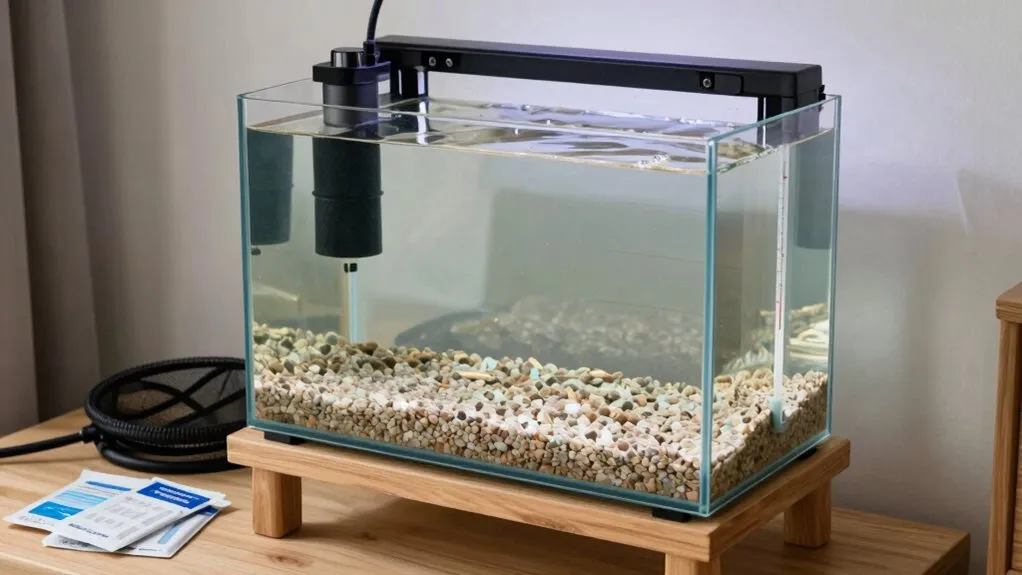
The five key assembly steps that transform your collection of aquarium parts into a working ecosystem deserve your full attention.
First, prepare a sturdy surface for your tank, then add 1-3 inches of rinsed gravel, sloping it for visual depth.
Next, assemble your filter by inserting cartridges and attaching intake guards before positioning equipment in the tank—hiding heaters and filters behind decorations. For proper oxygenation, connect your air stone to the tubing and conceal it within the gravel. Understanding water chemistry is essential to maintaining a healthy fish environment.
When it’s time to add water, pour it gently over a plate to prevent disturbing your carefully arranged gravel. Fill to about two-thirds capacity, giving yourself room to work.
Don’t forget to add water conditioner right away to neutralize chlorine!
Always use a quality water dechlorinator to make tap water safe for your future fish inhabitants, as chlorine is harmful to aquatic life.
After everything’s in place, wait 30 minutes before turning on equipment, then give it 24 hours to verify everything’s working properly. Regular maintenance is key to ensuring your fish thrive in their new home.
The Nitrogen Cycle: Establishing Biological Balance
Your new tank needs invisible helpers—beneficial bacteria—that transform toxic fish waste into safer compounds through the nitrogen cycle.
You’ll need to cultivate these bacterial colonies for 6-8 weeks before adding fish, giving them time to establish the biological balance that keeps your aquatic friends healthy. These bacteria reside primarily in your filter media, gravel, and on various tank surfaces where they can multiply. During this time, it’s crucial to maintain a stable pH level to support the growth of these helpful microorganisms.
Regular water testing for ammonia, nitrite, and nitrate levels will tell you exactly when your tank has cycled completely, with zero ammonia and nitrite readings signaling it’s finally safe to welcome fish to their new home. Experienced aquarists often accelerate this process by transferring mature filter media from an established tank to seed the new filter with beneficial bacteria.
Bacteria Colony Formation
When setting up a new aquarium, establishing a healthy bacteria colony might seem mysterious, but it’s actually the foundation of your tank’s entire ecosystem.
Your future fish depend on these microscopic heroes to transform toxic waste into safer compounds.
The process unfolds in two key phases over 6-8 weeks. First, ammonia-oxidizing bacteria convert fish waste into nitrite.
Then, nitrite-oxidizing bacteria transform this still-toxic substance into relatively harmless nitrate.
You’ll know you’re making progress when you see ammonia levels drop as nitrite rises, then finally both reach zero with only nitrates remaining.
To jumpstart this cycle, you can add fish food every 12 hours, use pure ammonia, or introduce bottled bacteria. Additionally, introducing seeds from an established tank can significantly expedite the formation of beneficial bacteria.
Don’t rush this process—your patience now means healthy, happy fish later!
Testing Water Parameters
Once you’ve initiated your tank’s bacteria colony, monitoring water parameters becomes your most crucial task in fishkeeping success.
You’ll need to test ammonia levels daily, aiming for 2-4 ppm initially to jumpstart the cycle. When ammonia begins dropping, start testing for nitrites every 2-3 days.
Keep a log of your readings to track the pattern – first an ammonia spike, then a nitrite spike, and finally nitrates. Your goal? Zero ammonia and nitrites with some nitrates present.
This magic combination signals your tank is cycled! Test frequently during the first week, then every 2-3 days throughout the 6-8 week cycling period. Regular water quality checks ensure you prevent toxic buildup and support your beneficial bacteria’s growth.
Patience pays off here – don’t rush adding fish until you’ve maintained stable readings for at least a week. Your future fish will thank you!
Introducing Fish to Their New Environment
When bringing fish home, you’ll need to gradually acclimate them to their new environment to prevent stress and shock.
You should introduce peaceful community fish first, followed by semi-aggressive species, and finally any territorial fish to establish a stable hierarchy.
During the first week, you’ll want to closely monitor water parameters, watch for signs of stress, and feed sparingly while your new aquatic friends adjust to their surroundings. Additionally, remember to perform essential water tests to ensure the stability of the tank’s ecosystem during this crucial adjustment period.
Gradual Acclimation Process
Bringing your fish home is only half the adventure; properly introducing them to their new aquatic home requires patience and careful attention to detail. Your finned friends can’t handle sudden changes, especially in temperature!
Start by floating the sealed bag in your aquarium for 15-20 minutes, allowing temperatures to equalize.
Next, set up a drip system using airline tubing to gradually introduce tank water to your fish. Aim for 2-4 drops per second, continuing for 30-60 minutes until the volume doubles or triples.
Watch your fish closely during this process—they’ll tell you if something’s wrong. Proper acclimation reduces fish shock and ensures a smoother transition into their new environment.
When it’s time for the big move, use a soft net to transfer them to their new home, leaving the shipping water behind. Your patience now means healthier, happier fish later!
Proper Stocking Order
Many aquarium enthusiasts make the critical mistake of adding all their fish at once, creating chaos in their carefully prepared tank. Instead, you’ll want to strategically introduce residents to maintain water quality and harmony.
Start with hardy, cycling-tolerant species like danios or platies that can handle those initial ammonia fluctuations.
Consider this proven approach:
- Begin with a small group of mid-water schooling fish (at least six) to establish activity and social dynamics without territorial disputes.
- After two weeks, add bottom-dwellers like Corydoras catfish once substrate has settled.
- Wait until parameters stabilize before introducing more sensitive species like shrimp or territorial fish. Additionally, Corydoras prefer soft substrate, which can enhance their scavenging behavior and overall well-being in the tank.
First-Week Monitoring
The first week after introducing fish to your new tank represents a significant shift period that demands your careful attention.
You’ll need to monitor water parameters daily during this essential time—check for zero ammonia, safe nitrite levels, and stable pH. Don’t skip this step!
Watch your new aquatic friends closely for signs of stress or unusual behavior. Are they swimming normally? Eating well? These observations can help you catch potential problems before they become serious.
Remember to verify your equipment‘s working properly every day. A malfunctioning heater or filter could spell disaster for your new tank inhabitants.
Top off evaporated water daily and perform small water changes (10-15%) to maintain ideal conditions.
Your diligence this week will establish a foundation for a healthy, thriving underwater world.
Weekly and Monthly Maintenance Routines
Once you’ve set up your beautiful aquarium, regular maintenance becomes your key to success with a healthy, thriving underwater world.
You’ll need to establish consistent routines to keep your fish happy and your tank sparkling clean.
Remember to test water parameters weekly, including salinity, alkalinity, and nitrate levels, which are like essential signs for your aquatic ecosystem.
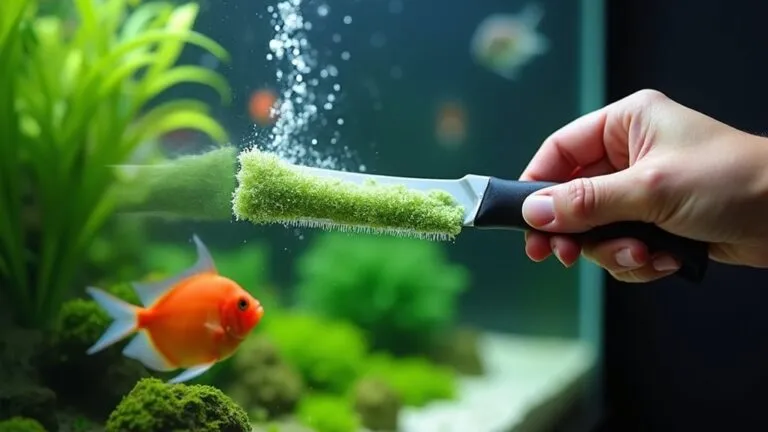
- Clean your tank surfaces – Scrape algae from glass every other day, and use a magnetic cleaner weekly to keep views crystal clear.
- Perform water changes – Replace 10% weekly and 25% monthly, matching temperature and salinity before adding new water.
- Check equipment – Inspect pumps, filters, and lights weekly, and don’t forget to clean your protein skimmer – it’s like a vacuum for water!
Frequently Asked Questions
How Do I Handle Power Outages Affecting My Aquarium?
You’ll need to maintain oxygen levels during outages by using battery air pumps, pouring water for circulation, covering tanks to retain heat, and avoiding feeding fish. Have backup power sources ready for emergencies.
Can I Use Tap Water Directly in My Aquarium?
No, you shouldn’t use tap water directly. Always treat it with a dechlorinator to neutralize harmful chlorine and chloramines. These chemicals are toxic to fish and can destroy beneficial bacteria in your aquarium.
How Do I Safely Move an Established Tank?
You’ll need to preserve beneficial bacteria by saving original water, keeping filter media wet, and transporting fish in buckets with air stones. Move the empty tank carefully, then reassemble quickly to minimize stress.
What’s the Ideal Fish-To-Plant Ratio for a Balanced Ecosystem?
For a balanced ecosystem, maintain about 1 pound of fish per 3-5 square feet of plant area. You’ll want fewer fish in planted tanks—roughly 1 inch of fish per gallon, with plants spaced every three inches.
How Do Medications Affect Beneficial Bacteria in My Filter?
Antibiotics can harm your filter’s beneficial bacteria, especially in newer tanks. Gram-positive antibiotics pose the highest risk, while Maracyn Oxy is safer. Monitor ammonia levels during treatment and consider using a hospital tank instead.
Final Thoughts
You’re now equipped to start your aquatic adventure! Remember, patience is your best friend in this hobby. Your tank isn’t just water and fish—it’s a living ecosystem that rewards careful attention. As you watch your underwater world develop, you’ll find the maintenance becomes second nature. Welcome the learning process, celebrate small victories, and don’t hesitate to ask fellow enthusiasts for advice. Happy fish keeping!