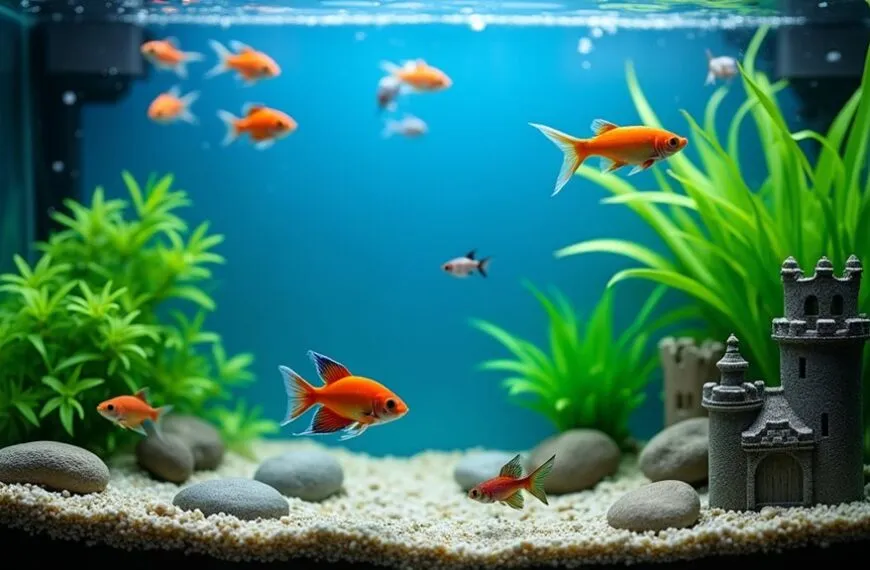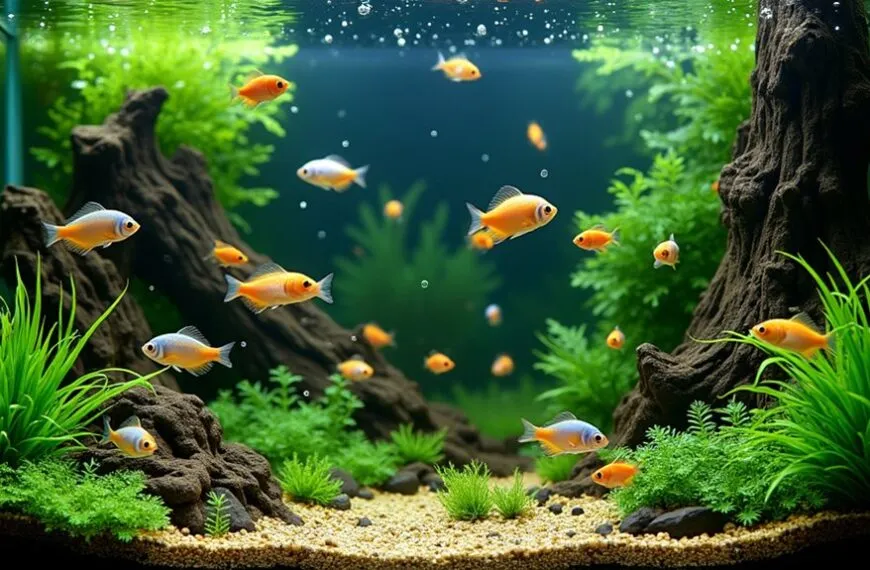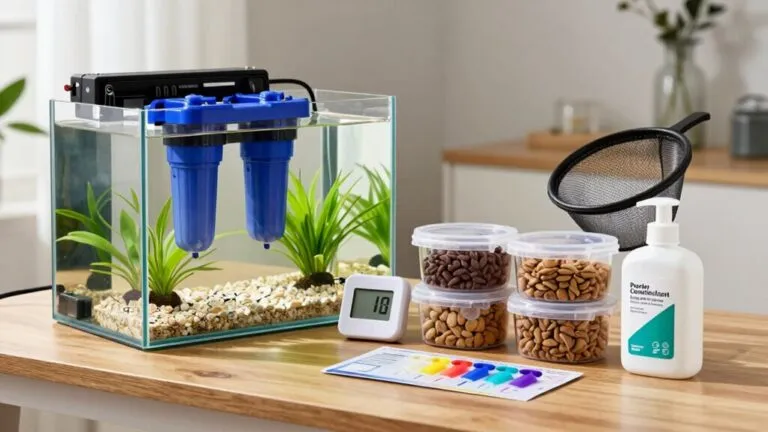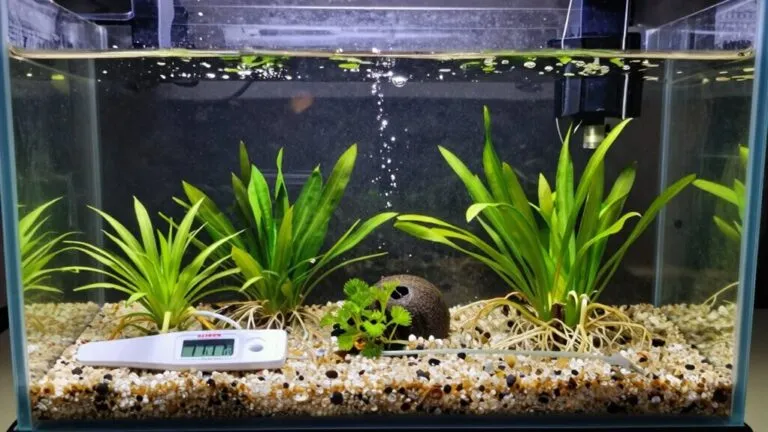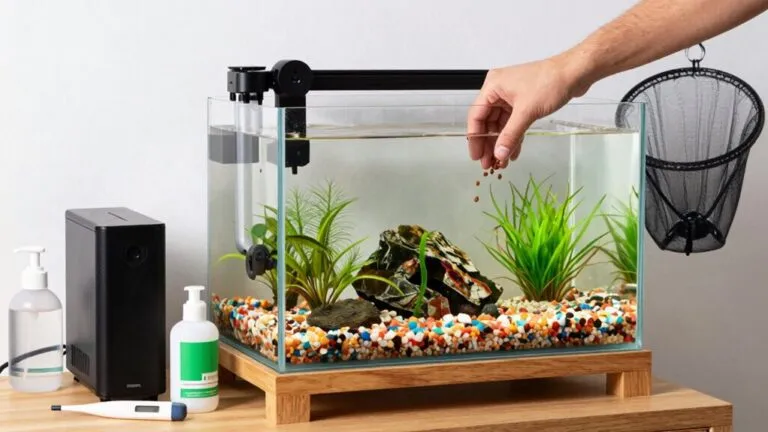
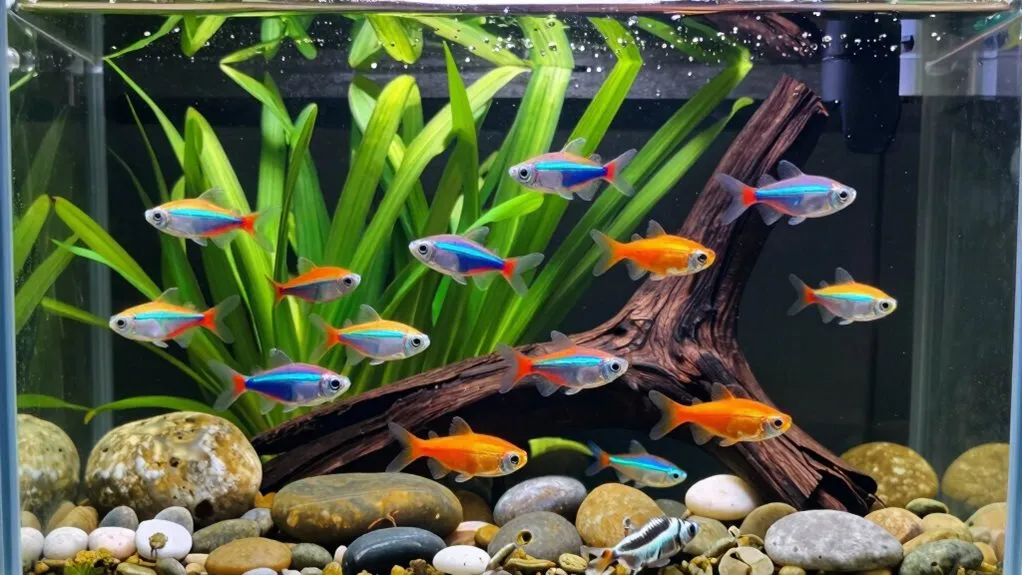
For a peaceful community tank, choose hardy, compatible fish like Neon Tetras, Cherry Barbs, and Guppies that forgive beginner mistakes. Aim for a 20+ gallon tank to provide stable water conditions and ample swimming space. Include bottom dwellers like Cory Catfish to maintain cleanliness. Keep water parameters stable with weekly testing and 20-30% water changes. Don’t forget hiding spots with plants and driftwood to reduce stress. Your success hinges on more than just fish selection.
Contents
- 1 Why Community Tanks Are Ideal for Beginners
- 2 The Essential Water Parameters for Success
- 3 Top 5 Hardy Fish Species for New Aquarists
- 4 Creating the Right Tank Size and Setup
- 5 Schooling Species: The Heart of Community Aquariums
- 6 Bottom Dwellers That Keep Your Tank Clean
- 7 Feeding Strategies for a Mixed Species Tank
- 8 Plant Companions That Enhance Your Aquatic Community
- 9 Avoiding Common Compatibility Mistakes
- 10 Maintenance Routines That Ensure Long-Term Success
- 11 Frequently Asked Questions
- 12 Final Thoughts
Why Community Tanks Are Ideal for Beginners
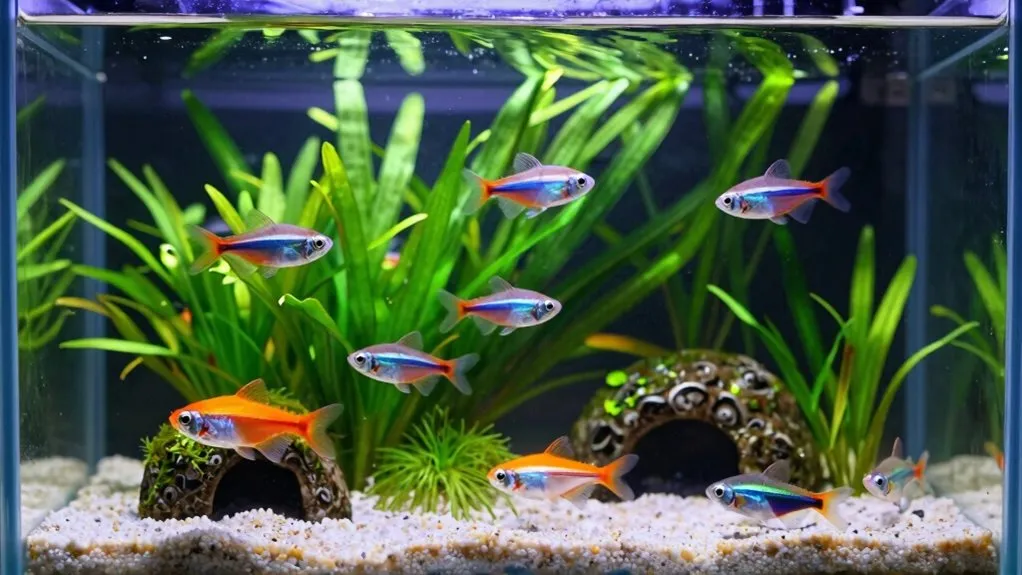
While many newcomers might be tempted to start with a small tank, community setups of 20 gallons or larger actually offer the best foundation for aquarium success.
They’re surprisingly forgiving, giving you room to make those inevitable beginner mistakes without dire consequences for your underwater friends.
Larger tanks maintain stable water parameters naturally, diluting fish waste and preventing those dreaded ammonia spikes that can spell disaster in nano tanks. Additionally, a well-cycled tank helps ensure beneficial bacteria thrive, creating a safer environment for your fish.
You’ll find yourself less stressed too—studies show that watching fish can lower your blood pressure by 4% and reduce anxiety by 12%!
Plus, a community tank gives you space for live plants, creating a mini ecosystem that improves water quality while providing hiding spots for your fish.
It’s like nature doing half the maintenance work for you!
With more generous space, fish experience less territorial behavior and can display more natural swimming patterns and social interactions.
Community tanks also serve as living artworks that enhance your home’s aesthetic while providing all the benefits of an engaging hobby.
The Essential Water Parameters for Success
Your community tank’s success hinges on maintaining the right water parameters, much like creating the perfect environment for houseguests.
You’ll want to focus on keeping pH between 6.8-7.4, temperature at 74-80°F, and guaranteeing zero ammonia and nitrite levels, which you can monitor with a reliable test kit. Maintaining optimal conditions supports fish health and their overall well-being.
While perfection isn’t required, stability matters most—gradual changes are far less stressful for your fish than the rollercoaster of constantly shifting conditions. For neutral community tanks, aim to maintain general hardness between 4-8 dGH and carbonate hardness from 4-7 dKH for optimal fish health. Regular testing of these water parameters is absolutely essential to ensure your aquatic pets thrive in their environment.
Key Parameter Ranges
Seven essential water parameters serve as the foundation for any successful community tank, acting like vital signs for your underwater ecosystem.
You’ll want to maintain ammonia and nitrite at absolute zero—they’re toxic even at minimal levels. The presence of even small amounts can interfere with respiration and cause severe stress to your fish. Beneficial bacteria convert these toxic compounds through the nitrogen cycle. Keep nitrates under 20 ppm through regular 20-30% weekly water changes to prevent stress and algae buildup. Regular testing helps ensure these levels remain stable and balanced water quality is maintained.
For pH, aim for the sweet spot between 6.5-7.5, where most community fish thrive, but remember that stability trumps perfection.
Your GH should fall between 4-8 dGH, with KH at similar levels (4-8 dKH) to prevent pH crashes. Consistent monitoring of these parameters is crucial to avoid sudden fluctuations that could stress your aquatic inhabitants.
Finally, maintain a consistent temperature around 78°F—the goldilocks zone for most community species.
With these parameters in check, you’re setting the stage for happy, healthy fish!
Testing Tools Matter
Because accurate water testing forms the backbone of successful fish keeping, investing in reliable test kits isn’t optional—it’s vital.
For beginners, liquid test kits provide the most accurate readings for important parameters like pH, ammonia, nitrite, and nitrate. Don’t be tempted by the convenience of test strips—they’re often less reliable when you need precision most. Regular monitoring of essential test parameters can prevent serious issues in your aquarium.
You’ll want to test your water weekly once your tank is established, but during cycling or after adding new fish, daily testing becomes your early warning system. Proper testing helps ensure zero ammonia levels are maintained, which is critical for fish health and survival.
Keep a simple log of your results; you’d be surprised how helpful it’s to spot troubling trends before they become disasters. Testing essential parameters like general hardness (GH) allows you to maintain the optimal range needed for your specific fish species.
Stability Over Perfection
Now that you’ve got your testing tools in order, let’s talk about what really matters in those test results.
It’s not perfection you’re chasing—it’s stability.
Your freshwater community will thrive in pH between 6.5-7.5, but consistency matters more than hitting exactly 7.0. Regular monitoring of ammonia, nitrite, and nitrate levels is essential to prevent toxic environments for your fish.
Think of KH (4-8 dKH) as your pH’s bodyguard, preventing those dreaded crashes that stress fish.
Temperature swings are equally troublesome, often leading to cloudy water and stressed inhabitants. Most tropical fish adapt well to a broad temperature range between 70-90°F (21-32.3°C).
For hardness, aim for GH around 6.7 (TDS 120), which supports healthy skeletons and plant growth.
As for the nitrogen cycle, keep ammonia below 5 ppm and nitrites under 1 ppm, with regular water changes to dilute nitrates below 80 ppm.
Regular testing of these parameters is crucial for maintaining the health and well-being of your aquatic community.
Top 5 Hardy Fish Species for New Aquarists
When you’re ready to stock your first aquarium, choosing the right fish can make all the difference between success and frustration.
You’ll want to start with hardy, peaceful species that forgive beginner mistakes while creating a visually appealing community in your tank. Maintaining optimal water quality management is essential for the health and happiness of your fish.
Let’s explore five perfect first-choice fish that will help you build a balanced aquatic family while learning the ropes of aquarium keeping.
Perfect First Choices
Five remarkable fish species stand out as perfect candidates for your first aquarium adventure.
The Neon Tetra dazzles with striking red and blue colors while thriving in groups of six or more.
Cherry Barbs offer vibrant red males that look stunning against green plants, with minimal aggression limited to establishing their pecking order.
Don’t overlook Guppies, those colorful livebearers that’ll surprise you with free-swimming babies before you know it!
Honey Gouramis bring gentle personalities and beautiful yellow-orange hues, occupying different tank areas than your other fish.
Finally, consider Harlequin Rasboras with their unique pink coloration and relaxed middle-water swimming style.
All five species remain small, adapt to varied water conditions, and maintain peaceful temperaments—making them perfect companions as you embark on the rewarding world of aquarium keeping. Additionally, selecting fish that thrive in community settings helps ensure a harmonious community tank environment.
Starting a Balanced Community
Creating a balanced community tank starts with selecting the right mix of hardy fish that’ll thrive together while each playing a unique role in your aquatic ecosystem.
Start with Cory Catfish as your clean-up crew – these peaceful bottom-dwellers will happily scavenge leftover food.
Add a school of Neon Tetras or Harlequin Rasboras for brilliant color and mid-tank activity; both species need groups of at least 6 to feel secure.
Cherry Barbs bring vibrant red flashes and thrive in planted environments, while the playful Honey Gourami adds a touch of yellow-orange to your upper water levels.
Each species occupies different tank zones, creating visual interest while preventing territorial disputes. Additionally, ensuring appropriate tank conditions like a pH range of 6.0-7.8 will further support the health of these fish.
Creating the Right Tank Size and Setup
The foundation of a successful community aquarium begins with selecting the right tank size and setup.
While you might be tempted to start small, a 20-30 gallon rectangular tank gives your fish the swimming space they need to thrive.
Remember, you’ll want roughly one inch of adult fish per gallon, but don’t forget to account for decorations taking up precious room!
- Opt for a longer, wider tank rather than tall ones to provide natural swimming patterns
- Include plenty of hiding spots with plants and driftwood to reduce stress
- Create “sight breaks” with decorations to minimize territorial disputes
- Balance open swimming areas with sheltered spaces for shy species
- Consider your largest species first when selecting tank size – they’ll thank you!
- Ensure to monitor water parameters to maintain a healthy environment for your fish.
Schooling Species: The Heart of Community Aquariums
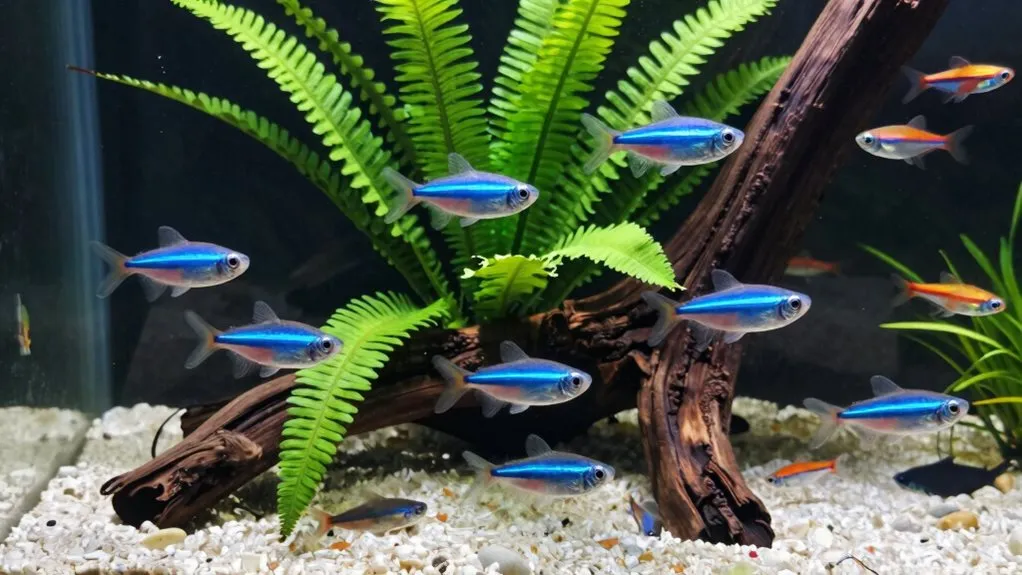
Schooling fish create the heartbeat of your community tank, offering both stunning visual displays and a more natural, stress-free environment for your aquatic pets.
You’ll need adequate space for these social swimmers, with most species requiring groups of 6-10 individuals to feel secure and display their natural behaviors.
When properly stocked, these synchronized swimmers transform the midwater section of your tank into a dynamic, ever-changing scene of color and movement that will captivate you for hours. Additionally, maintaining high-quality water conditions is crucial for the overall health and happiness of your schooling fish.
Schooling Behavior Benefits
While many novice aquarists focus solely on a fish’s appearance, understanding schooling behavior reveals why these social species form the backbone of successful community tanks.
When you add a proper school of 6+ compatible fish, you’re not merely creating a stunning display—you’re providing crucial benefits that improve their health and wellbeing.
- Creates safety-in-numbers that reduces stress and encourages natural behaviors
- Improves energy efficiency as fish swim together, leading to healthier, more active specimens
- Boosts foraging success through group intelligence and information sharing
- Offers better protection from any tank bullies through confusion and dilution effects
- Provides more entertaining viewing as fish display synchronized swimming and natural social interactions
You’ll notice your schooling fish are calmer, more colorful, and display fewer stress-related problems when kept in proper groups—making your aquarium maintenance easier too!
Size and Space Requirements
Before selecting your aquatic companions, understanding proper tank sizing for schooling species guarantees both their happiness and your success as a beginner aquarist.
Remember the one-inch-per-gallon rule as your starting point, but don’t overcrowd!
Most peaceful schoolers thrive in groups of six or more, which means you’ll need adequate space. Neon tetras and cherry barbs require at least 15 gallons, while rummy nose tetras need a roomier 30-gallon setup. Those adorable dwarf pencilfish can squeeze into a 10-gallon home.
Tank shape matters too! Wider tanks serve your fish better than tall, narrow ones—especially for active swimmers like danios.
They’ll zip back and forth with glee in a spacious environment. When your fish have room to roam, you’ll notice fewer squabbles and more natural behaviors—making your underwater community truly shine.
Creating Visual Dynamism
The heart of any thriving community aquarium beats within its schooling fish, creating a mesmerizing underwater ballet that’ll captivate you for hours.
These synchronized swimmers add movement, color, and life to your tank that individual specimens simply can’t match.
To maximize visual impact in your aquarium, consider these dynamic schoolers:
- Neon tetras (20+ fish) – Their electric blue-red stripes create stunning light displays as they move together
- Rummy nose tetras (10+ fish) – Red faces and striped tails form tight, eye-catching formations in mid-layers
- Harlequin rasboras (8-10 fish) – Orange bodies with black triangles provide bold contrast
- Cherry barbs – Males flash intense red against females’ softer hues for dimensional color
- Green neon tetras – Perfect for nano tanks, their iridescent schools shine even in small spaces
Bottom Dwellers That Keep Your Tank Clean
Five fascinating bottom-dwelling species can transform your aquarium’s maintenance routine while adding visual interest to the lower levels.
Corydoras catfish, best kept in groups of 6+, will diligently scavenge food scraps while sifting through substrate. They’re personable little cleaners that occasionally rest on plants during breeding.
Kuhli loaches, with their distinctive striped pattern, provide nocturnal cleaning services, though they’ll hide frequently.
For larger tanks, the peaceful Pictus catfish (reaching 7 inches) effectively tackles plant detritus.
Siamese Algae Eaters are natural algae controllers that venture beyond the substrate to clean decorations too.
Don’t overlook Zebra Loaches—these plant-safe cleaners thrive in trios and get along beautifully with peaceful community fish.
They’ll actively patrol your tank bottom, keeping it spotless while adding movement to lower levels.
Feeding Strategies for a Mixed Species Tank
Maintaining a healthy community tank requires more than just selecting the right cleaning crew—your feeding approach must address the diverse appetites throughout the aquarium.
You’ll want to feed 2-3 times daily, distributing food across the tank to guarantee all fish get their fair share.
- Scatter flakes across the surface for top-swimmers, while dropping sinking pellets for bottom dwellers.
- Feed at opposite ends of the tank to prevent dominant fish from monopolizing meals.
- Use a turkey baster to target-feed shy species that might miss out otherwise.
- Mix up feeding times to mimic natural feeding patterns and reduce aggression.
- Combine different food types—flakes, pellets, frozen and live foods—for complete nutrition.
Plant Companions That Enhance Your Aquatic Community
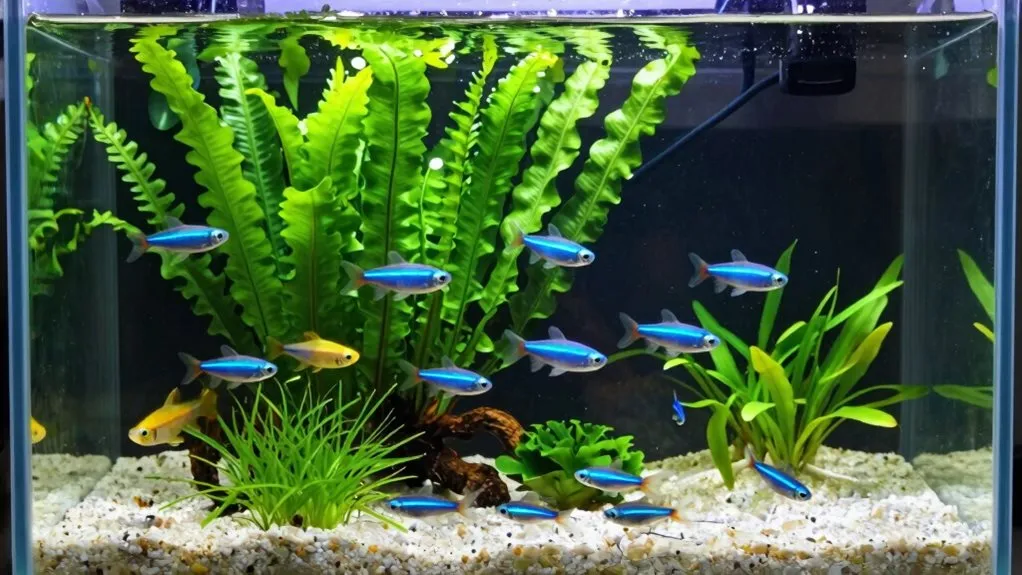
While fish naturally steal the spotlight in any aquarium, live plants transform your tank into a thriving underwater ecosystem that’ll benefit every inhabitant.
They’re not merely decorative—they’re crucial partners in your aquatic community.
Java Fern and Hornwort are perfect for beginners, thriving in low light without CO2 and providing cozy hiding spots for shy fish and tiny fry.
For a lush backdrop, try Anacharis or Amazon Sword, which grow quickly and absorb excess nutrients while creating a forest-like setting.
If you’re looking for an earthy aesthetic, Cryptocoryne Wendtii offers subdued beauty despite its initial “melt” phase.
Each plant supports different tank dynamics—whether you’re keeping peaceful communities with guppies, bettas needing resting places, or shrimp requiring protected grazing areas.
Avoiding Common Compatibility Mistakes
Even experienced aquarists make compatibility mistakes that can transform a peaceful community tank into an underwater battleground.
You’ll save yourself heartache by avoiding these common pitfalls when selecting your finned friends.
- Don’t ignore adult fish size—that cute little oscar will grow to 12 inches, requiring much more space than you initially planned.
- Never mix aggressive species like bettas with long-finned or colorful tankmates they’ll likely attack.
- Avoid overcrowding by following the one-inch-per-gallon rule (and doubling that for aggressive species).
- Remember that water parameters matter—goldfish prefer cooler temperatures than tropical fish like angelfish.
- Always research compatibility charts before adding new fish, as pet store setups don’t reflect long-term home conditions.
Your careful planning now will create a harmonious underwater community that thrives for years to come.
Maintenance Routines That Ensure Long-Term Success
The right fish selection creates harmony in your tank, but the long-term success of your underwater community depends on consistent care routines.
Establish a weekly schedule for partial water changes, removing 20-30% while vacuuming the substrate to eliminate hidden waste. Your filter is your tank’s lifeline—clean media regularly but rinse biological components in tank water only to preserve those hardworking beneficial bacteria.
Weekly water testing isn’t optional—it’s your early warning system! Monitor ammonia, nitrites, nitrates, and pH to catch problems before your fish show signs of stress.
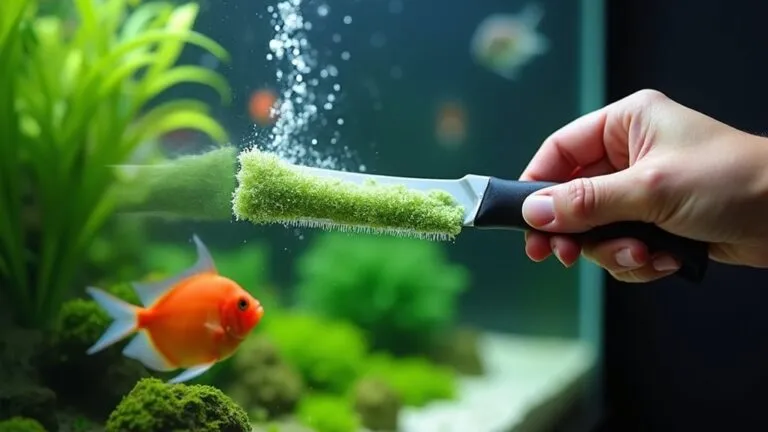
Control algae by limiting light to 8-10 hours daily and consider adding algae-eating tank mates.
Finally, regularly inspect equipment and décor while maintaining appropriate bioload. Remember, a little maintenance now prevents big headaches later!
Frequently Asked Questions
Can I Keep a Betta in My Community Tank?
Yes, you can keep a betta in your community tank if it’s at least 10-20 gallons with plenty of hiding spots. Choose peaceful, non-fin-nipping tankmates that occupy different swimming zones and monitor for aggression.
How Long Should I Wait Between Adding Different Species?
Wait 1-2 weeks between adding small groups, and 2-4 weeks for larger or semi-territorial species. You’ll need to verify zero ammonia/nitrite readings between additions and watch for any aggression or stress behaviors.
Will My Community Fish Breed in the Tank?
Yes, many community fish may breed in your tank. Livebearers like guppies and platies breed easily, while others require specific conditions. Survival rates of fry remain low unless you provide hiding places.
Should I Treat My Tap Water Before Adding It?
Yes, you must treat your tap water with a conditioner before adding it to your aquarium. This removes harmful chlorine, chloramines, and heavy metals that can kill your fish and beneficial bacteria.
Do Community Tanks Need Special Lighting or Equipment?
You don’t need special lighting for community tanks, but a basic LED light with a timer works best. It’ll provide 8-hour cycles for viewing while preventing excessive algae growth.
Final Thoughts
You’ve now got everything you need to create your peaceful community tank! Remember, starting with hardy species like tetras, corydoras, and guppies will build your confidence as you learn. Take your time, maintain consistent water parameters, and don’t overstock. With regular maintenance and the right plant companions, you’ll enjoy a vibrant, balanced aquatic world that’s both rewarding and relaxing. Happy fish keeping—your underwater community awaits!