Most beginner fish deaths result from misunderstanding the nitrogen cycle. When fish waste produces toxic ammonia, you need beneficial bacteria to convert it to nitrite, then less harmful nitrate. This process takes 6-8 weeks to establish properly. Without cycling your tank first, ammonia spikes quickly kill fish through gill damage and nervous system failure. Regular water testing and changes are essential, while avoiding filter cleaning with tap water preserves your bacterial colonies. The difference between thriving fish and floating ones lies in these invisible biological processes.
The Biology Behind the Nitrogen Cycle in Aquariums

While many aquarium hobbyists focus on selecting beautiful fish and decorations, understanding the nitrogen cycle is actually the foundation of a successful tank.
It’s a fascinating process where waste transforms through several stages before becoming safe for your fish.
Here’s what’s happening: your fish produce waste, and uneaten food breaks down into toxic ammonia. The cycling process is crucial for establishing beneficial bacteria in your tank.
Within days, beneficial bacteria called Nitrosomonas convert this ammonia into nitrite, which is still dangerous to your aquatic friends.
Don’t worry though—another bacterial hero, Nitrobacter, steps in to transform nitrite into less harmful nitrate.
This three-stage process takes weeks to establish naturally, but you can speed things up with bottled bacteria or used filter media from established tanks.
Regular water changes are essential to remove accumulated nitrates since they can cause pH drops in poorly buffered water over time.
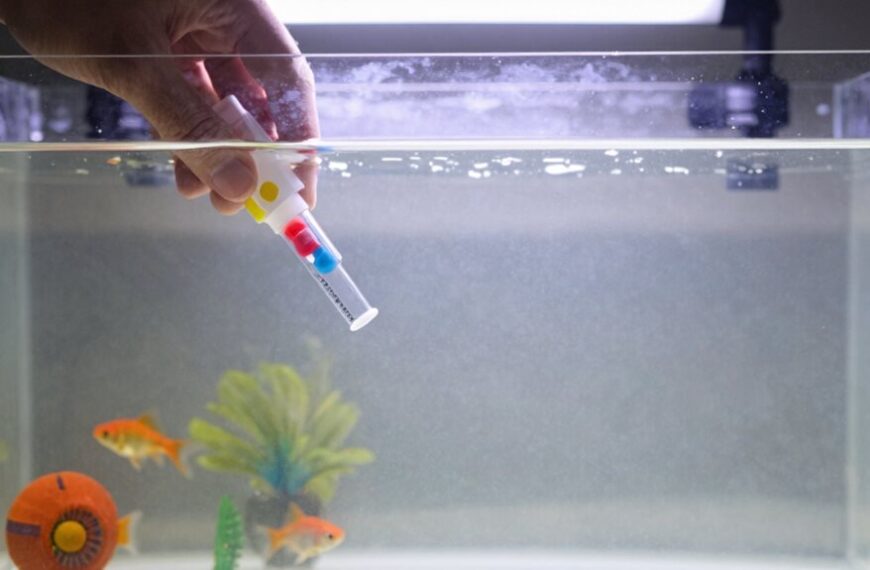
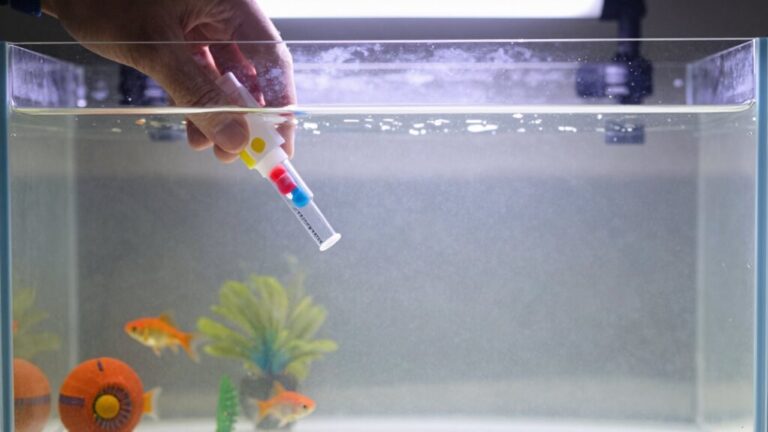
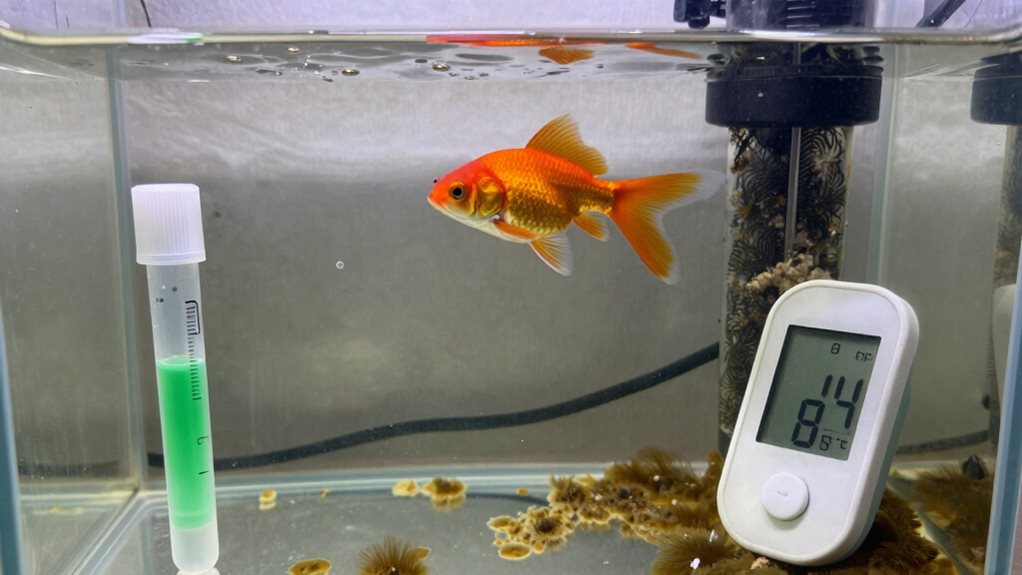
Proper testing is crucial during the cycling process, as both ammonia and nitrites are highly toxic to fish and corals in even small amounts.
Recognizing New Tank Syndrome and Its Warning Signs
Understanding the nitrogen cycle helps prevent one of the most heartbreaking experiences in fishkeeping: New Tank Syndrome. This common killer occurs when your tank lacks the beneficial bacteria needed to process fish waste properly.
You’ll notice warning signs if you’re paying attention. Is your water cloudy or hazy? That’s a bacterial bloom in progress. Does your tank have a distinctly fishy smell? Nitrites are likely building up. Regular water quality checks help to eliminate toxic buildup from harmful bacteria that thrive in unconditioned water.
Watch your fish, too—if they’re gasping at the surface, swimming lethargically, or keeping their fins clamped close to their bodies, they’re telling you something’s wrong. Toxic ammonia levels can develop rapidly when fish are added too soon to a newly established aquarium.
Overfeeding your new fish is a major contributor to poor water conditions, as excess food decomposes and creates ideal conditions for harmful bacteria to thrive.
Don’t ignore these signals! Regular testing for ammonia, nitrite, and nitrate will confirm what your eyes and nose are already telling you: your tank’s nitrogen cycle isn’t balanced yet.
The Silent Killers: Ammonia and Nitrite Toxicity Explained
Beneath the peaceful surface of your aquarium lurks a potential disaster that can strike without warning: ammonia and nitrite poisoning.
These invisible toxins damage your fish’s delicate gill tissue first, eventually attacking their brain and nervous system if left unchecked. Regular water parameter monitoring is crucial to prevent these developments and ensure your fish thrive.
You’ll spot trouble when fish gasp at the surface, develop reddened gills, or show blood streaks on their fins.
What’s worse, even levels below 1 ppm can prove fatal over just a few days!
If disaster strikes, act quickly with 50% water changes at matching temperatures.
Adding aquarium salt can help combat nitrite toxicity (use the nitrite ppm ÷ 4 tablespoons per 10 gallons).
Regular maintenance and monitoring are essential as these toxins typically result from organic waste accumulation in your tank from uneaten food and fish waste.
While ammonia and nitrite are immediate threats, a slow nitrate buildup can also cause health problems in fish, especially when proper filtration management is neglected.
Common Mistakes That Crash Your Tank’s Ecosystem

You’ll crash your tank’s ecosystem when you scrub your filter media too thoroughly, removing those precious bacteria colonies your cycle depends on. Additionally, beneficial bacteria thrive on habitat stability, so it’s crucial to avoid any drastic changes. Drastic pH shifts can happen if you’re not careful with water changes or additives, sending your fish into shock as their bodies struggle to adapt to the new conditions. Many medications will kill off beneficial bacteria alongside the pathogens they target, creating a domino effect that can spiral your tank back into a cycling nightmare. Without establishing a proper nitrogen cycle first, adding fish too early guarantees toxic ammonia levels that few aquarium species can survive. Regular water changes are essential to export nutrients and prevent the toxic buildup of ammonia and nitrites in your closed aquarium system.
Overeager Filter Cleaning
When aquarium enthusiasts scrub their filter media under running tap water, they’re unknowingly committing one of the hobby’s most devastating mistakes.
That brown “gunk” you’re washing away isn’t dirt—it’s your beneficial bacteria colony!
Your filter isn’t just for clearing debris; it’s the heart of your nitrogen cycle. Those bacterial colonies break down toxic ammonia, and they live primarily in your filter media. In fact, they are crucial for converting harmful toxins into safer compounds like nitrate.
When you clean with chlorinated tap water or scrub too thoroughly, you’re fundamentally resetting your tank’s ecosystem.
Instead, gently squeeze your sponges in a bucket of tank water until it runs clearer (not crystal clear). Consider using a large fish bag to contain the waste during cleaning and minimize beneficial bacteria loss. Always remember to unplug the filter before beginning any maintenance to ensure safety and prevent motor damage.
Only clean when flow slows down, not on a rigid schedule. For newer tanks, be even more gentle—a light rinse in tank water is sufficient.
Your fish will thank you for preserving their invisible bacterial allies.
Ph Swing Disasters
pH swings represent one of the most silent yet devastating threats to your aquarium’s stability.
You mightn’t see the danger until it’s too late, as your fish gasp at the surface or hide in corners.
The culprits? Your daily photosynthesis cycle creates natural fluctuations, while low KH leaves your water defenseless against pH crashes.
That beautiful driftwood you added? It might be tanking your pH faster than your fish can adapt.
CO2 injection systems in planted tanks can drop pH by a full point daily, while accumulated waste steadily acidifies your water between water changes.
Even well-intentioned maintenance can backfire – massive water changes with different pH values shock your fish’s systems.
Don’t panic! Regular testing and gradual corrections will keep your underwater world peaceful and thriving. Optimal ammonia and nitrite levels should always be maintained to prevent fish stress or death.
Medication Side Effects
Medications designed to heal your aquarium inhabitants can sometimes become silent killers if misused or misunderstood. That “cure-all” solution might actually wipe out your beneficial bacteria, causing an ammonia spike that’s more deadly than the original disease.
When dosing medications, remember that one size doesn’t fit all. Scaleless fish, juveniles, and sensitive species need adjusted doses, while many reef-safe treatments will decimate your invertebrates faster than you can say “oops.”
You’re also playing with fire when combining multiple medications without checking compatibility.
Don’t fall into the antibiotics trap either—they won’t touch viral or parasitic issues but will happily destroy your biological filtration. It’s essential to monitor key parameters during treatment to ensure that water quality remains stable.
Always quarantine sick fish instead of medicating your main tank, and never skip water testing during treatment. Your nitrogen cycle will thank you!
Step-by-Step Guide to Successfully Cycling Your Aquarium
Establishing a healthy nitrogen cycle in your aquarium isn’t just important—it’s vital for your future fish friends’ survival.
Think of it as creating a miniature ecosystem where beneficial bacteria do the heavy lifting of waste management.
To properly cycle your tank:
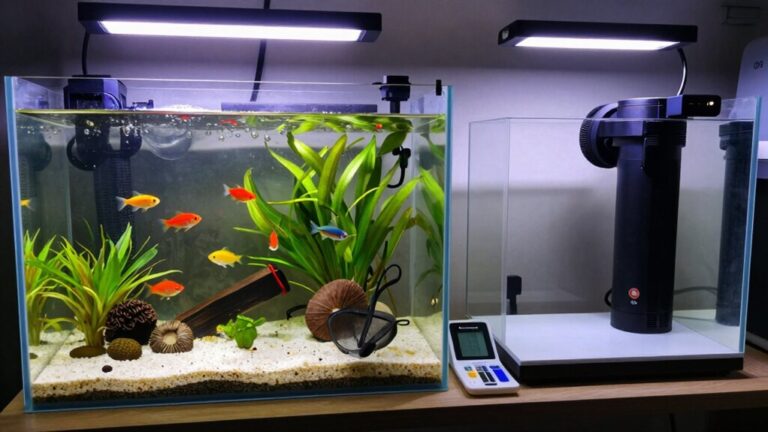
- Set up your aquarium completely first—filters, substrate, and plants provide homes for beneficial bacteria
- Add an ammonia source (fish food, pure ammonia, or organic matter) to reach at least 3ppm
- Test water daily, watching for the ammonia spike, followed by nitrite, then nitrate
- Be patient—the full cycle takes 6-8 weeks as different bacterial colonies establish, ultimately leading to the establishment of a stable nitrogen cycle.
Don’t rush this process!
When both ammonia and nitrite consistently read zero, you’re ready to add a few hardy fish gradually.
Advanced Troubleshooting for Persistent Nitrogen Cycle Issues
When your aquarium’s nitrogen cycle seems stuck in an endless loop of problems, don’t panic—you’re facing issues that even experienced aquarists encounter.
If your test kit shows deep blue ammonia levels, act immediately with 20% water changes. When nitrite persists above 0.50 ppm alongside ammonia, you’re likely facing insufficient biofiltration.
Check if your pH has dropped below 6.0, as this can halt nitrification completely. For lasting solutions, test daily until stabilization occurs, and consider adding fast-growing plants that consume nitrogen directly. Additionally, maintain optimal pH levels to ensure the health of your fish and the efficiency of your biological filtration.
Don’t forget to examine your substrate—proper nitrification only happens in the top 1-2 inches where oxygen reaches. If all else fails, reduce your bio-load by limiting feeding or temporarily rehoming fish while your beneficial bacteria catch up.
Frequently Asked Questions
Can I Use Plants to Reduce Cycling Time?
Yes, you can use fast-growing plants to reduce cycling time. They’ll absorb ammonia directly, but don’t rely solely on them – you’ll still need beneficial bacteria to handle nitrite conversion consistently.
How Do Medications Affect My Tank’s Nitrogen Cycle?
Many medications, especially antibiotics like erythromycin and tetracycline, can damage your beneficial bacteria. They’ll disrupt nitrification, causing ammonia spikes. Use gram-negative antibiotics like kanamycin when possible and do frequent water changes during treatment.
Will Using Bottled Water Bypass Cycling Requirements?
No, bottled water won’t bypass cycling. You’ll still need to establish beneficial bacteria that process ammonia and nitrite. Without this biological filter, fish waste will quickly build to toxic levels.
Does Substrate Type Impact Nitrogen Cycle Development?
Yes, your substrate type directly impacts nitrogen cycle development. Coarser substrates allow deeper aerobic zones while finer sand creates shallower zones. The right substrate provides more surface area for beneficial bacteria to colonize.
How Do I Safely Transfer Established Filter Media?
Rinse your established media in tank water (not tap water), transport it in sealed containers filled with aquarium water, and use a battery-powered air pump during longer moves to preserve beneficial bacteria colonies.
Final Thoughts
You’ve now revealed the mystery behind most beginner fish deaths. Remember, patience is your greatest ally when cycling your tank. Don’t rush the process—those invisible biological cycles need time to establish. By monitoring ammonia and nitrite levels, you’ll prevent the silent killers from claiming your fish. With this knowledge in hand, you’re well-equipped to create a thriving aquatic home where your finned friends can flourish for years to come.